FIELD NOTES: Bready White Is Still Alive (What I’ve learned from making sourdough fit into my actual life)
The Situation
I wanted to learn sourdough.
I did not want a new dependent.
My first starter, Princess Doughana, met an untimely end. The replacement eventually became Bready White, mostly because my family did not appreciate my superior naming instincts.
The goal with Bready was never to become someone who wakes at 4:47 a.m. because her starter has peaked.
I wanted good bread.
I wanted to understand why it worked.
And I needed the whole operation to coexist with an actual life.
The System
Bready lives in the refrigerator.
This was the breakthrough.
I keep a small mother starter cold, feed her when I’m getting ready to bake, build what I need, and put the mother back to sleep.
Sometimes I bake every week.
Sometimes life happens.
She survives.
Sourdough had already become considerably less dramatic than the internet had led me to believe.
What Actually Worked
A few things have made the biggest difference:
A fridge mother. I have no interest in feeding something on my counter every day just because it has feelings.
Learning what “ready” looks like instead of worshipping the clock. Recipe times are useful. The dough still gets the final vote.
Shaping before the overnight cold proof and putting the loaf straight into the banneton. Easier for me the next morning and one less decision before coffee.
A long cold proof. Better flavor, better schedule.
A couple of ice cubes in the Dutch oven. My crust blistered like crazy.
Convection. Also worked beautifully.
Actually waiting for the loaf to cool. Rude but apparently necessary.
Toast. Toast fixes a surprising number of sins.
My first beginner loaf came out with a crackly, blistered crust and a really good chew.
I gave it the gentlest little squeeze and could hear it crackling.
That was the moment I thought:
Oh.
I can actually make bread.
What Didn’t / I’d Change
My first loaf had a dense, chewy bottom quarter.
The garlic-Parmesan loaf was underwhelming.
Probably rushed fermentation.
Useful information.
Not tragedy.
I’ve had dough that looked strange, timing that went sideways, and plenty of moments when I was sure I had ruined the entire thing.
Generally, bread still came out.
And when it didn’t come out exactly as intended?
See above: toast.
The Part I’m Actually Learning
I recently started working through a sourdough book structured around six beginner loaves.
The book suggests making each one several times before moving on.
Naturally, I will probably make each one once unless the lesson clearly hasn’t sunk in.
But I like the premise.
Because I don’t really want six more bread recipes.
I want to understand what fermentation looks like. What properly developed dough feels like. What changes when I alter hydration, timing, or shaping.
The science matters.
Just not because I want more rules.
I want to understand enough that eventually I can look at the dough and think:
Needs more time.
Or:
That feels ready.
Instead of:
The recipe says four hours, therefore the dough must comply.
Steal This
You do not need to organize your life around sourdough.
Make sourdough fit your life.
Keep the starter cold.
Learn one basic loaf.
Change one thing at a time.
Pay attention to what happens.
Eat the evidence.
Closing Note
The funny thing is that sourdough initially seemed like exactly the kind of cooking that could send me spiraling into overthinking.
Ratios.
Temperatures.
Fermentation windows.
Timelines.
Percentages.
Now I’m beginning to see all that information differently.
Learn the structure.
Watch what happens.
Trust what you see.
Adjust next time.
Bready White appears comfortable with this arrangement.
So far, she’s still alive.
And apparently that is enough.
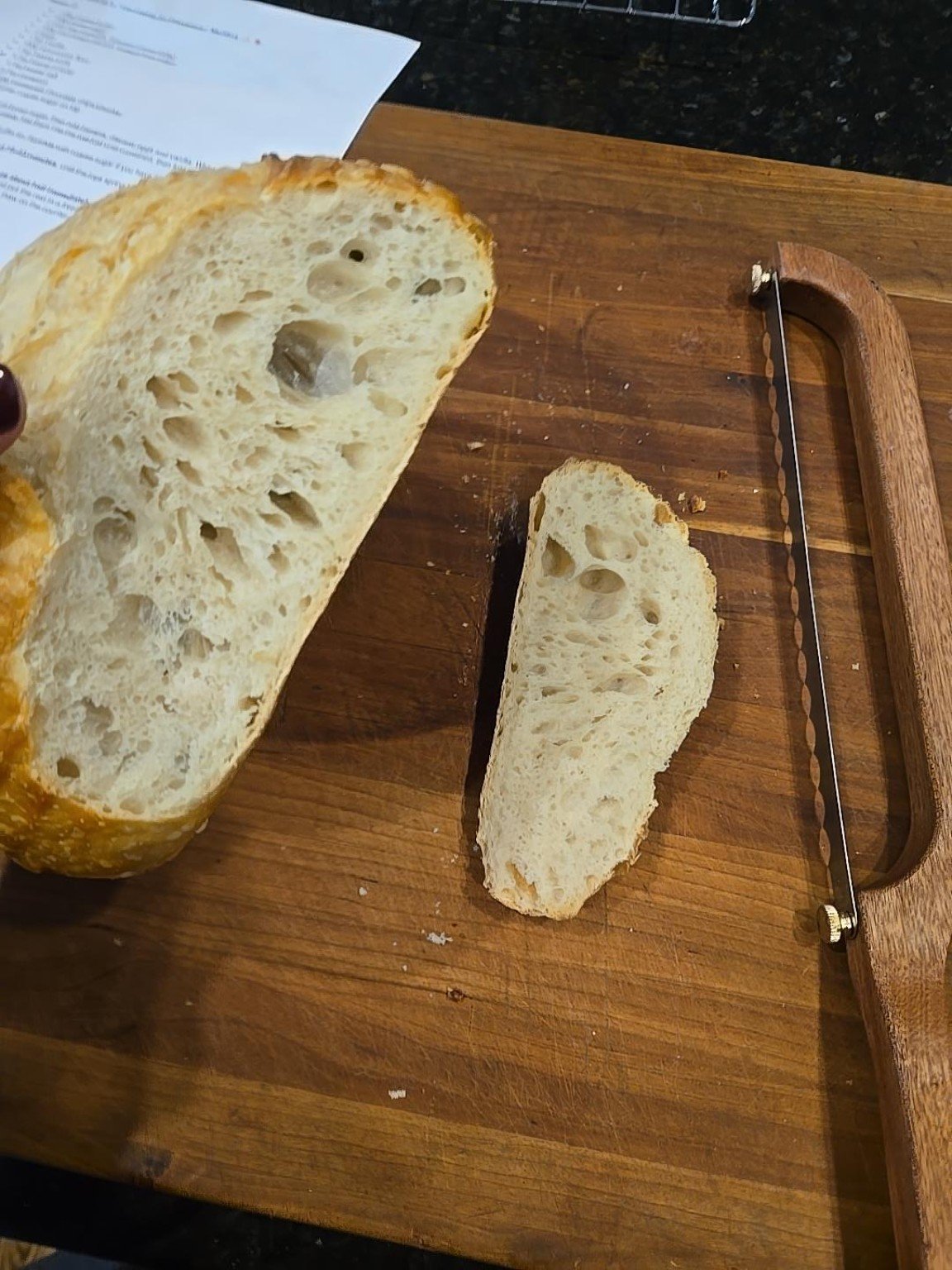
Bready’s crumb