This Isn’t That Serious
I went to France to cook in Julia Child’s kitchen.
That was the headline, anyway.
First, I had a few days alone in Nice.
For most of my life, France had more or less meant Paris to me, and Paris had never particularly called my name. Then Toulouse happened on my first solo trip to France, followed by Camp Château, and suddenly France became pink brick, medieval streets, markets, cassoulet, rosé, and women I never would have met if I had stayed home.
Apparently France and I had more to discuss.
So a year later, I was back.
This time the ultimate destination was Provence and Cook Camp at La Pitchoune, Julia and Paul Child’s former home in the hills above the Côte d’Azur.
But first: Nice.
Nice, Before I Knew I Needed It
My first impression was that Nice was nothing like Toulouse.
Bigger. Busier. More cosmopolitan. Definitely more touristy. Old Nice softened all of that almost immediately.
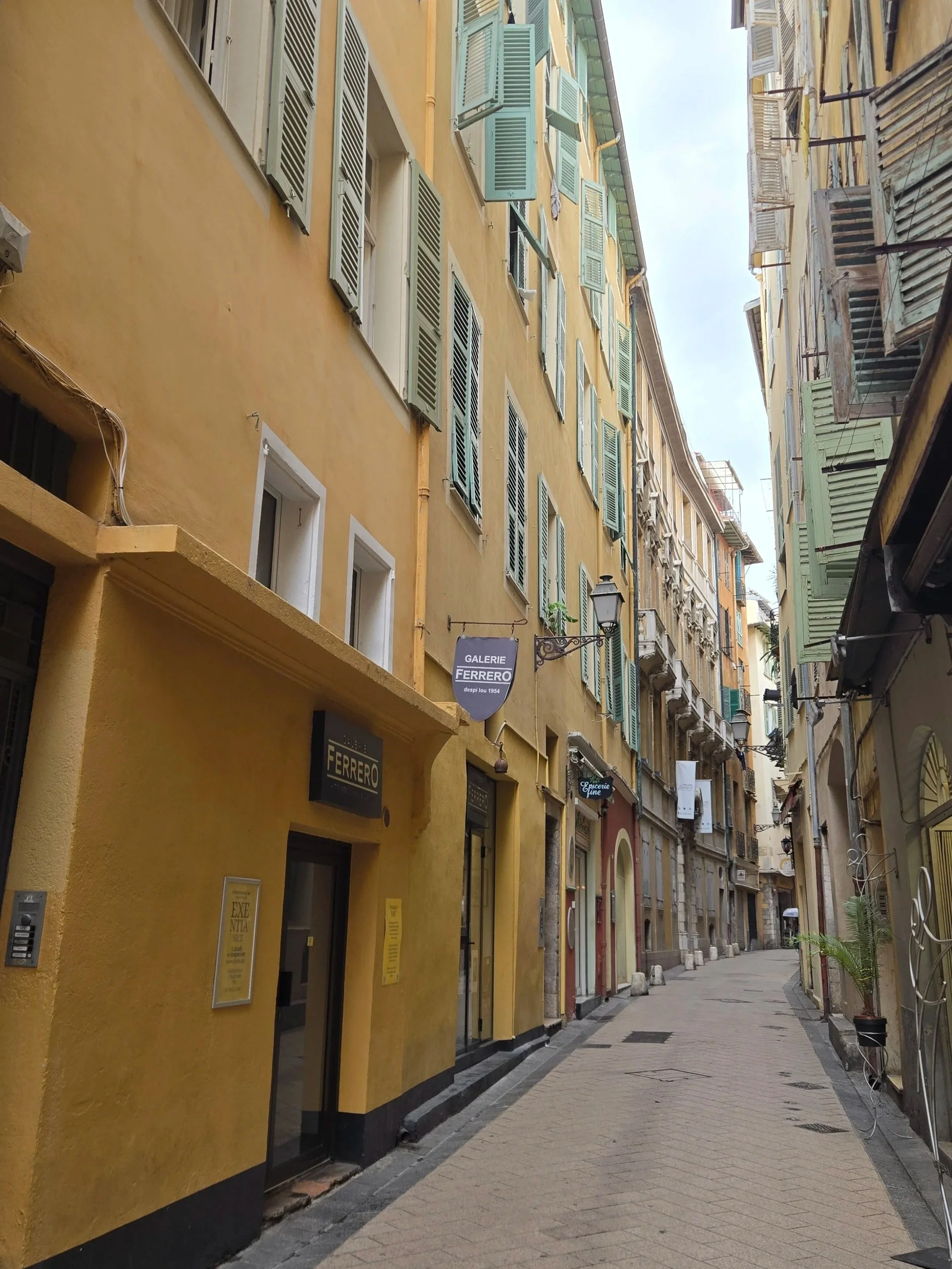
My hotel, Palais Saleya, sat right in the middle of the old city, where narrow lanes opened unexpectedly into squares and buildings rose in warm shades of yellow, ochre and faded red. Laundry hung overhead. Shutters tilted open. Café tables occupied any patch of pavement wide enough to hold them.
My room wasn’t ready, so the hotel held my luggage, and I went walking.
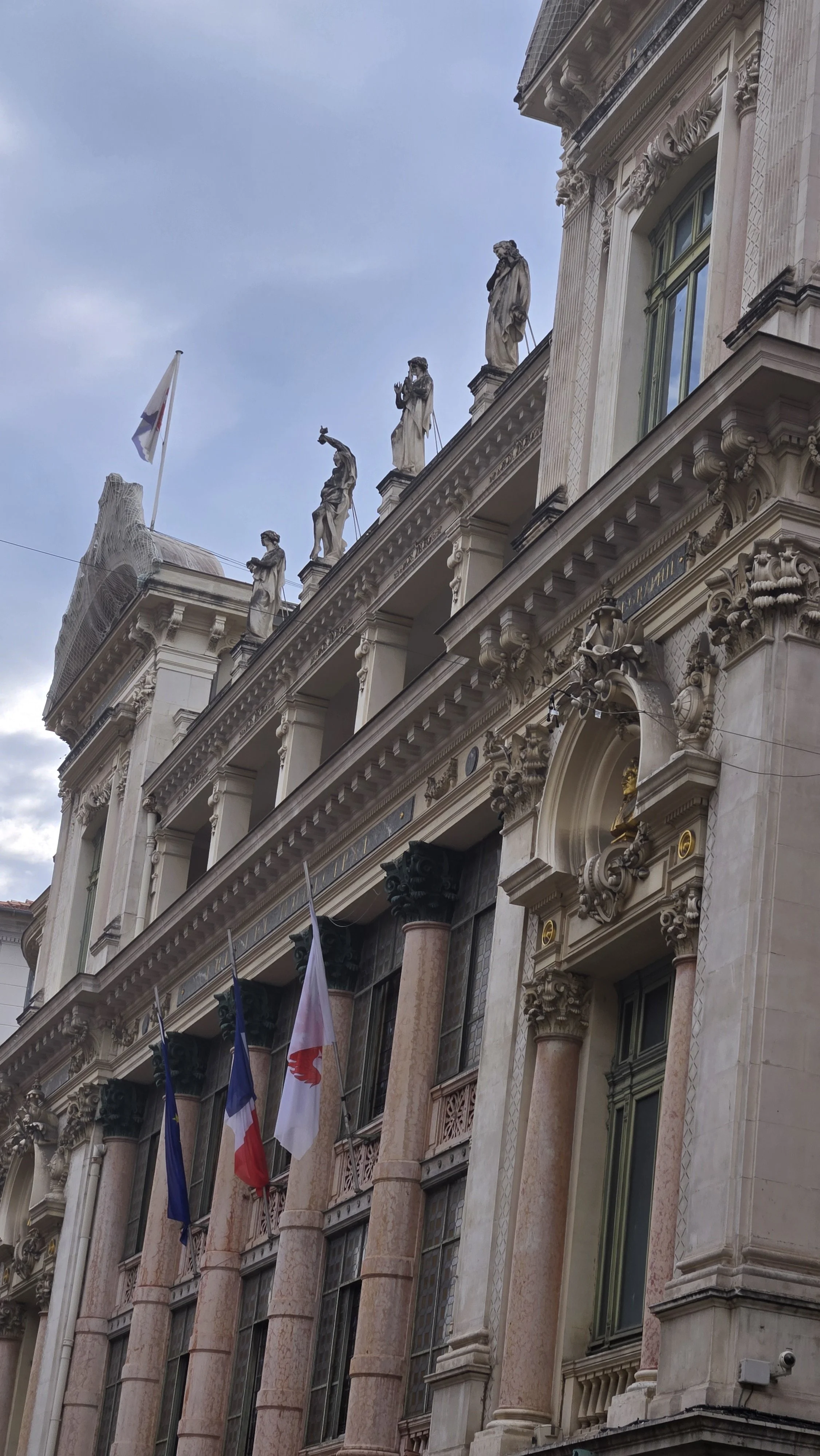
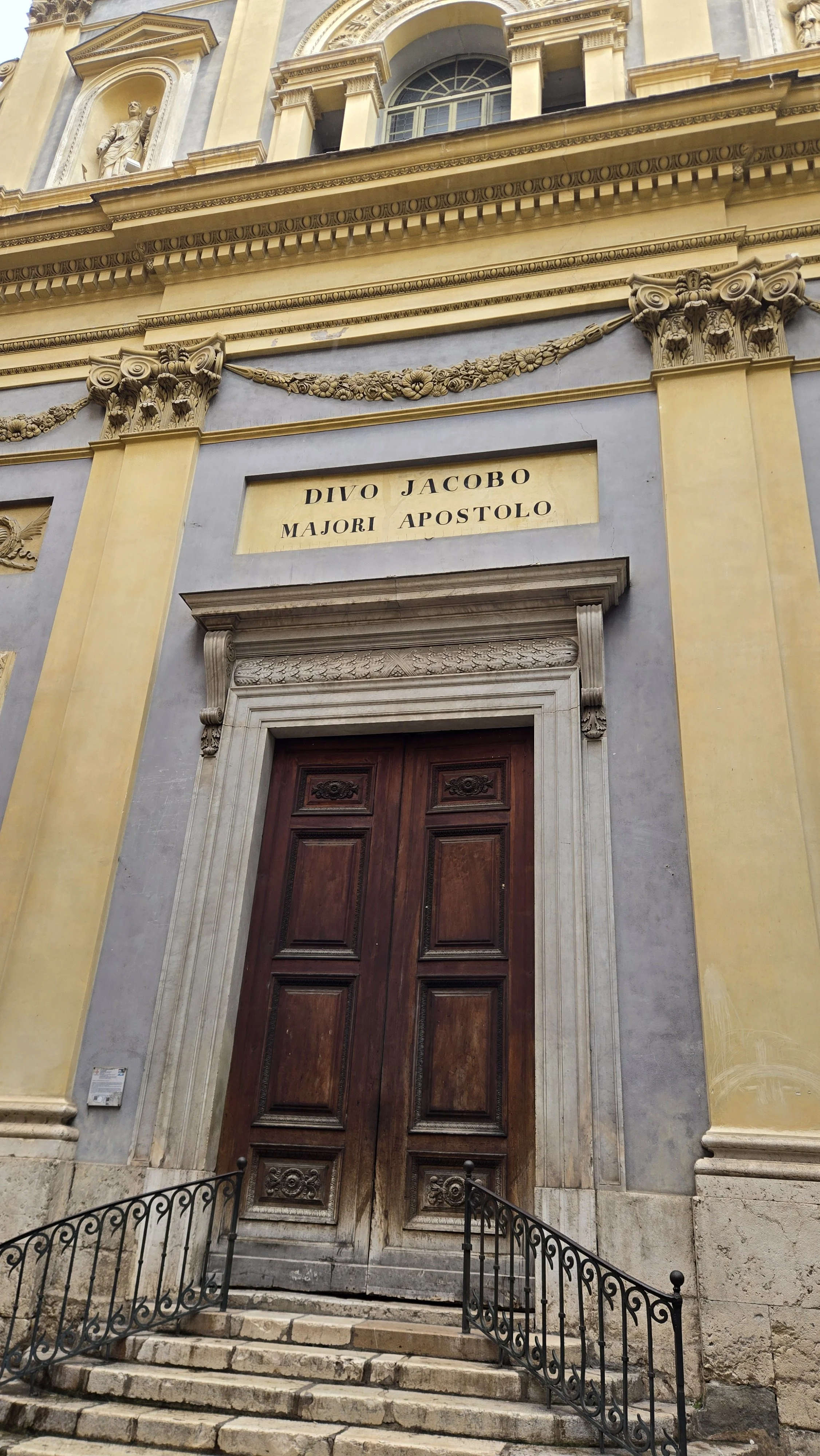
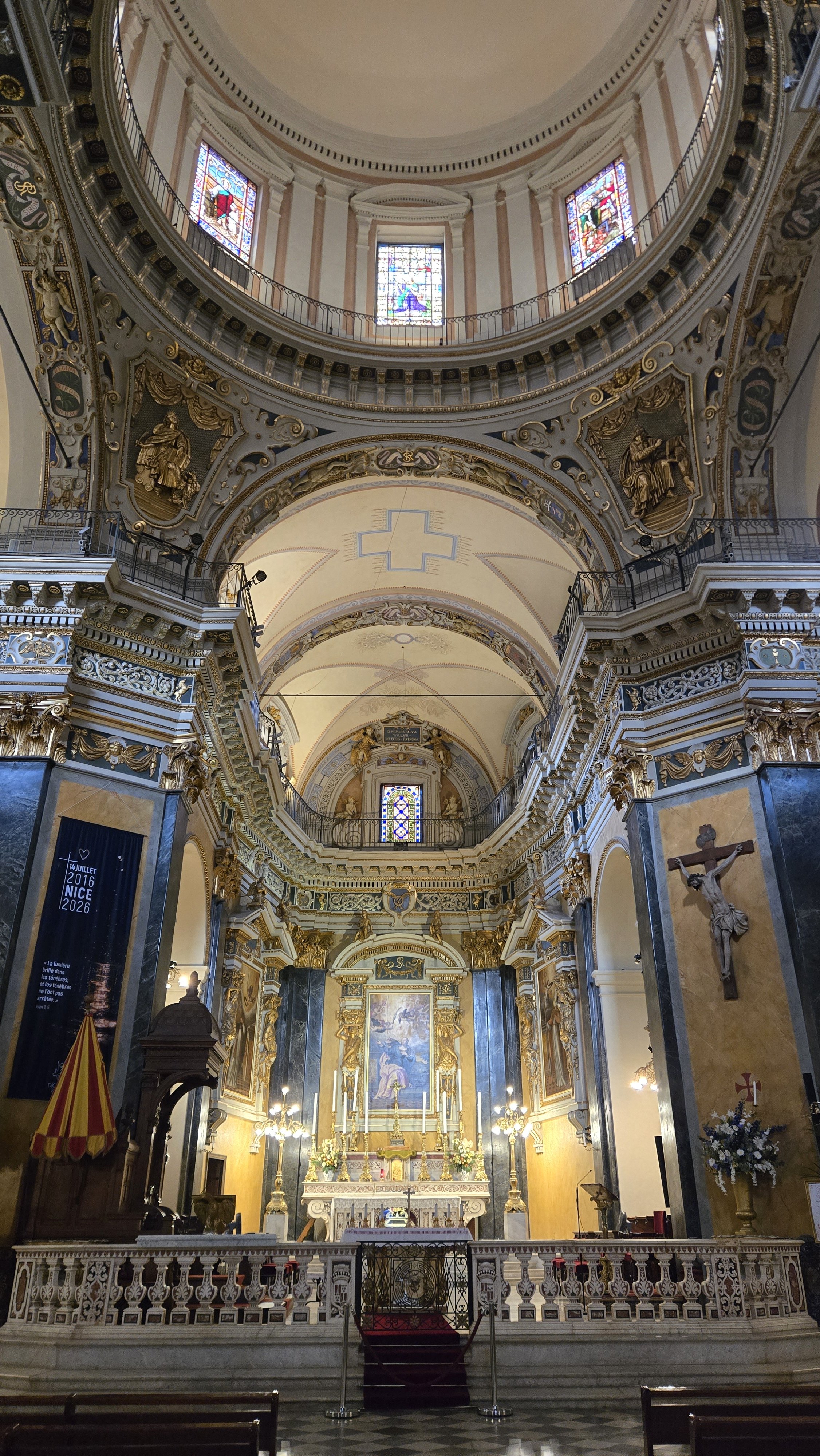
I wandered into Cathédrale Sainte-Réparate, then past Saint-François-de-Paule, following streets mostly because they looked interesting rather than because I knew where they went.
Eventually, Old Nice spilled me toward the sea.
And there it was. The French Riviera.
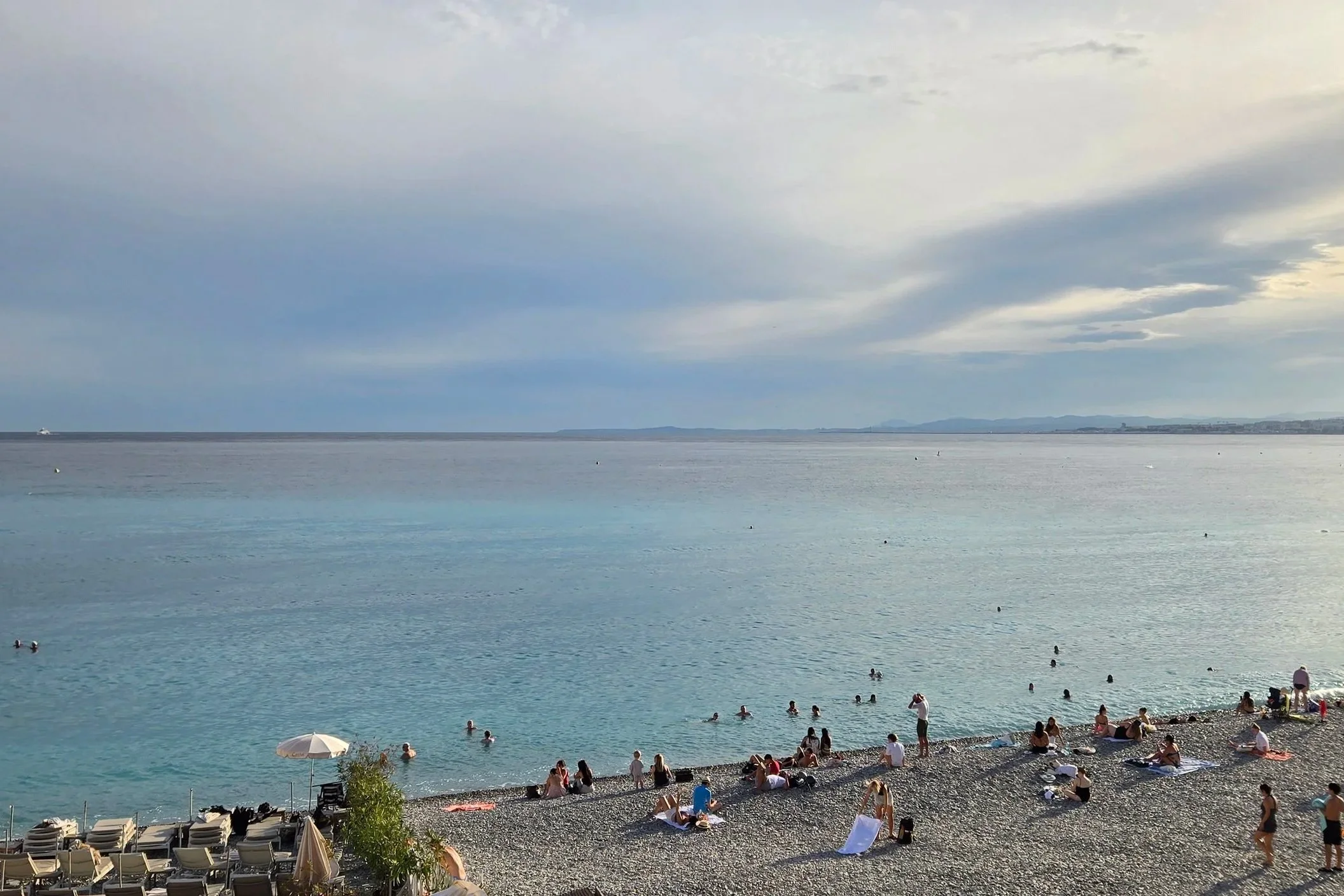
Not sand, but that wide sweep of pale pebbles. The Mediterranean stretched beyond it in ridiculous shades of blue, turquoise near shore and darker farther out.
People were swimming.
I stood there thinking some version of: Oh. Hello, France.
My first afternoon included a food tour through Vieux Nice, where I ate my way through a respectable chunk of the Niçoise canon: pan bagnat, socca, fried stuffed zucchini flowers, petits farcis, pissaladière, barbajuans, sweet tourte de blettes, ice cream and cake.
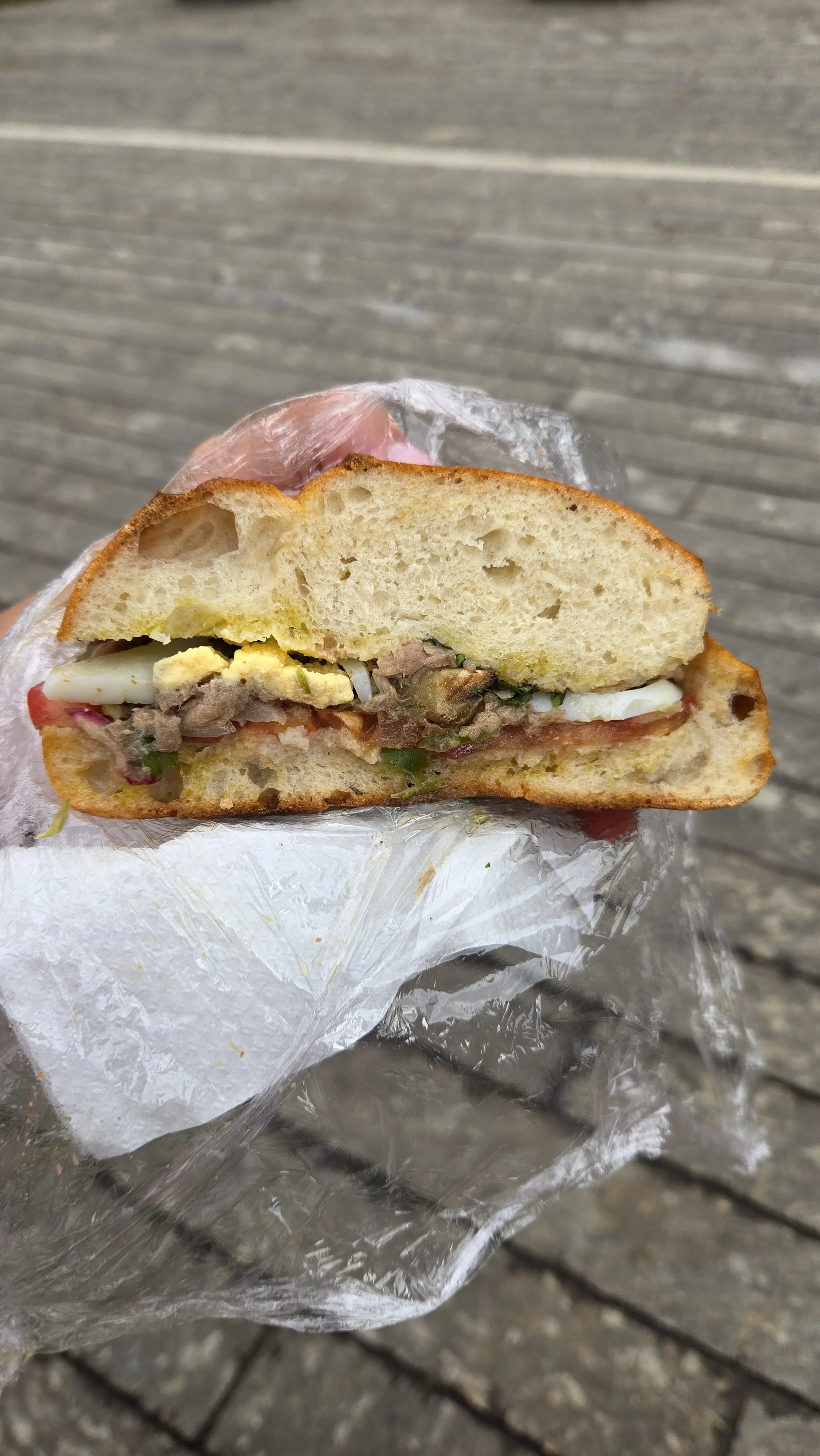
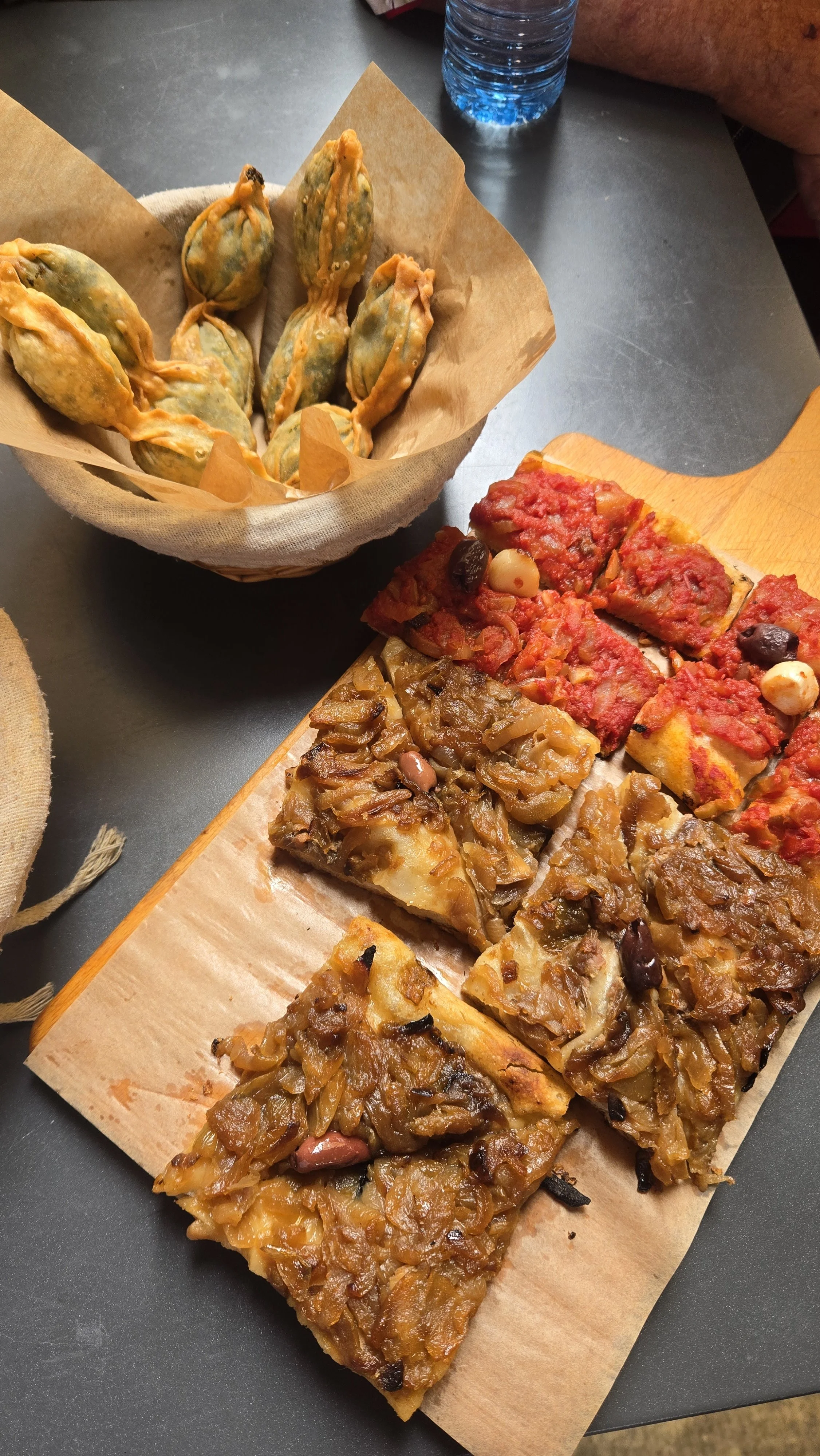
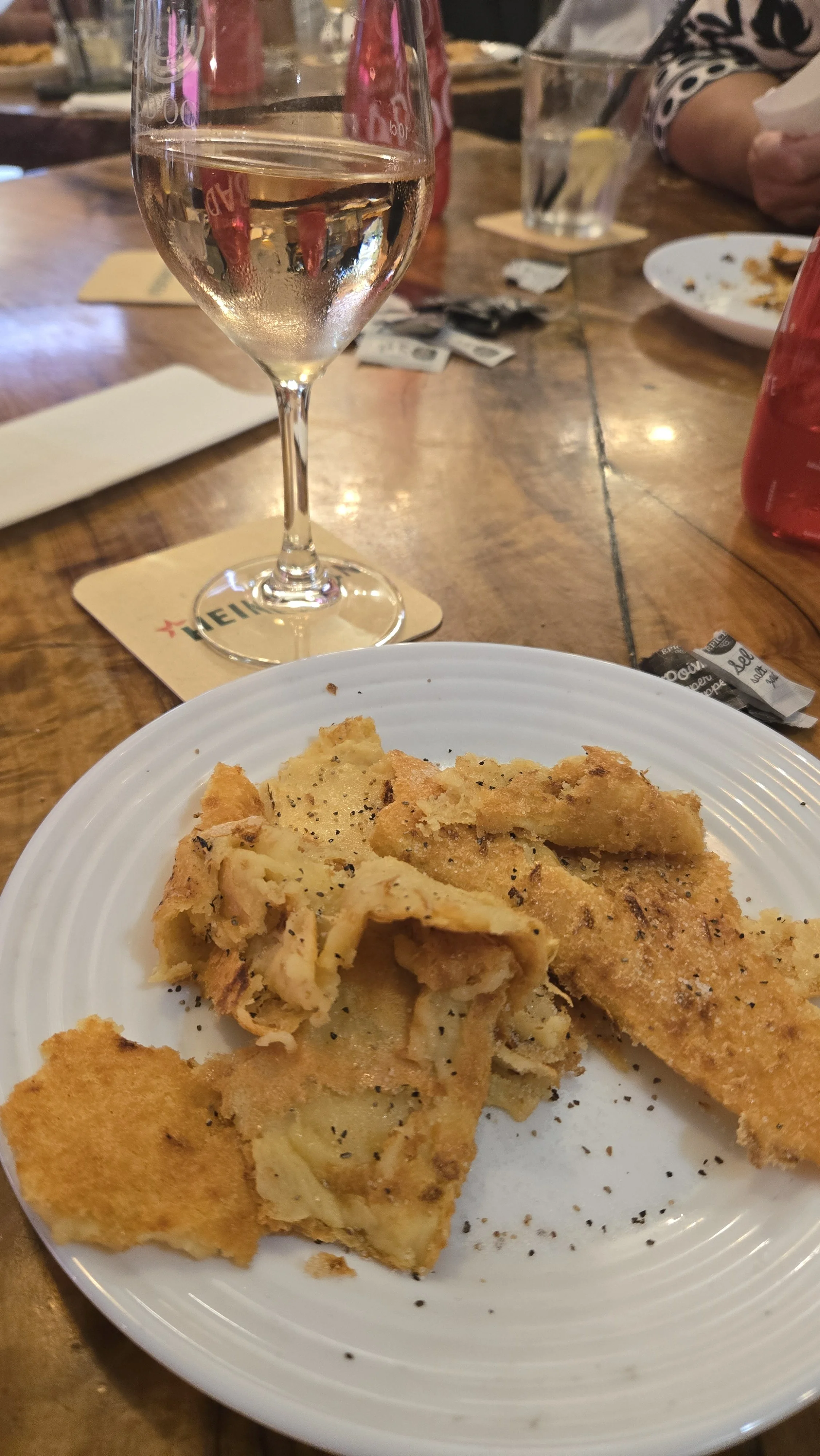
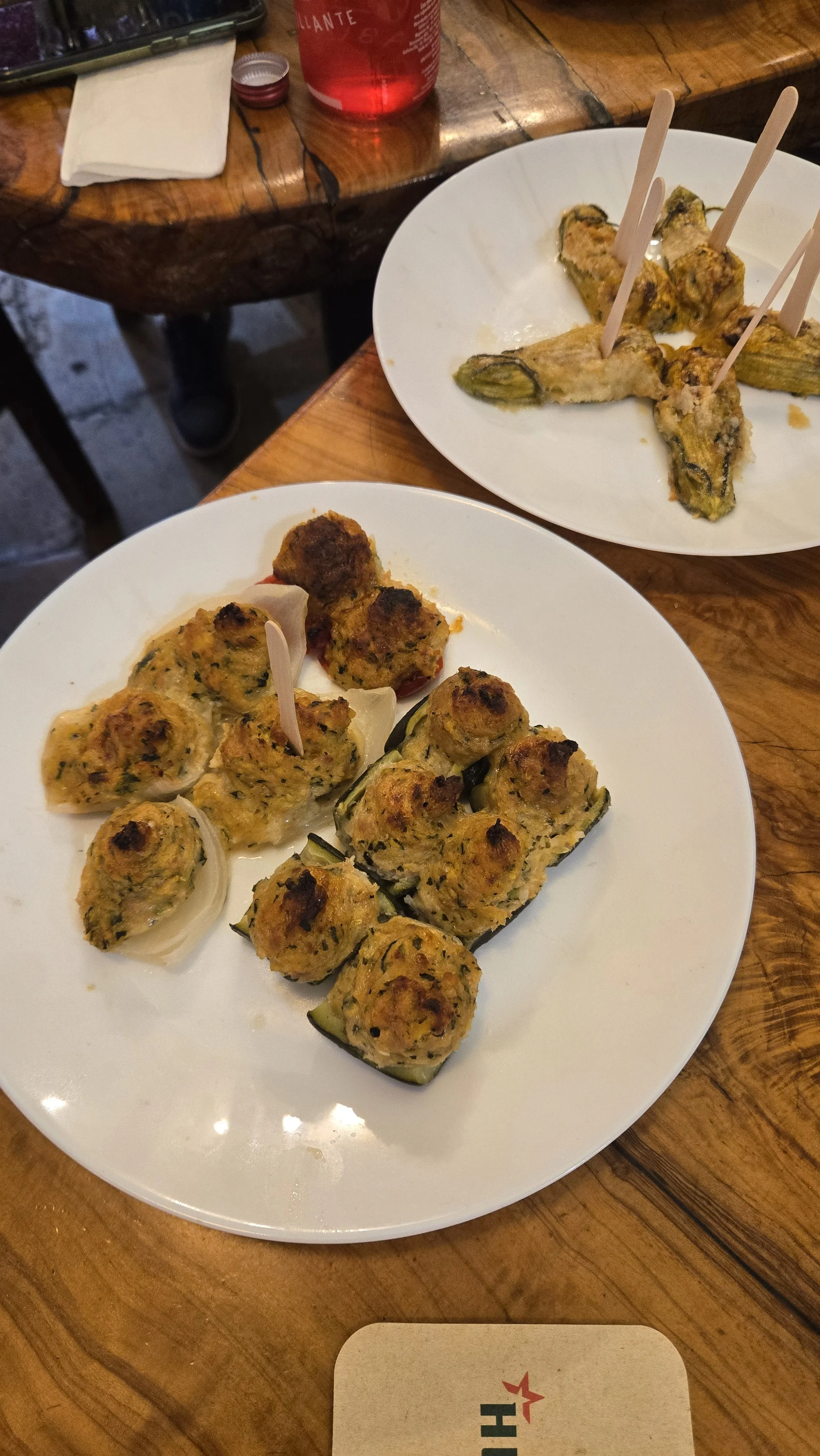
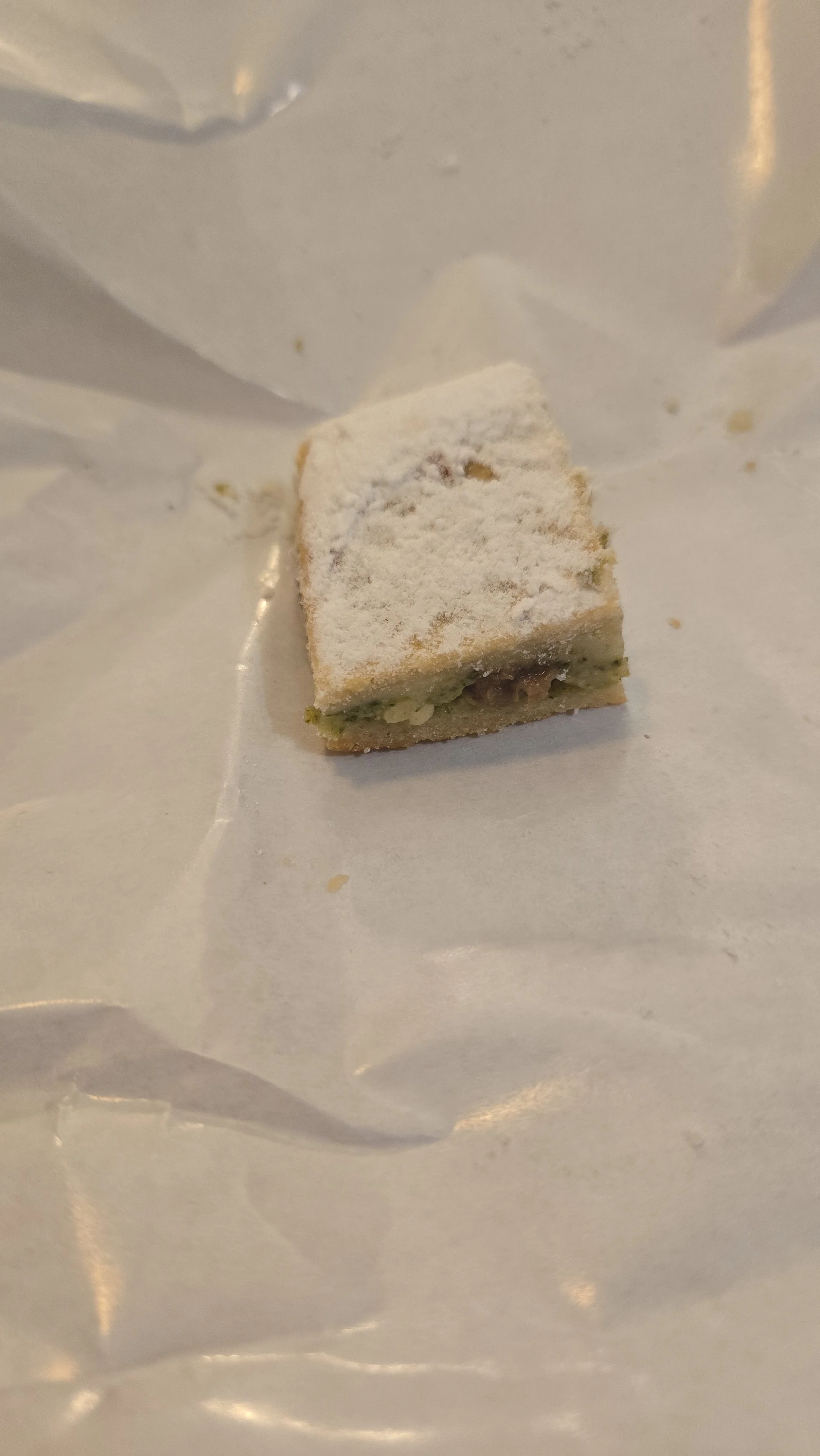
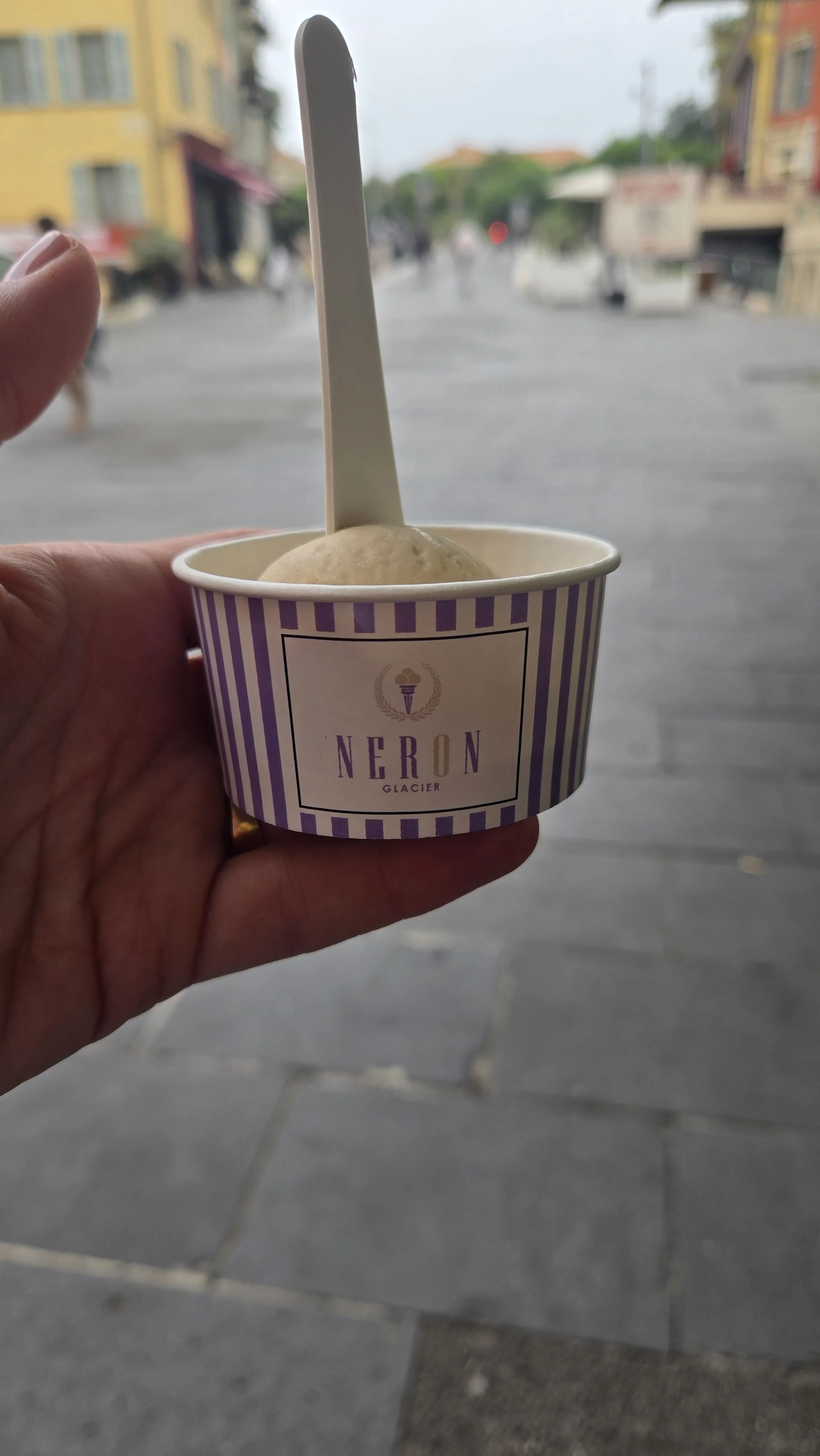
The food was terrific. The tour itself was not quite what I had loved so much in Toulouse. An unexpected French-speaking family meant our guide spent much of the afternoon bouncing between French and English, and I missed the deeper thread I wanted: why this food exists here, who brought it, what it says about Nice.
Apparently I don’t just want to eat the thing. I want its entire biography.
By evening I was tired enough to stay in.
My hotel room was huge. It also had almost zero character.
Except for the windows. The windows were enormous. I opened them and Nice came pouring in.
Scooters. Church bells. Conversation rising from tables below. Cutlery hitting plates. Music from somewhere I could never quite locate. An occasional siren.
The room could have been anywhere. The windows were very much in France.
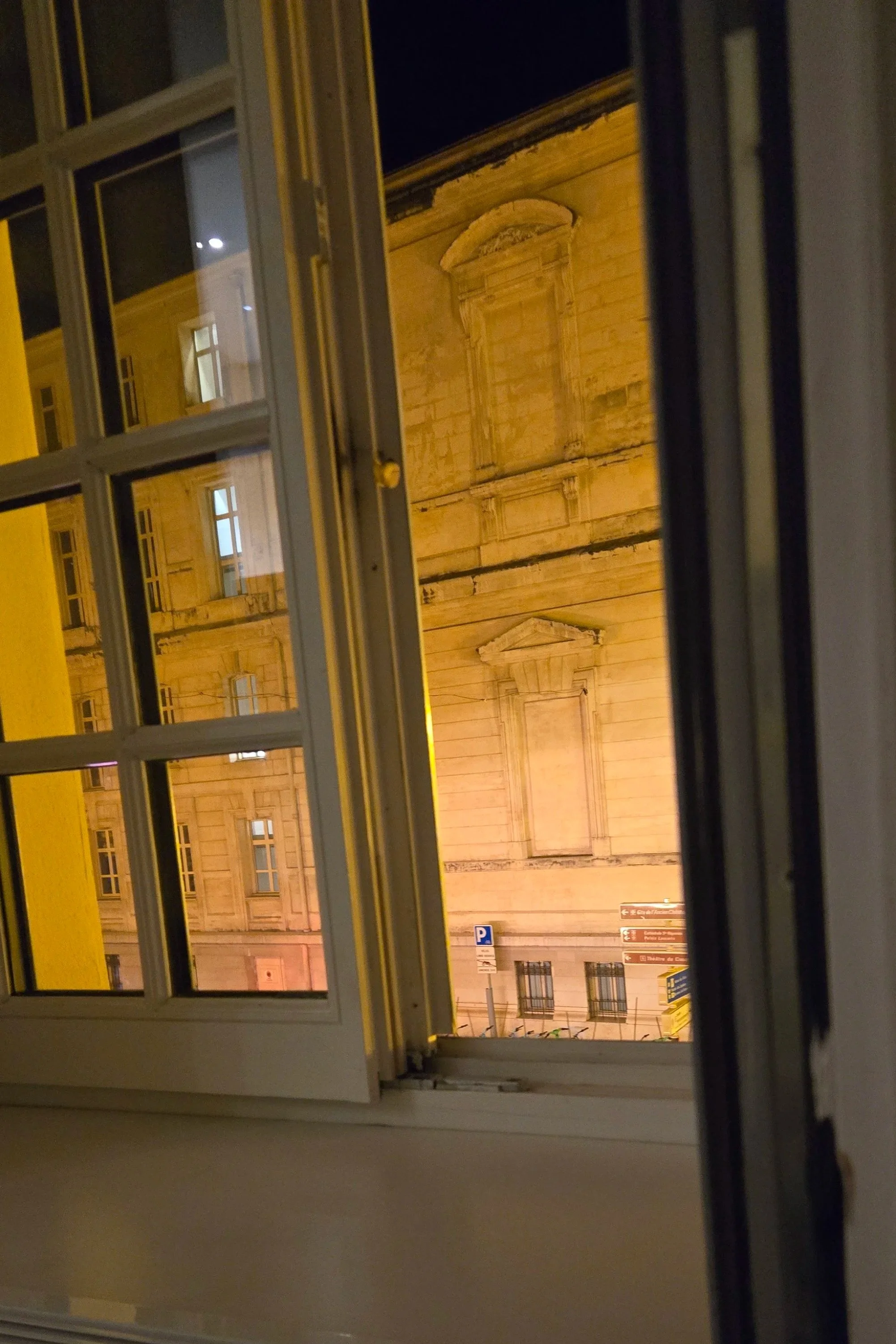
I poured some rosé, opened the chocolate I had acquired because one must prepare for emergencies, and put on Julie & Julia.
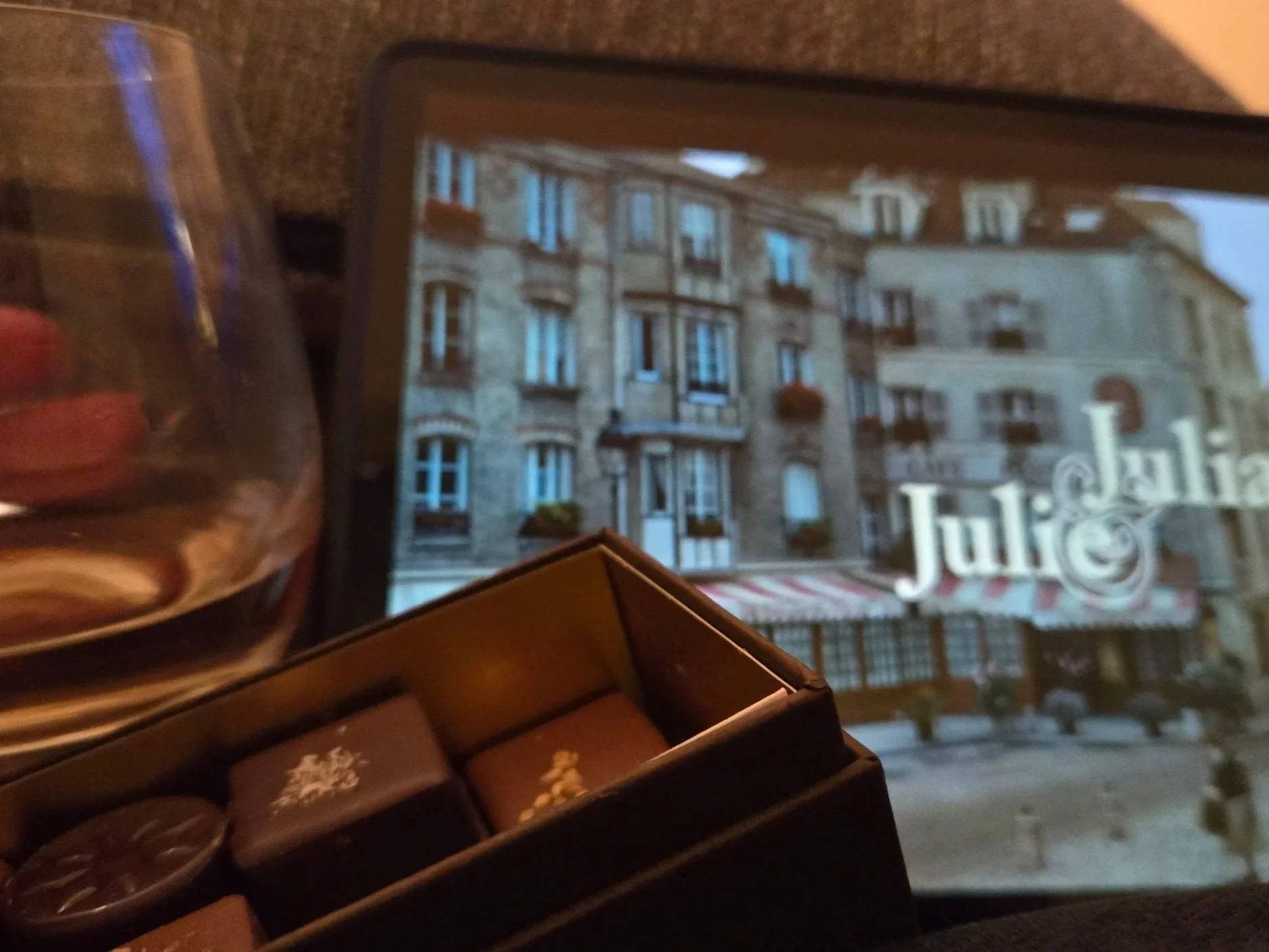
Somewhere between the wine, the square below and Meryl Streep, I had one of those embarrassingly obvious realizations that somehow hadn’t occurred to me before.
Julia Child wasn’t born Julia Child.
She arrived in France as an adult. She loved to eat. She got curious. She learned to cook. She wasn’t weaned off the teat of béchamel.
And in a few days, I was going to cook in her kitchen.
Sometimes the change, all caps, just falls into your lap.
Market, Castle Hill & Oyster Research
I woke ridiculously early the next morning because it was market day.
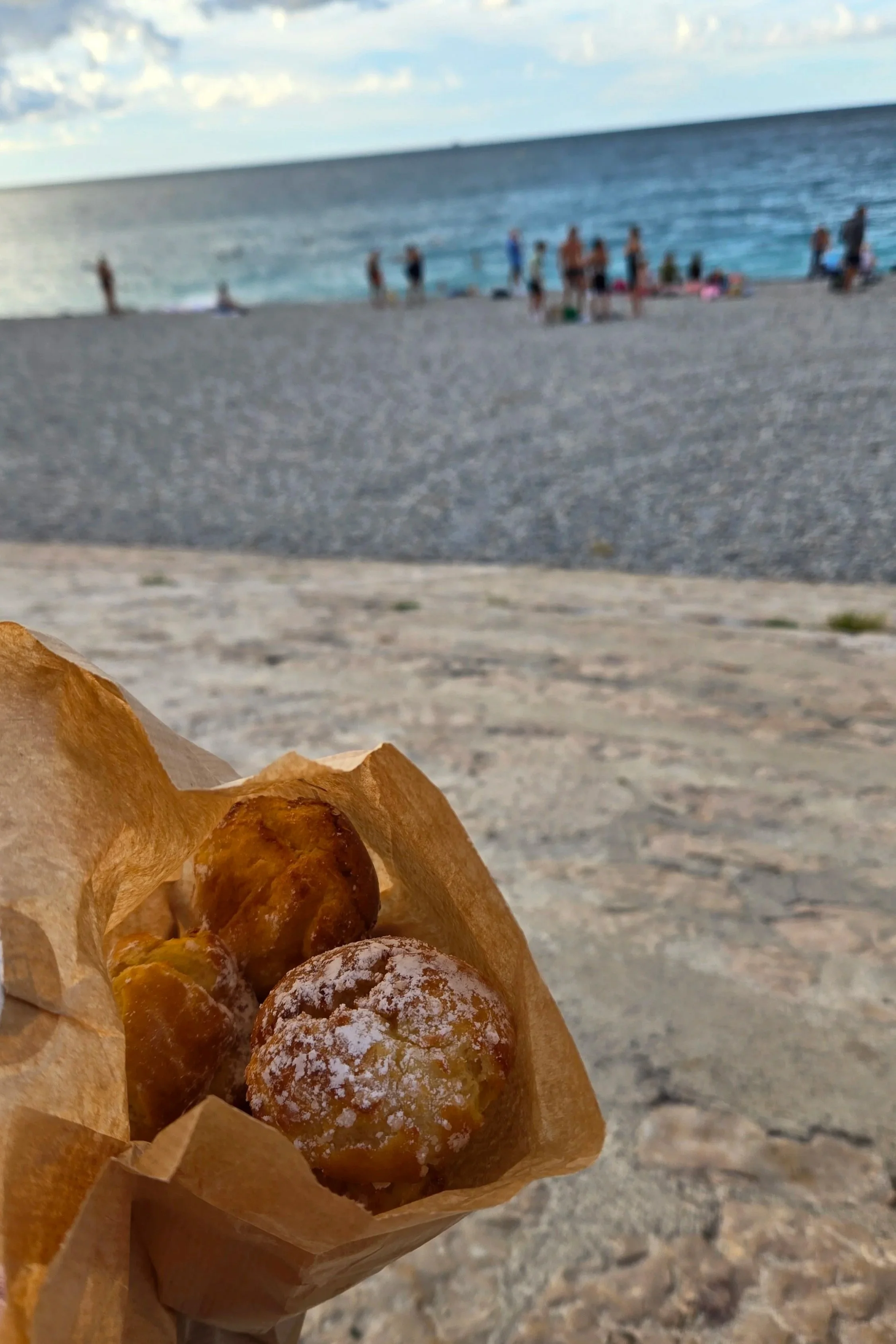
At Marinette, I bought chouquettes and an iced latte, then carried the little brown paper bag toward the sea.
Nice was still stretching awake.
A few people were already swimming in the Mediterranean while I sat above them eating chouquettes, tiny airy puffs covered in crunchy sugar that are apparently considered breakfast food in France and therefore need no further justification.
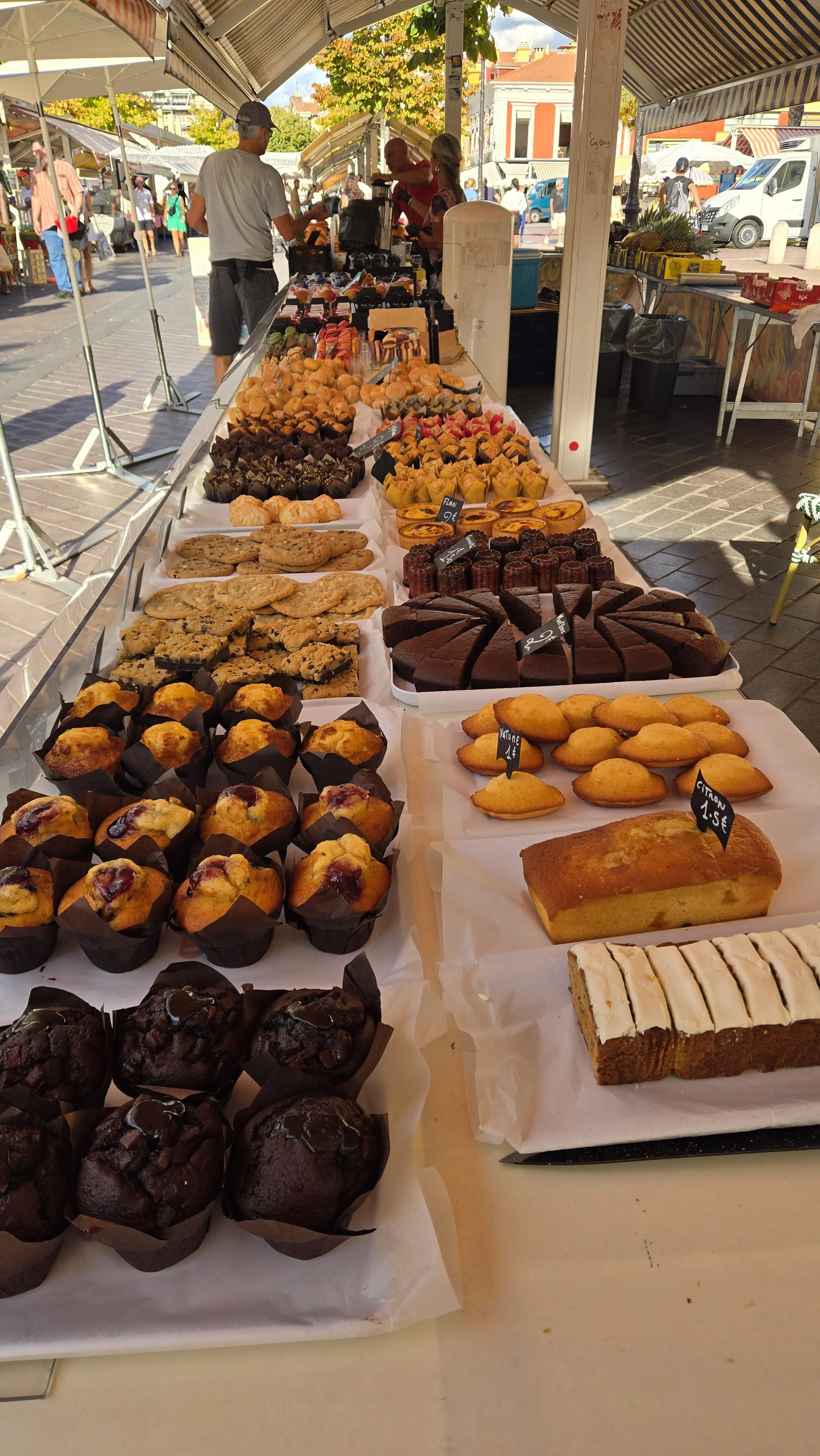
Then I walked into Cours Saleya. Oh my.
Flowers exploded from buckets. Herbs and spices crowded the tables. Tomatoes glowed red, orange and yellow. Eggplants were glossy purple. Zucchini came in sizes I rarely see at home.
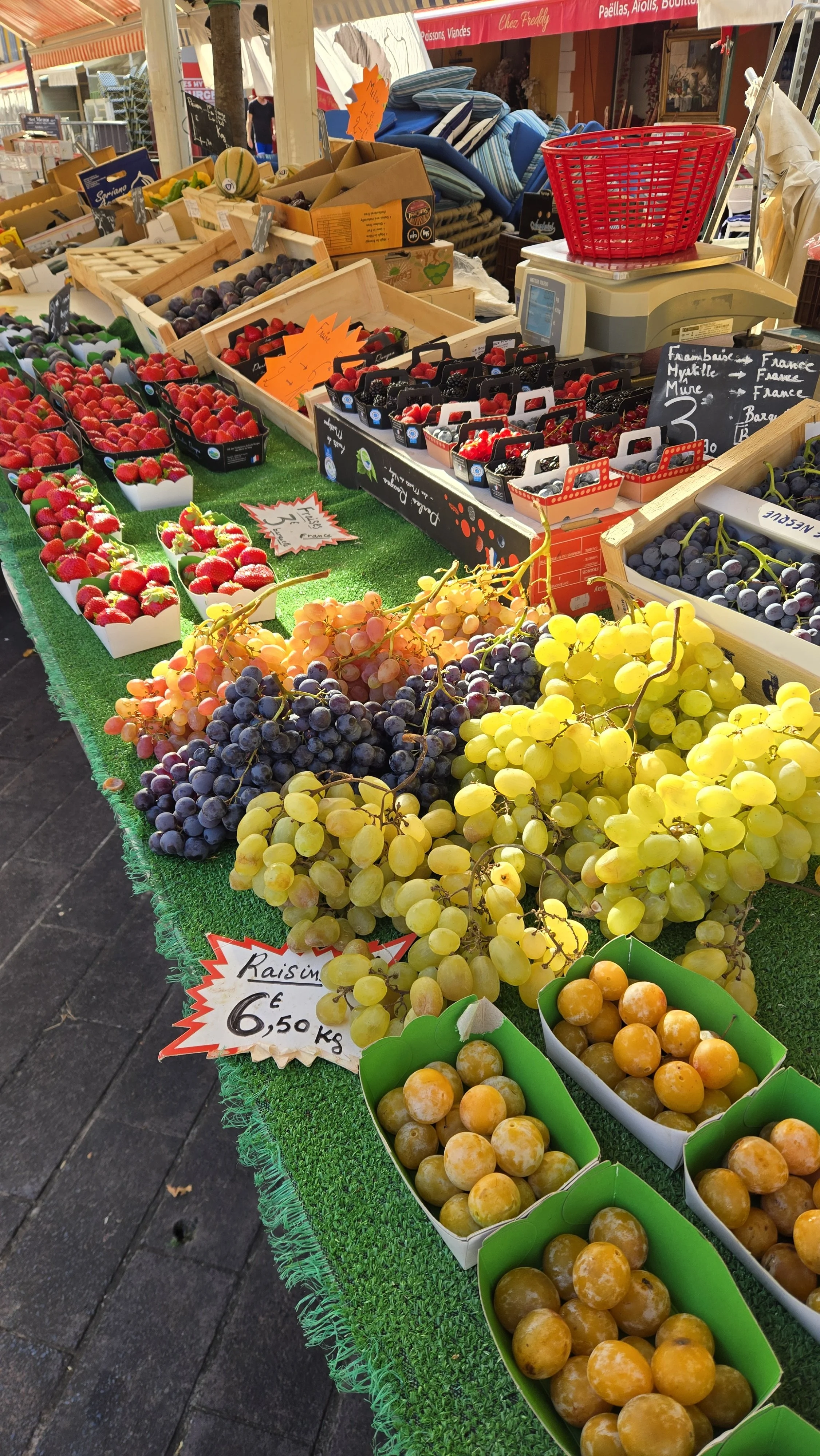
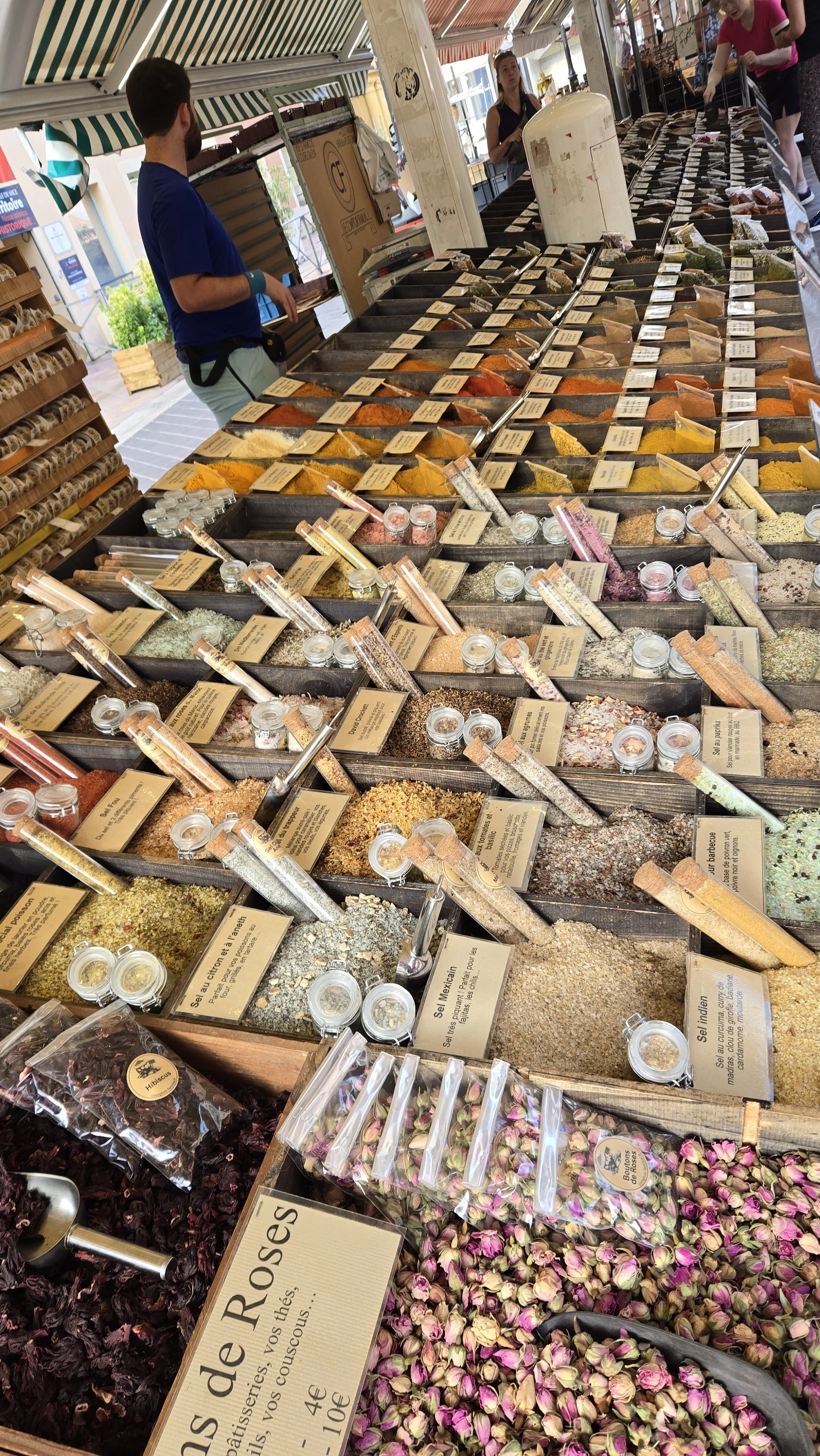
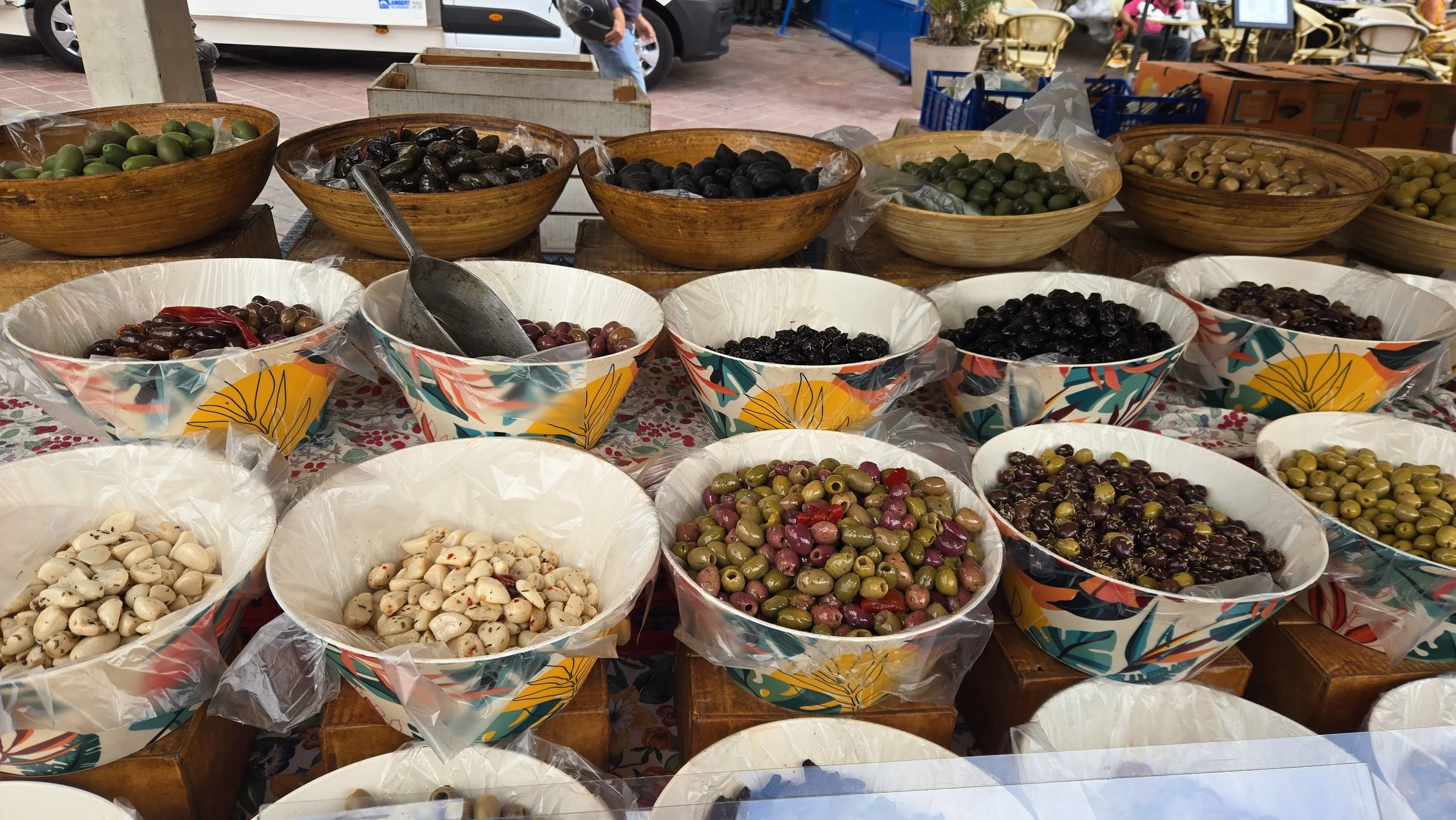
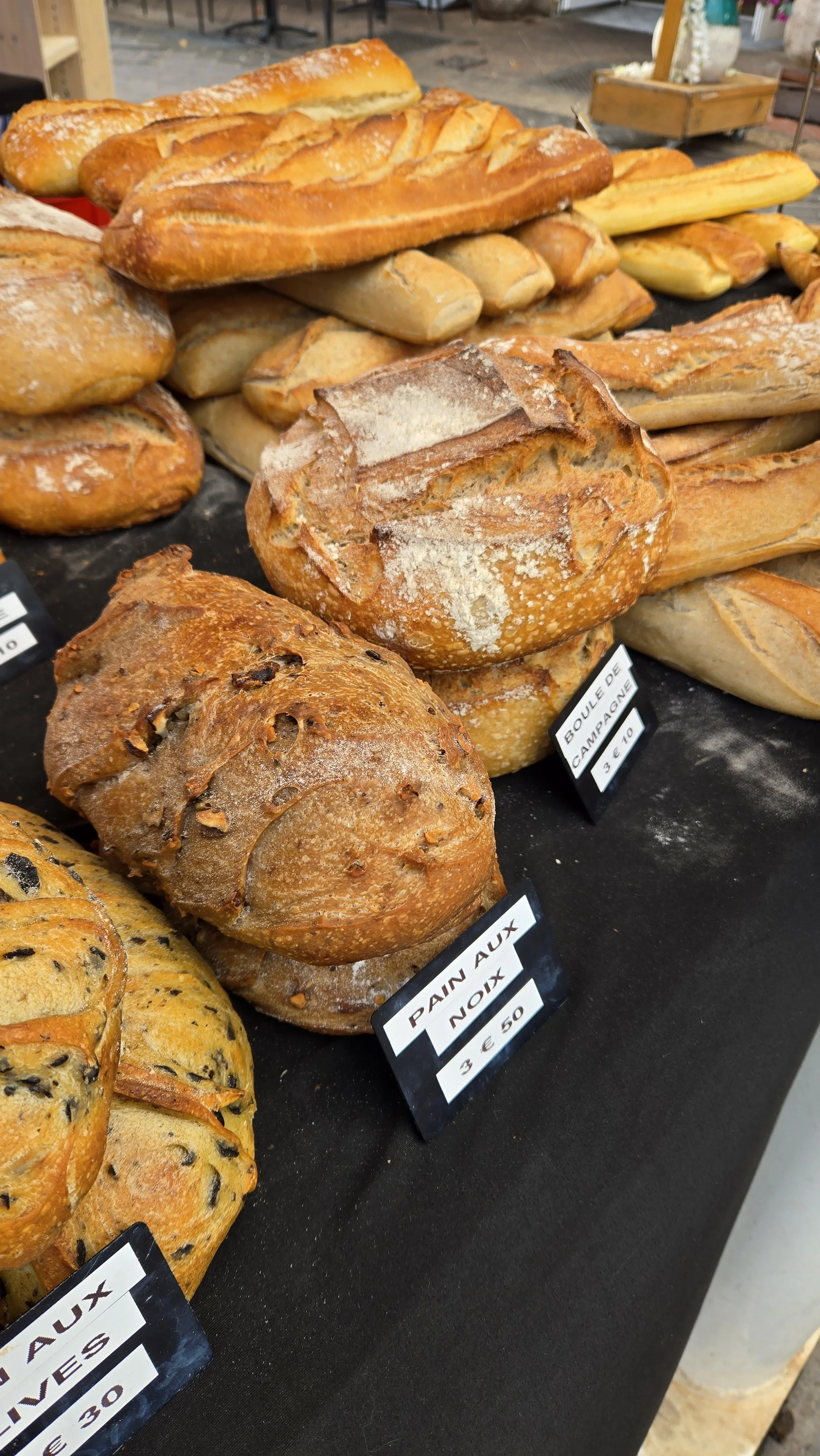
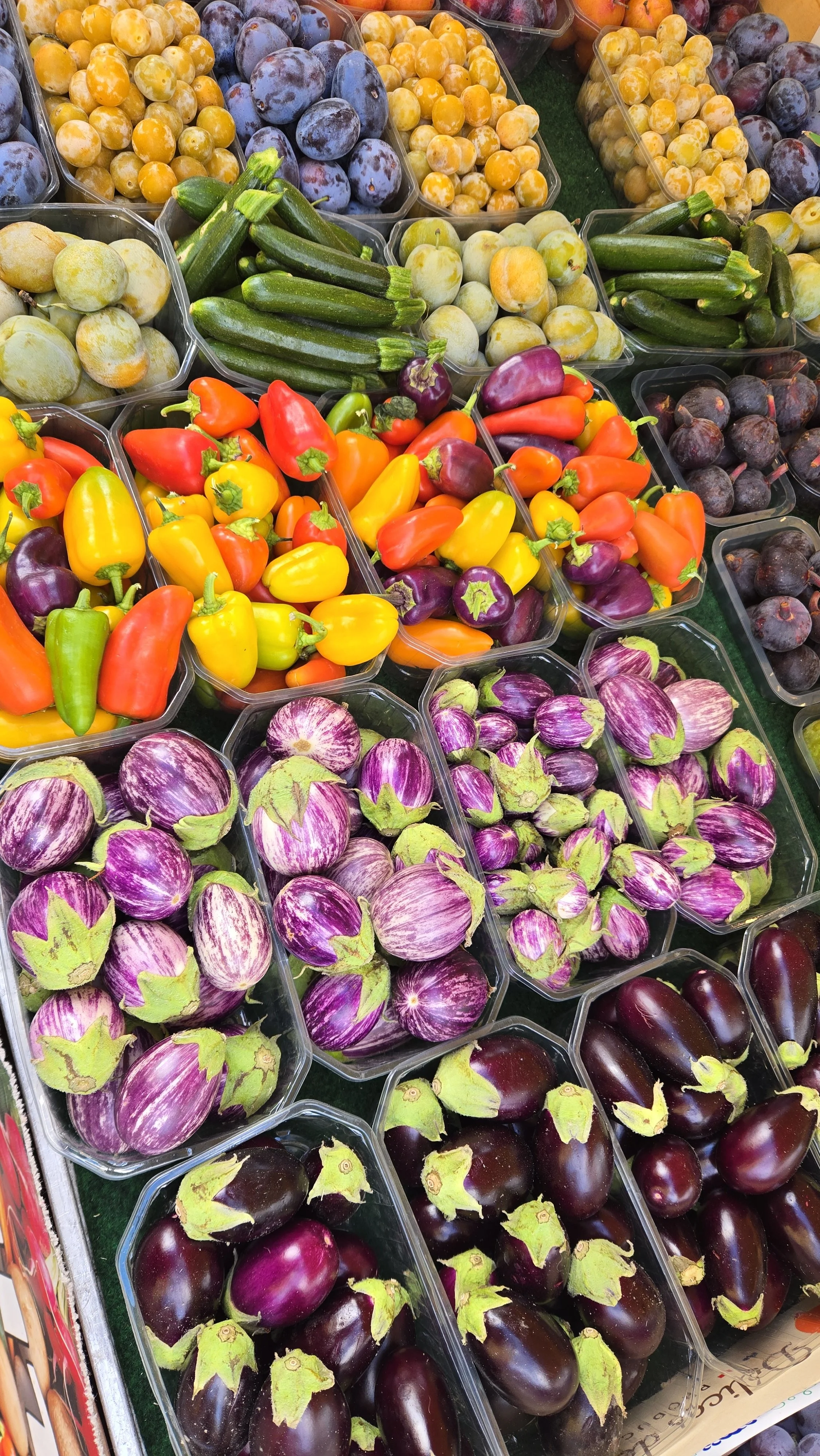
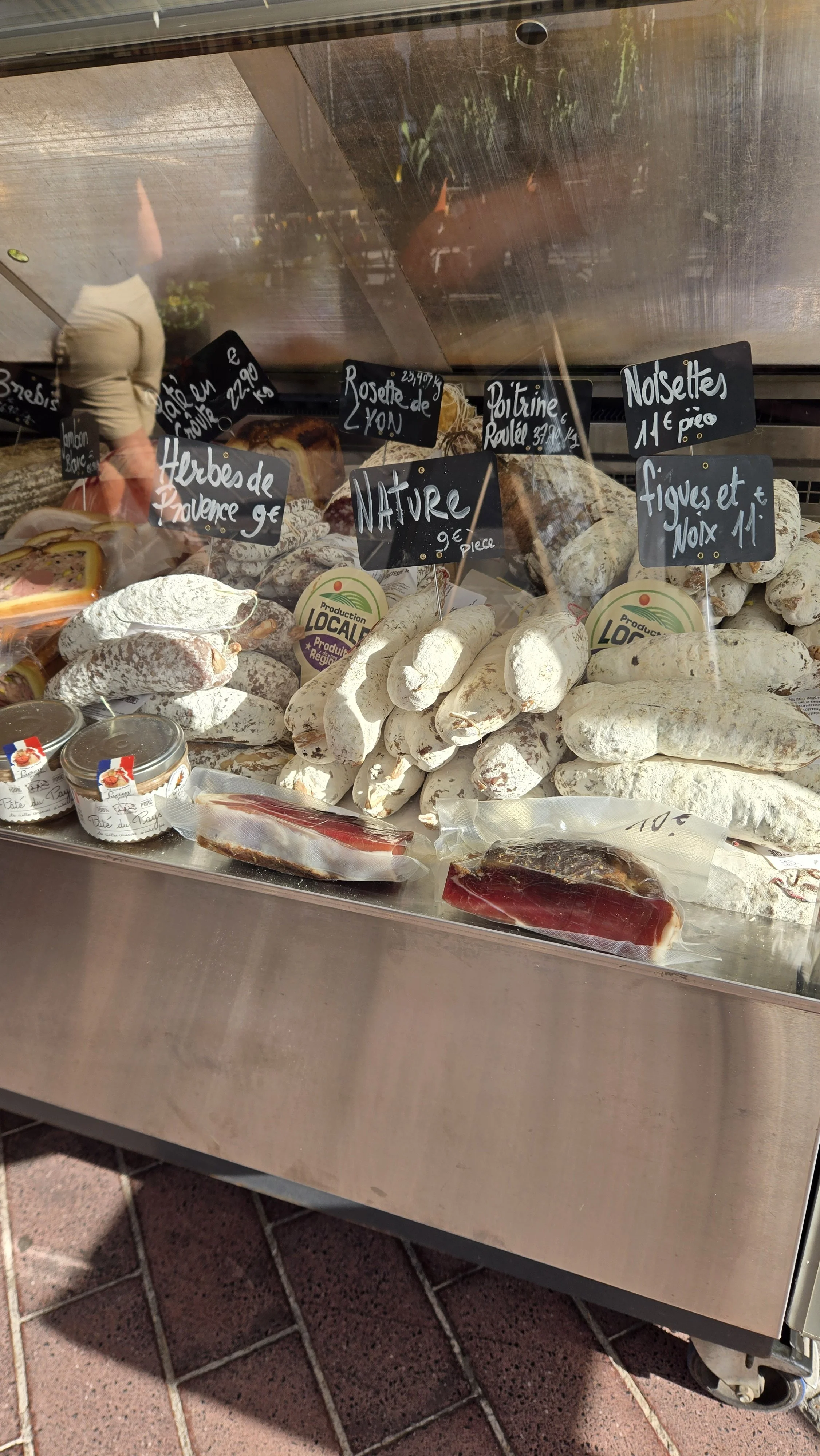
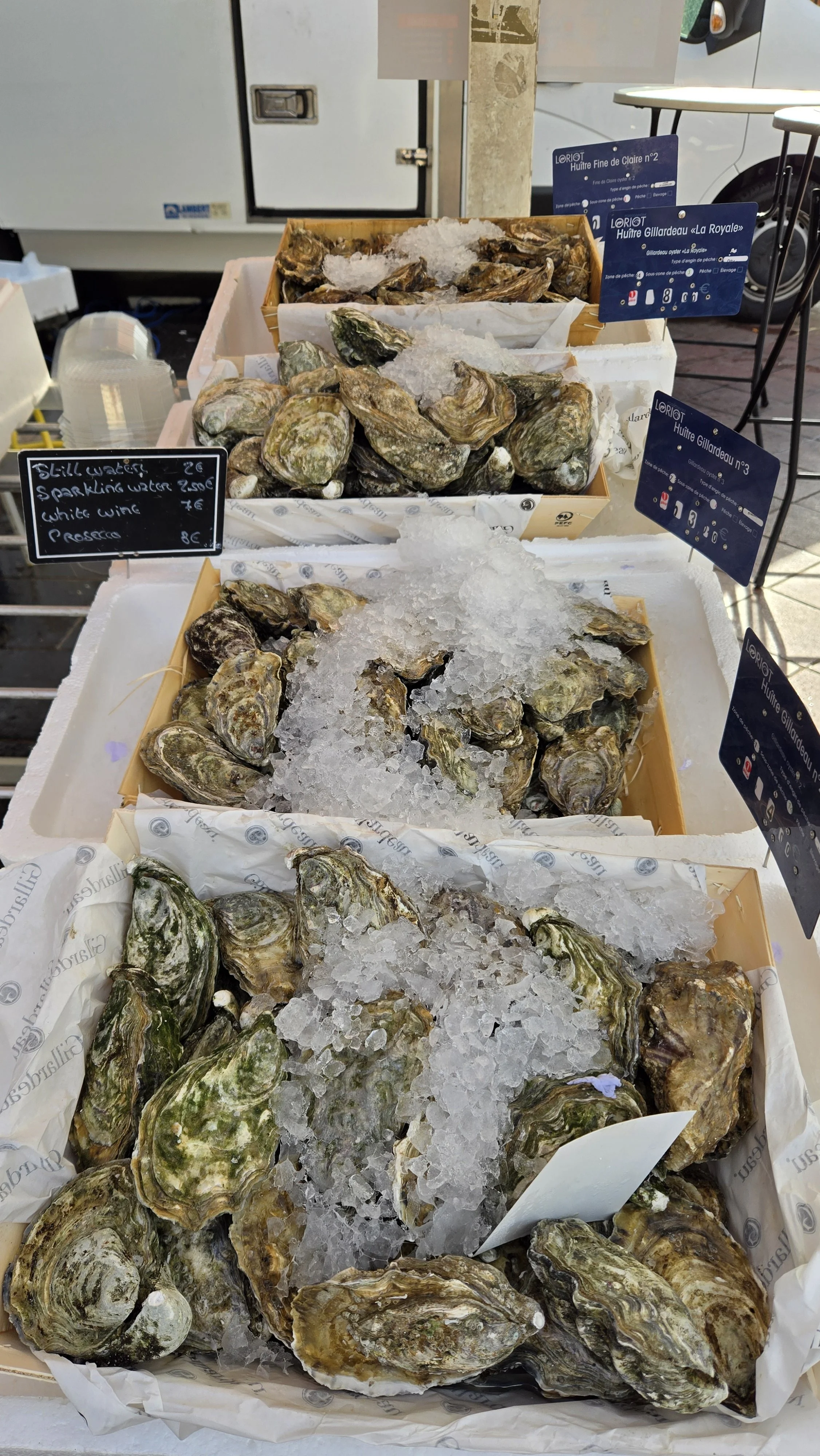
And then there was the fruit. So many plums. Yellow mirabelles. Green reine-claudes. Dark familiar-looking ones. Fresh prunes. And figs everywhere.
Obviously I bought a sampling. For science.
Later, back at the hotel, I cut them open one by one.
The mirabelle was sweet and floral but slightly mealy. The reine-claude practically burst. The darker plum tasted more like home. The fresh prune was somehow my least favorite. Maybe better dried.
But first, Castle Hill.
I wanted to get up there before the heat and the forecast thunderstorms arrived, so I climbed through the greenery above the old city.
Remnants of another Nice lay up there, pieces of old stone and history folded into a public park.
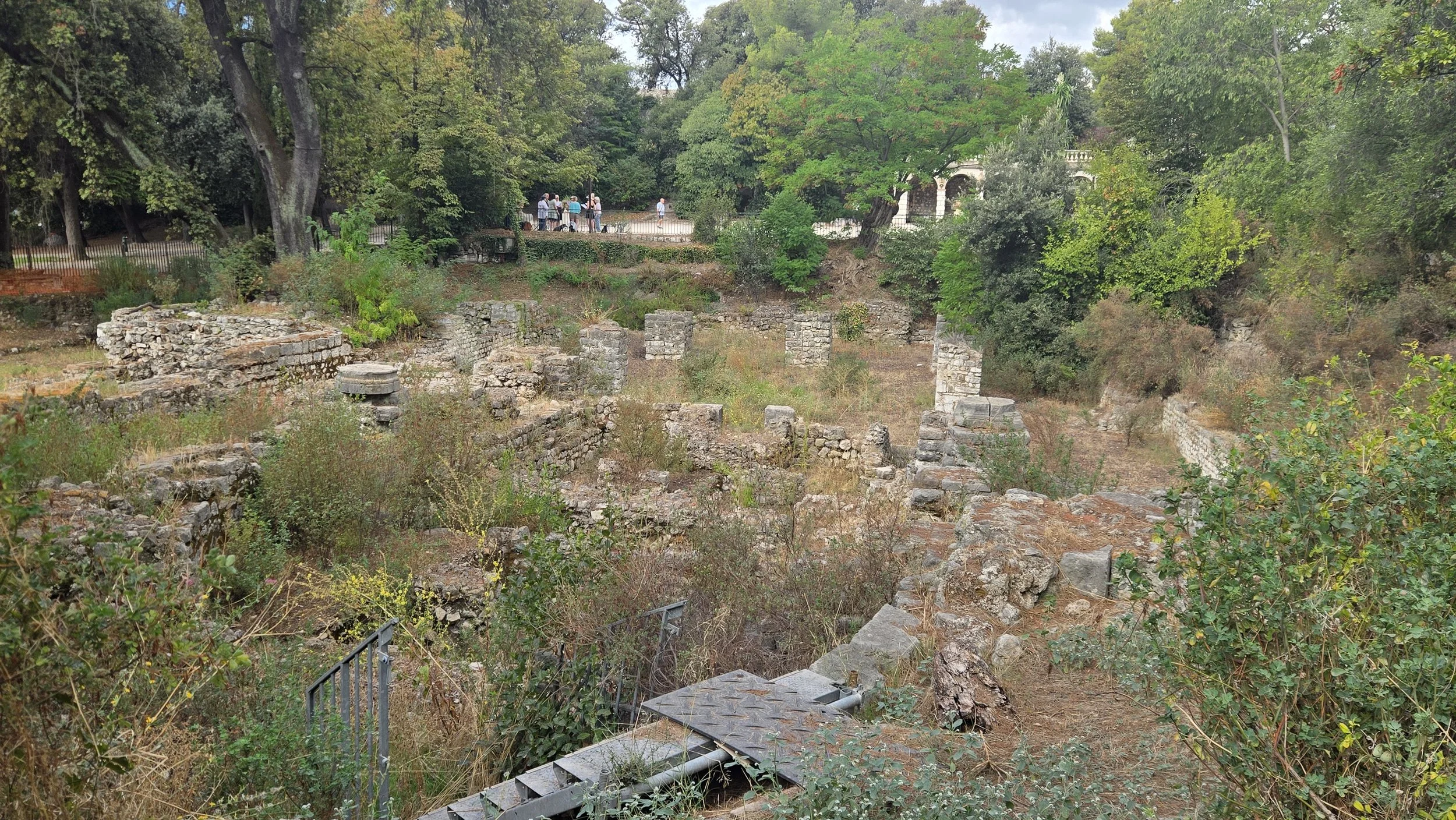
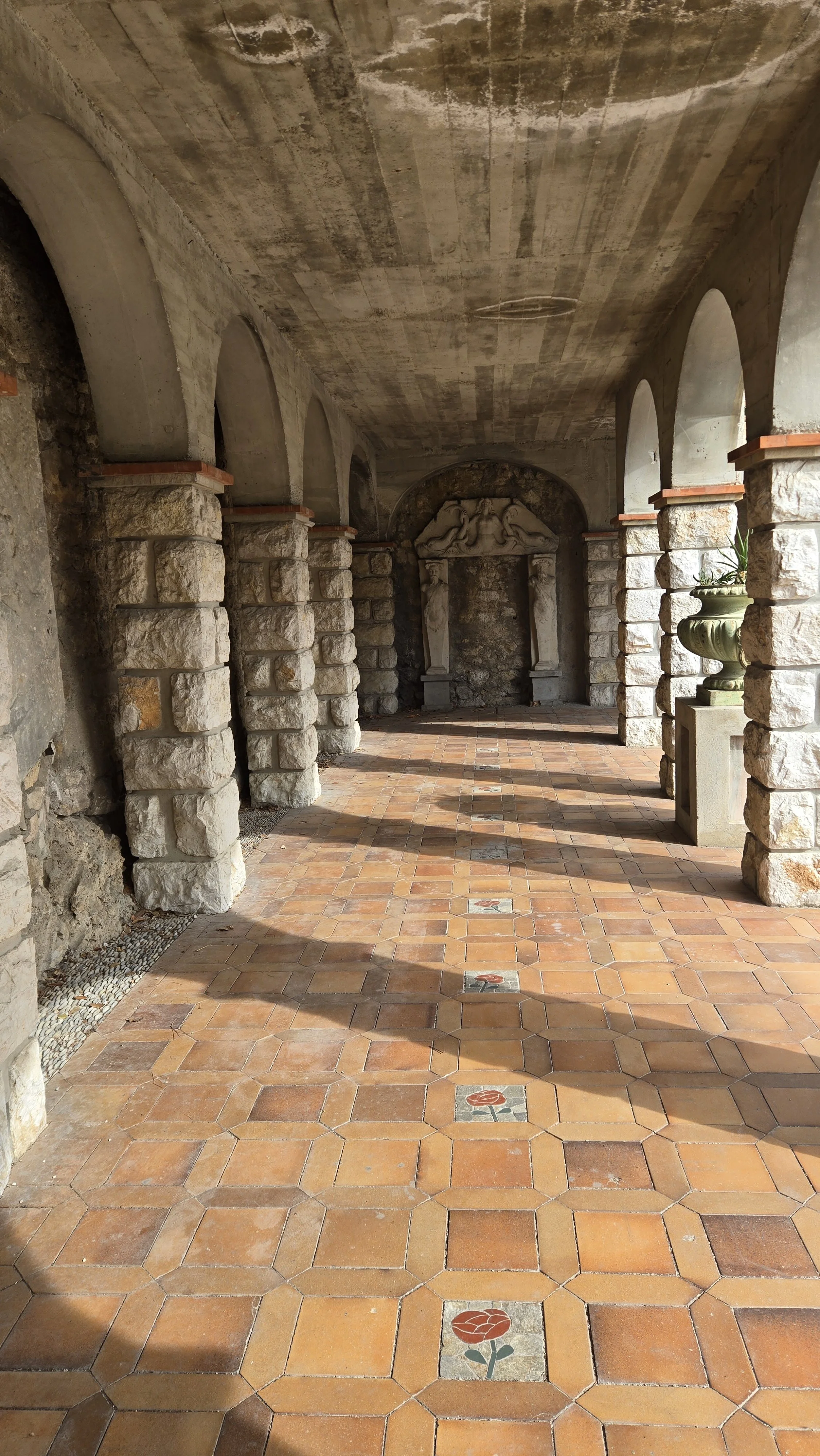
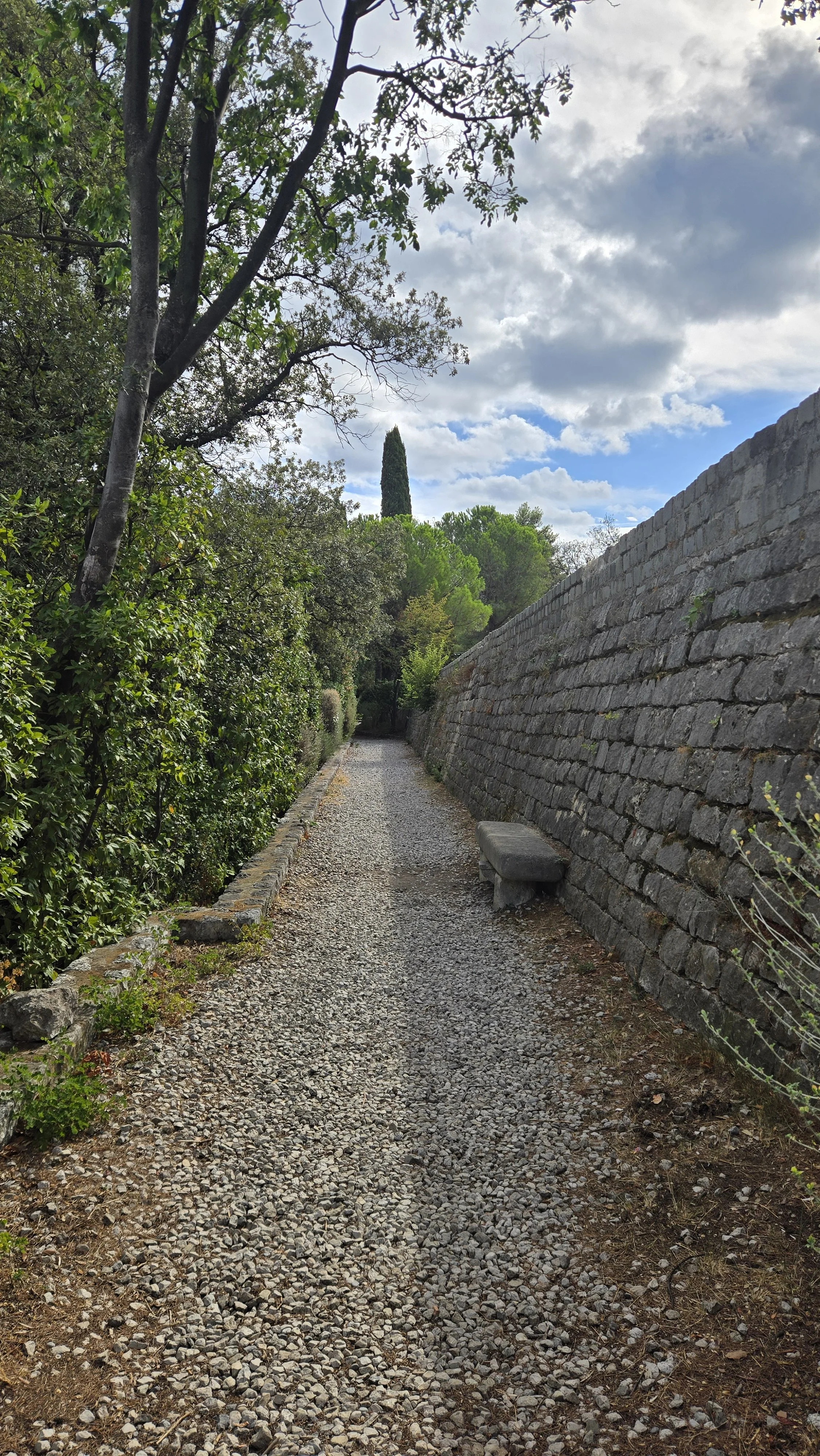
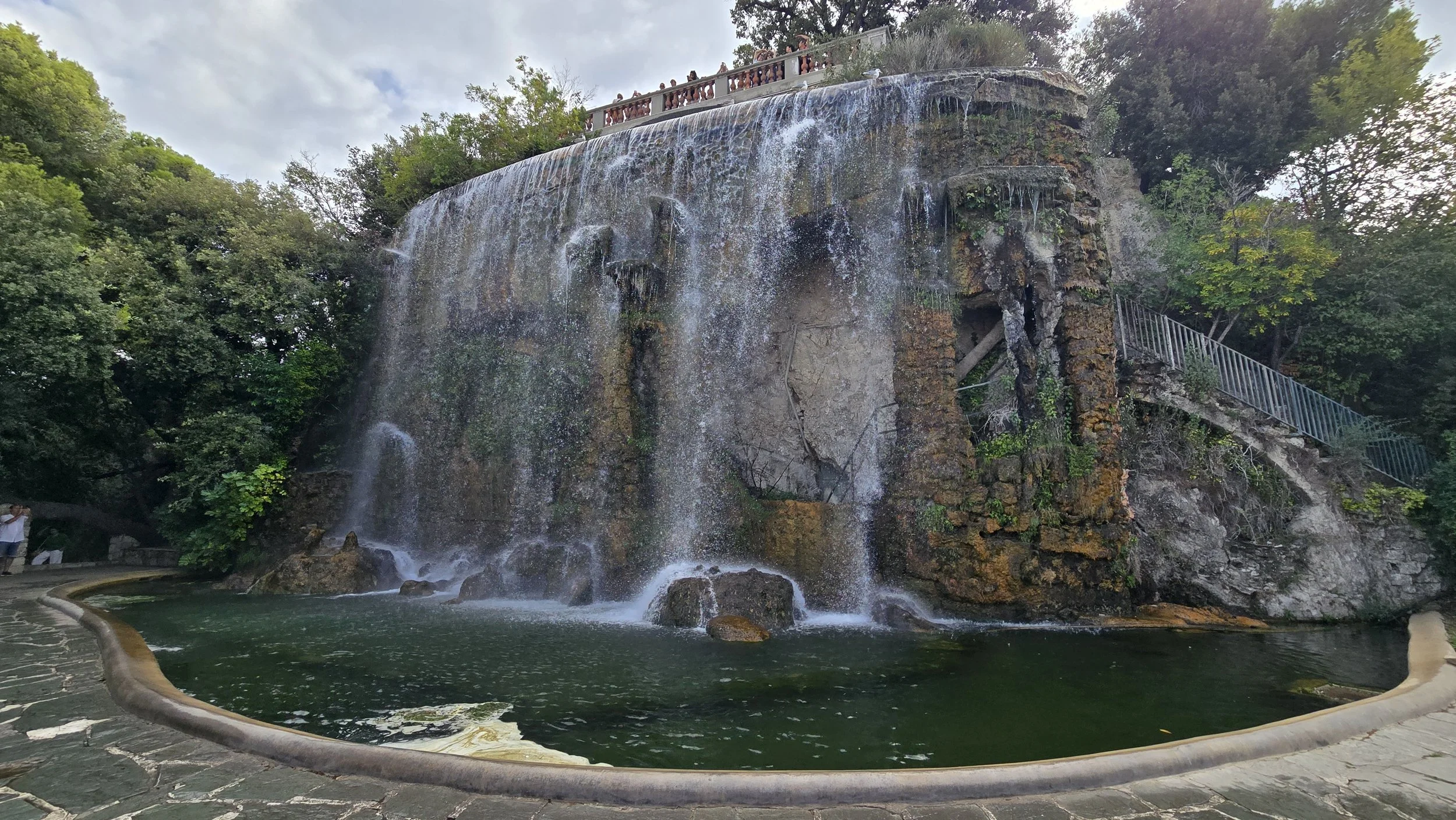
And then the trees opened. Nice curved below me, terracotta roofs pressed between hills and sea, the Promenade tracing the coastline, and the Mediterranean running to the horizon in blue.
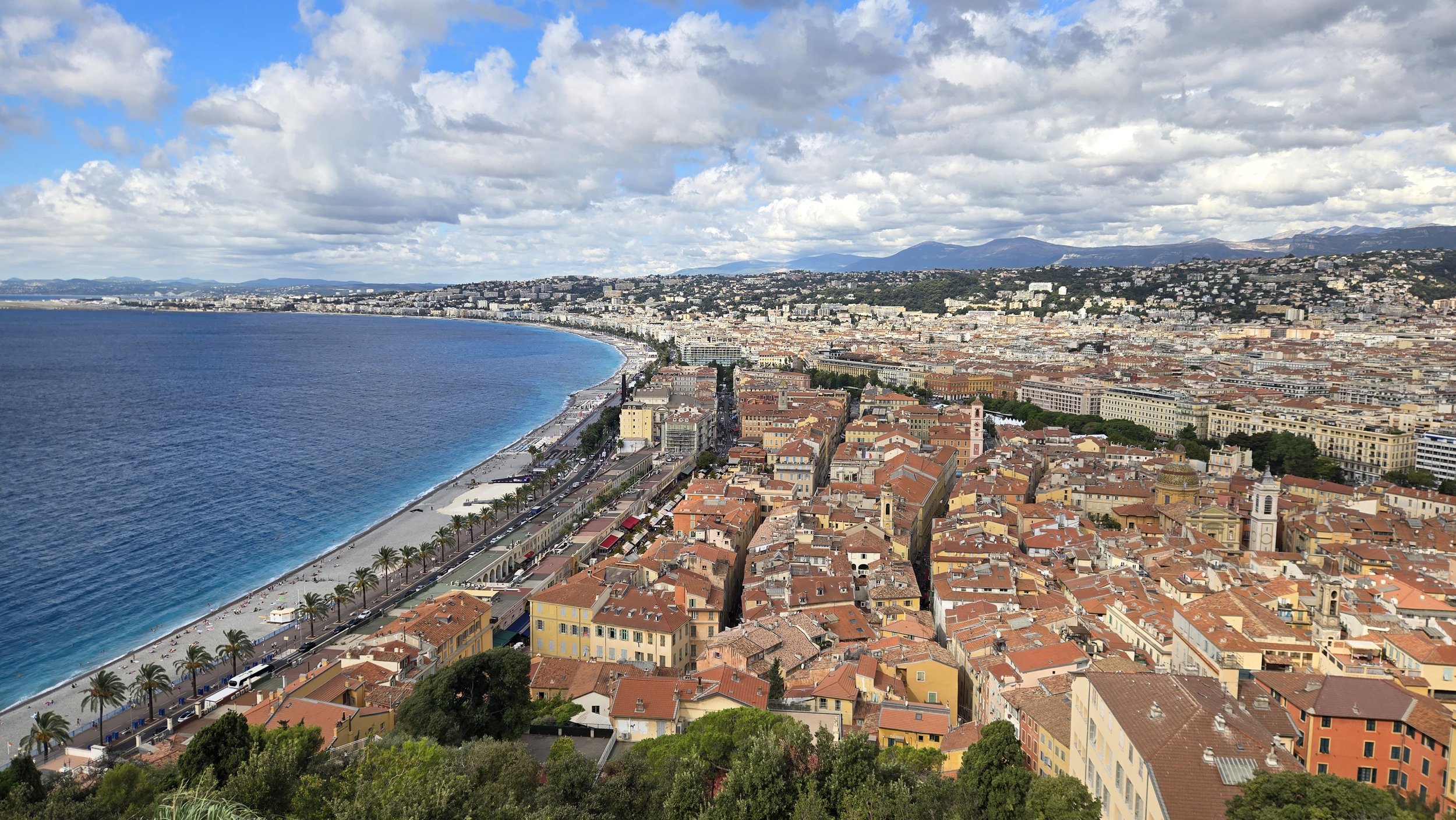
That view earned the climb.
Coming down may have been even better.
Google Maps sent me through back streets, alleys, and hidden staircases I never would have chosen myself. Thank you, Google Maps, for the charming route.
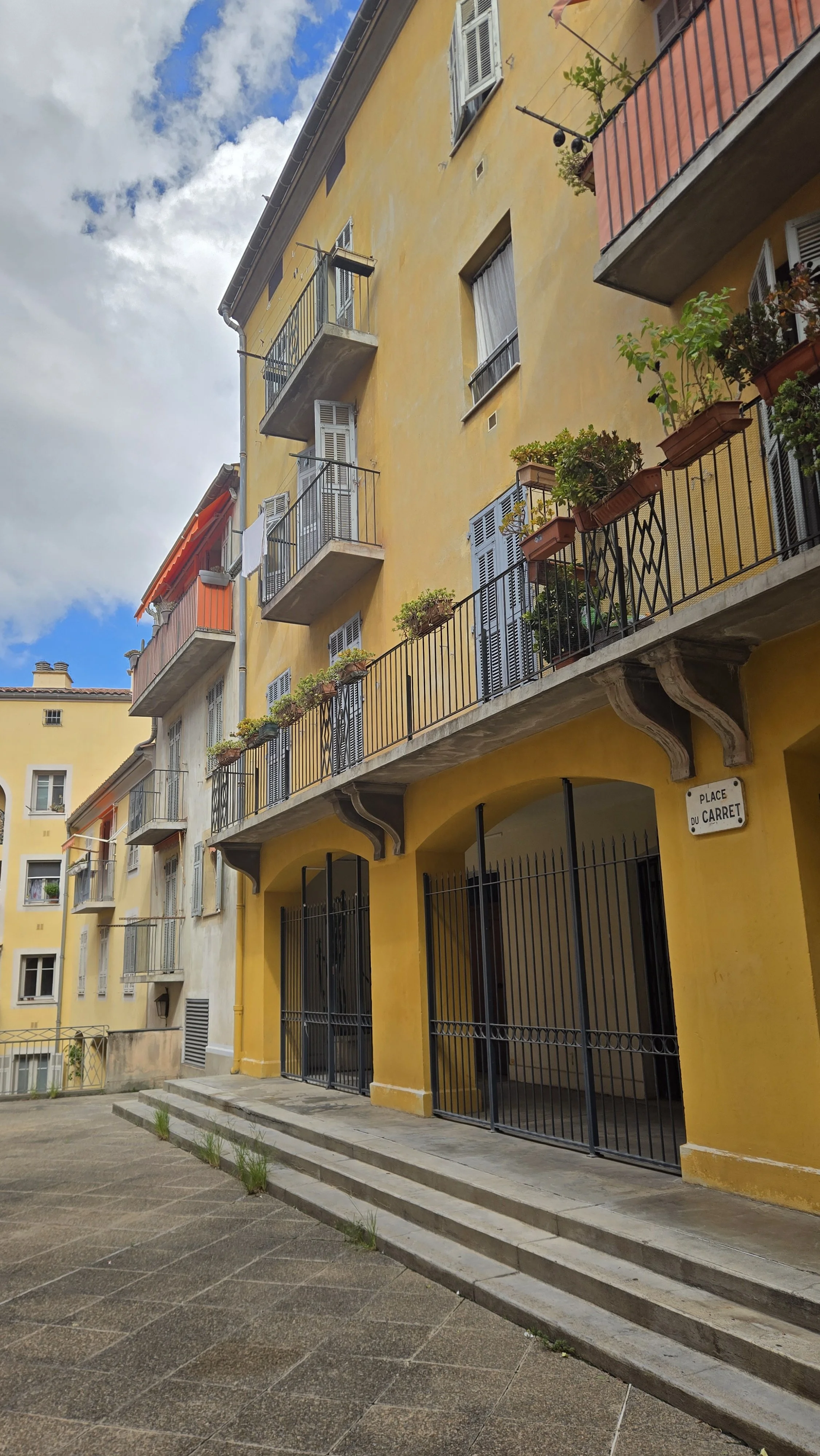
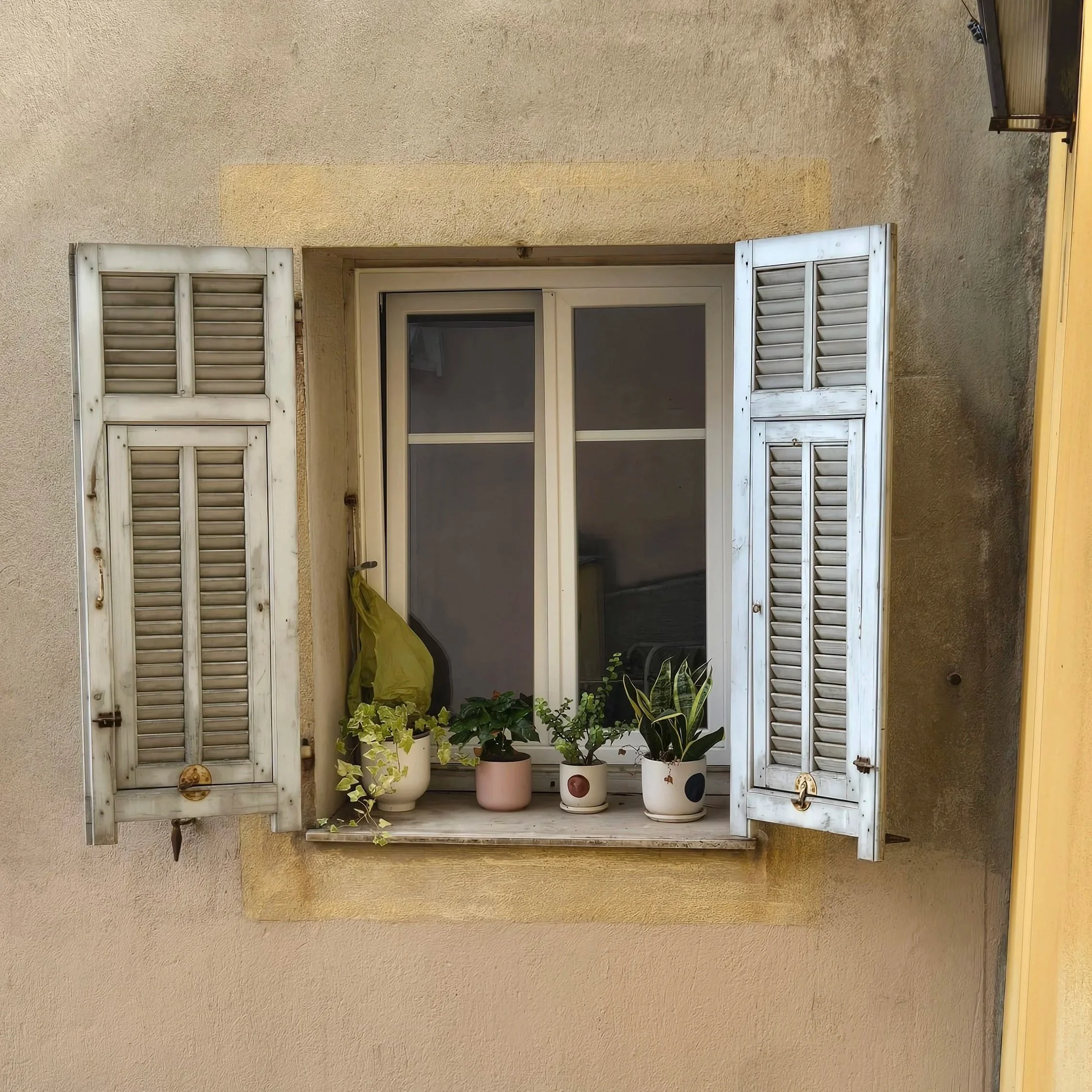
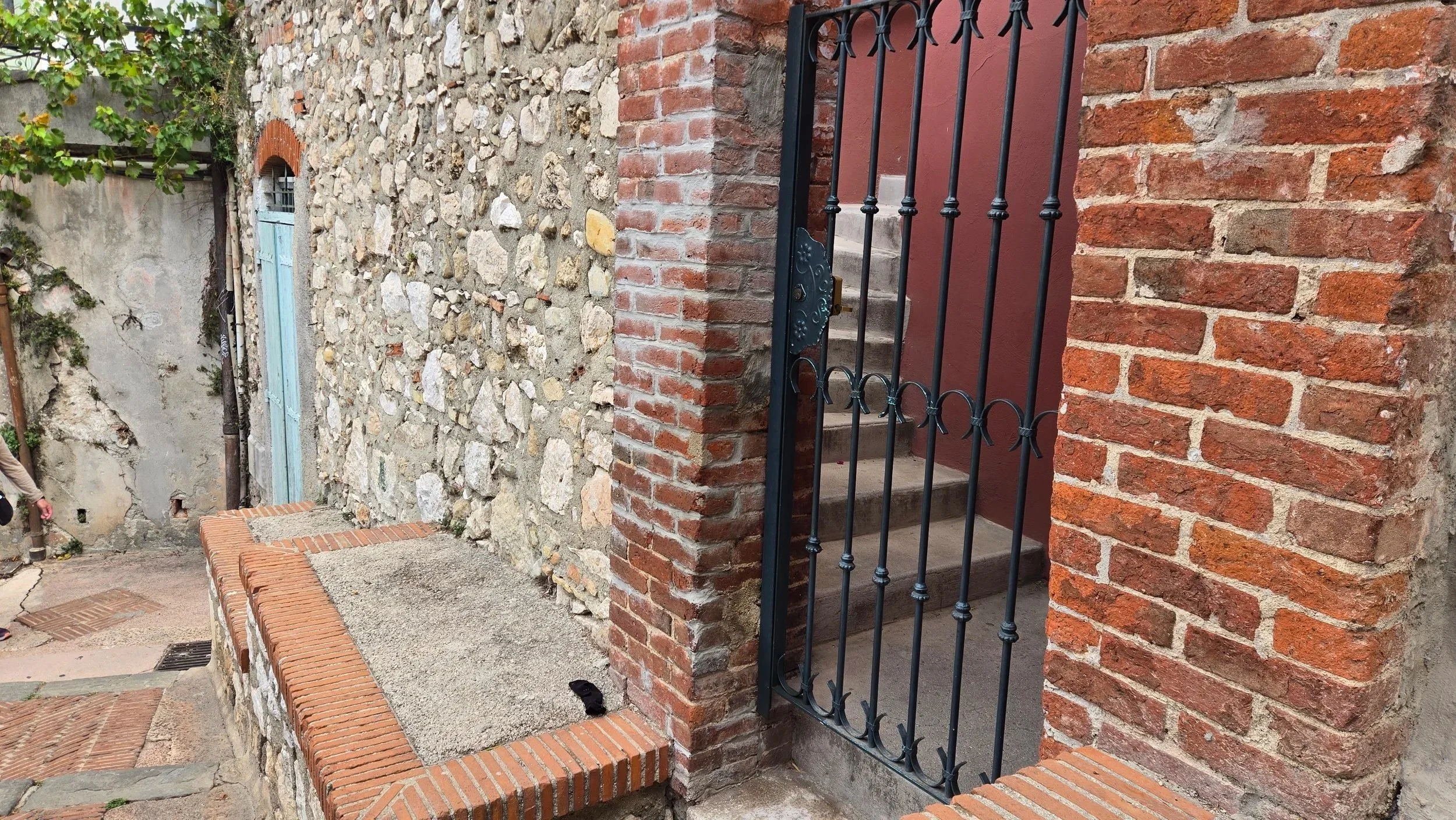
I emerged near Rue de la Préfecture, bought a bottle of local Bellet wine and picked up chocolates and macarons for later. Provisioned.
Then came lunch.
I had already spent the previous afternoon dutifully eating Niçoise specialties, so instead of continuing to check local dishes off a list, I made what turned out to be a perfect pivot.
Oysters. A platter of them at Café de Turin, white wine beside me, people packed into tables around me.
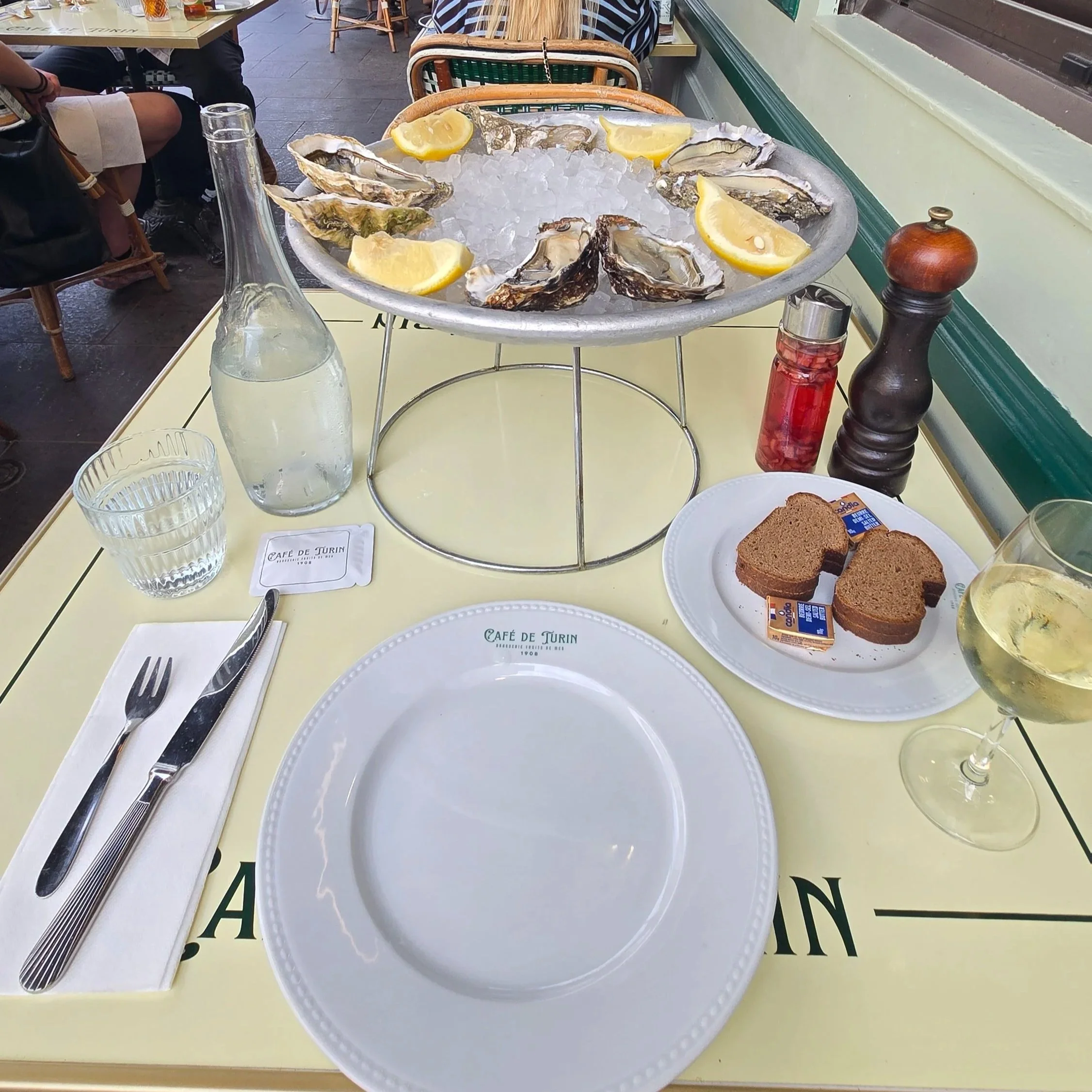
I tasted them against each other with absurd seriousness.
Mineral. Sweet. Yeasty. Fruity. Sea. Earth.
This was important research.
Then I went to Fenocchio for one scoop of calisson gelato.
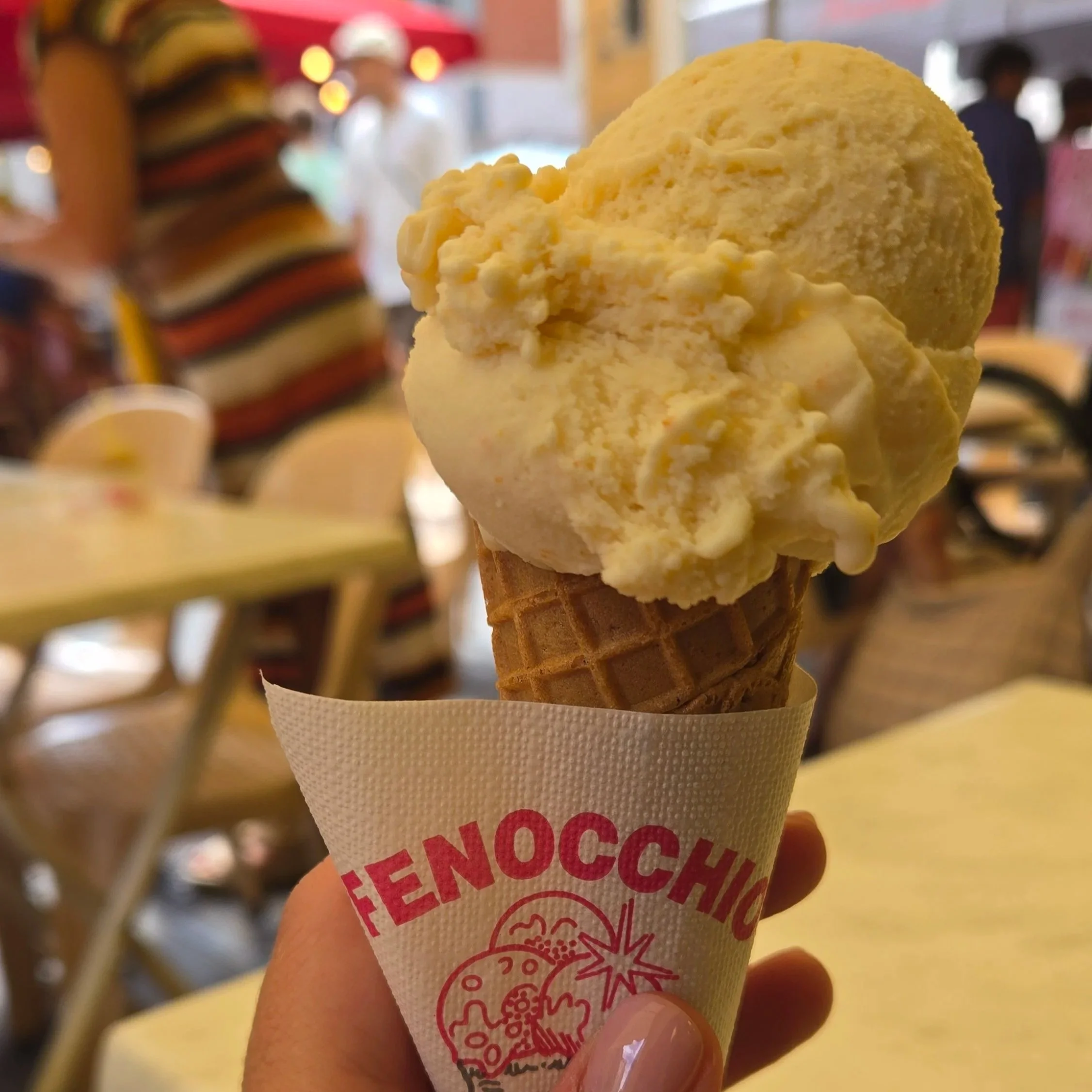
Oysters and almond-candy ice cream. Vacation nutrition is complicated.
Later that afternoon I sat outside with a limoncello spritz and wrote in my journal that I wanted to simply watch France happen.
So I did. People walked home carrying bags. Scooters threaded through narrow streets. Tables filled. Nobody needed anything from me.
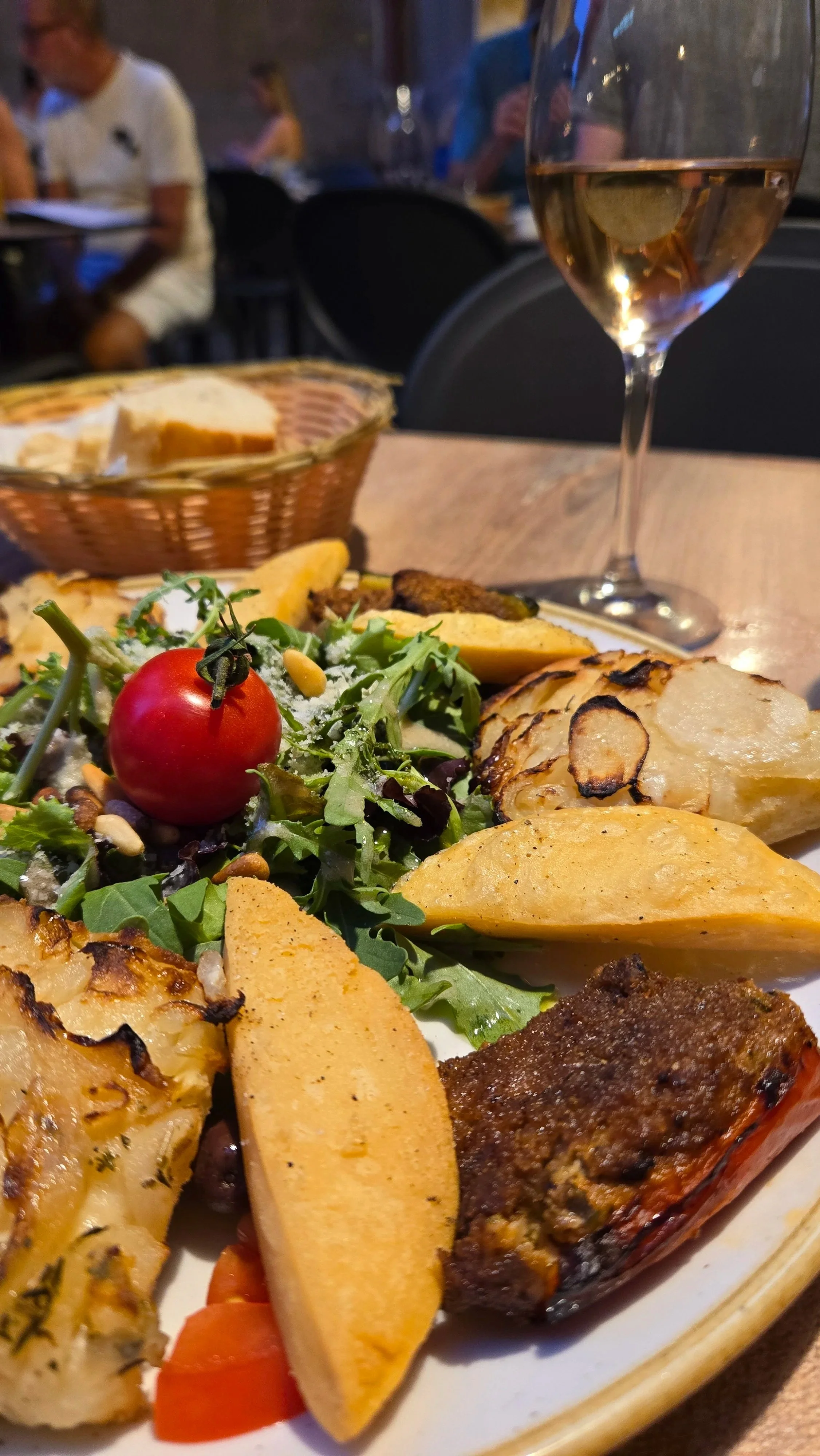
Dinner that night was outside as the sky deepened into blue. I ordered a trio of Niçoise classics and house rosé, and church bells began ringing somewhere nearby.
Rich stuffed vegetables. Sweet-savory onion tart. Something crisp and salty. A bright little salad cutting through all of it. Nothing tasted remotely like anything else on the plate. All of it tasted like Nice.
Then I went upstairs. Bellet. Macaron. Movie.
Windows open.
Obviously.
The Day I Stopped Checking the Map
On my final full day, I deliberately did almost nothing first thing.
I ordered room-service breakfast for eight and ate slowly beside the open windows while the square came to life below me.
I didn’t leave until after ten. That alone felt slightly rebellious.
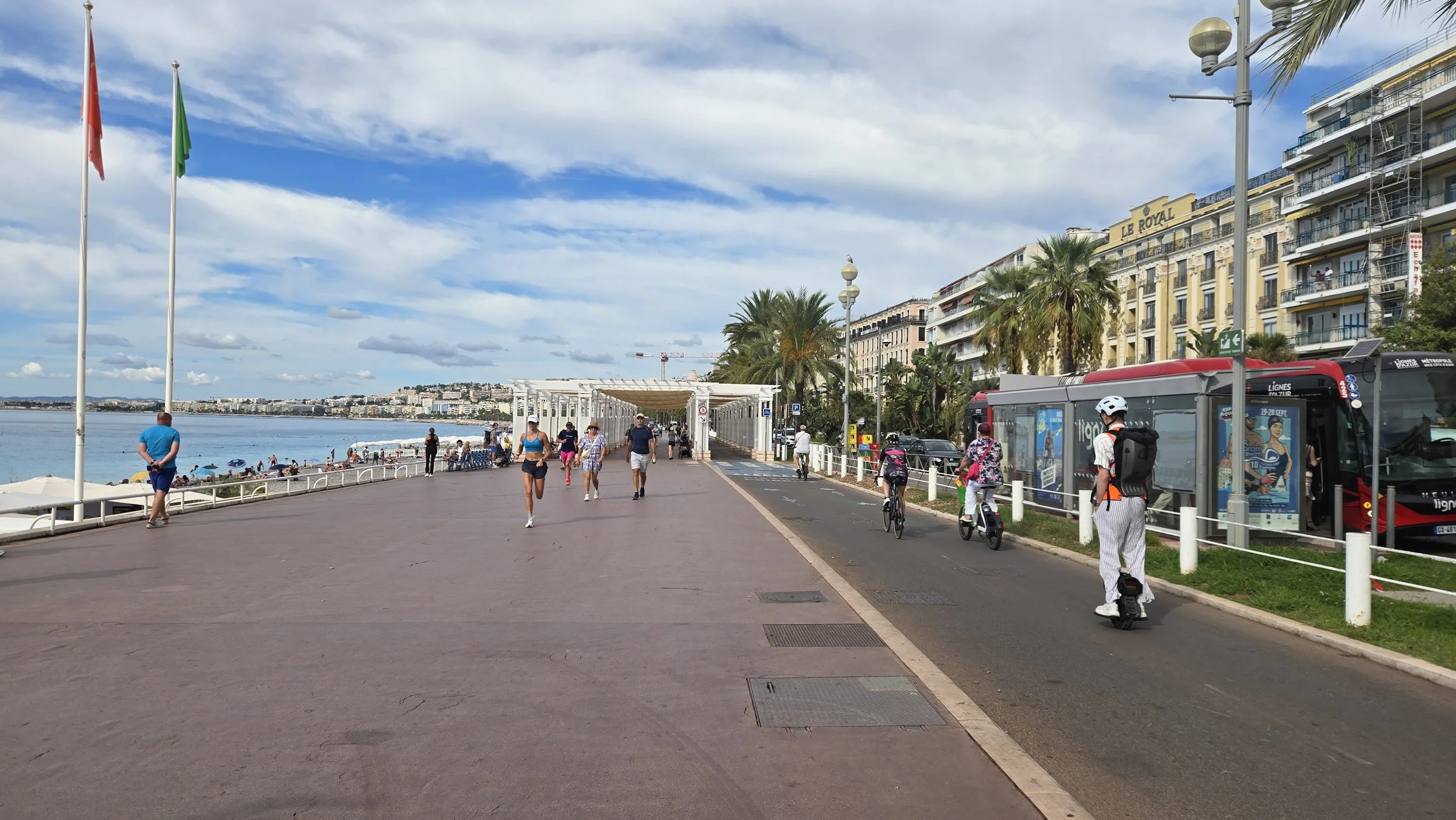
The Promenade des Anglais was a complete mess.
Nice was getting ready for the weekend’s Ironman, and barriers, equipment, workers, and crowds had taken over long stretches of the waterfront.
It was noisy. Congested. Mildly annoying.
I walked it anyway.
The sea was still right there beyond the chaos, glittering blue and entirely unconcerned with race logistics.
I cut away from the Promenade and wandered through the gardens at Villa Masséna, suddenly surrounded by palms, manicured green and Belle Époque Nice instead of barricades and athletic infrastructure.
Then back toward Place Masséna and the Fontaine du Soleil, the broad plaza opening dramatically after the compressed streets of Old Nice.
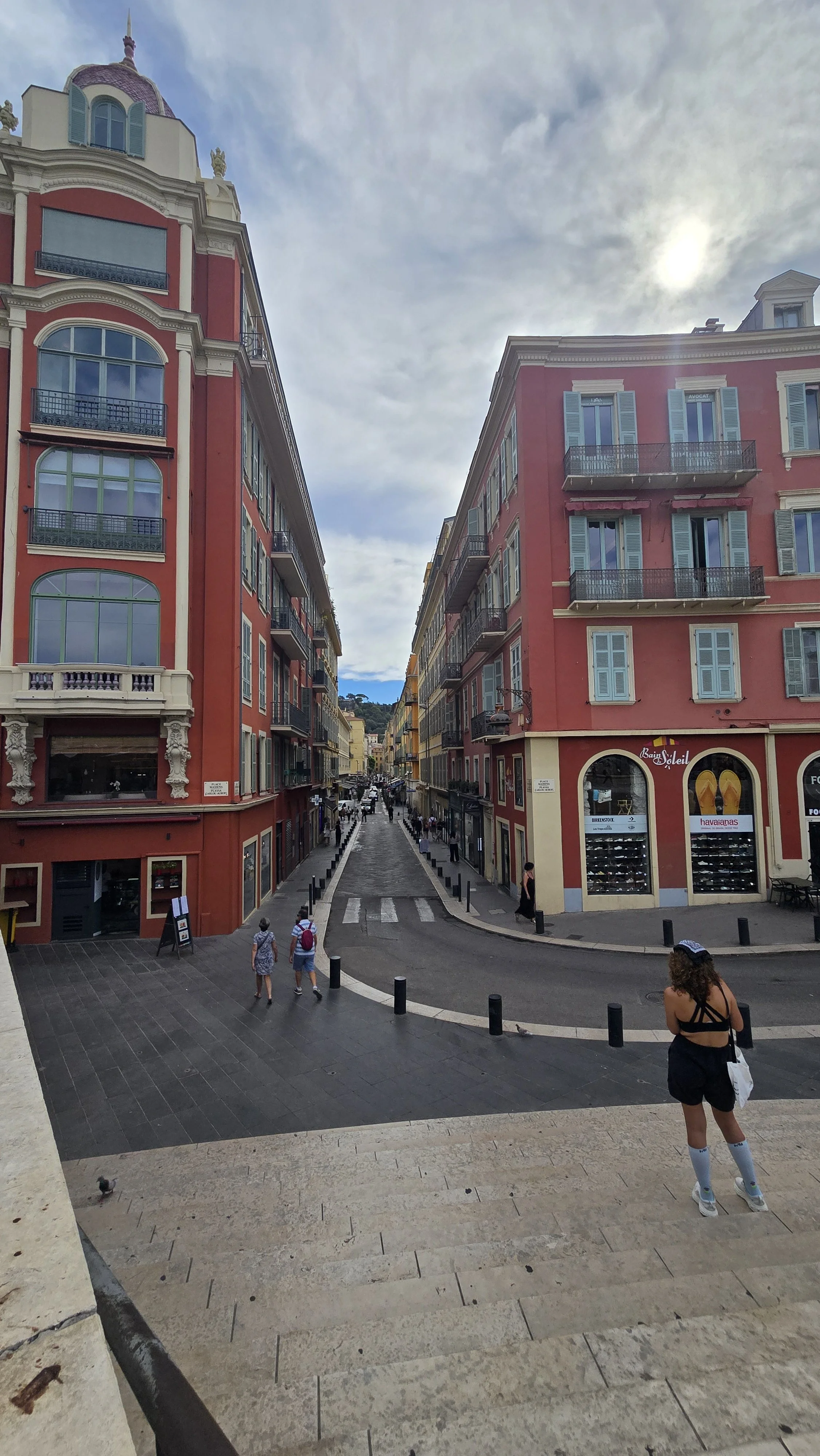
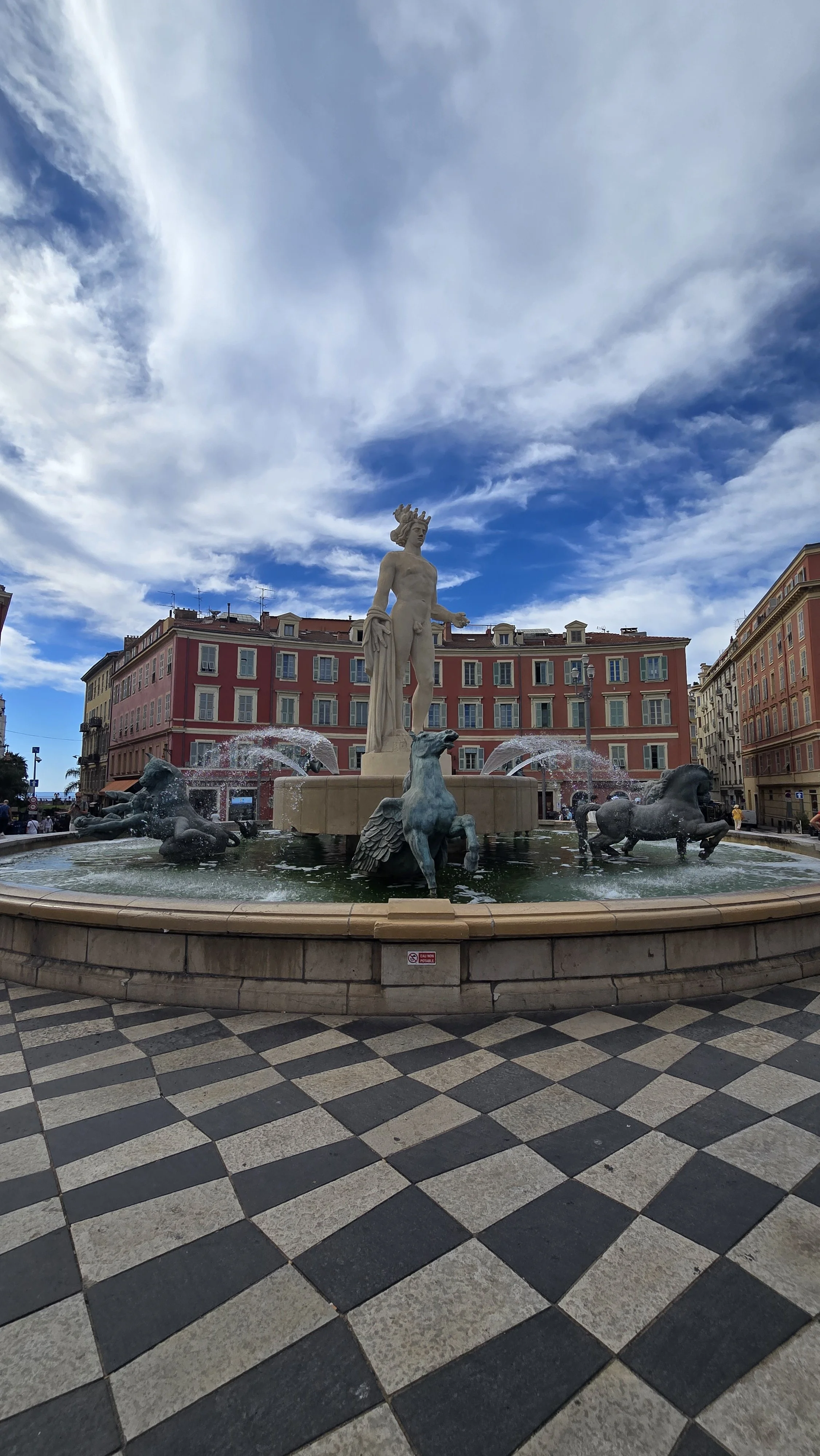
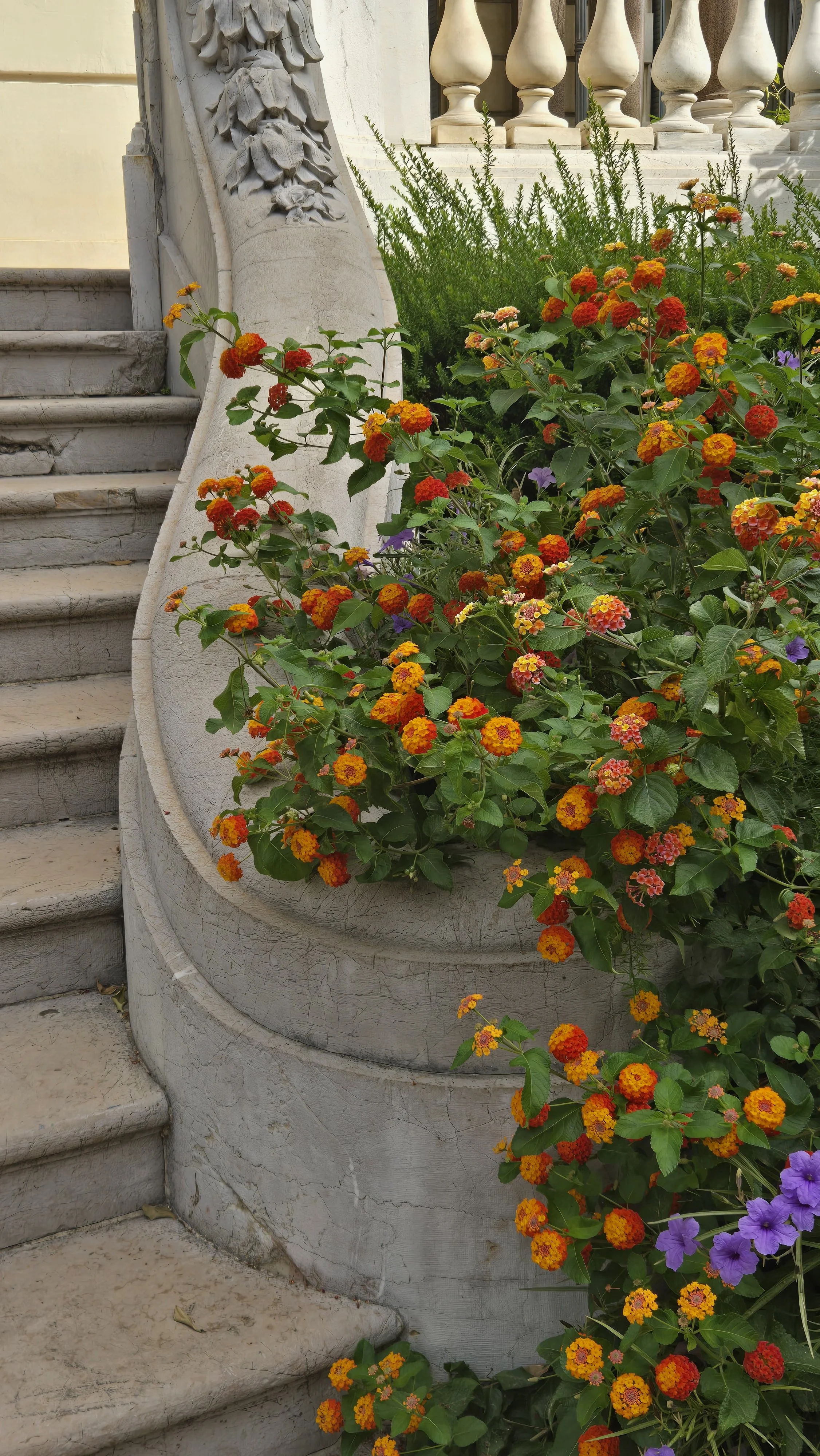
Nice kept doing that.
Tight alley.
Open square.
Ancient church.
Palm tree.
Old stone.
Mediterranean.
Modern city.
Back into another alley.
By lunch, I was at Peixes with scallop ceviche, little potatoes with wasabi cream, lime meringue, and a rosé spritz.
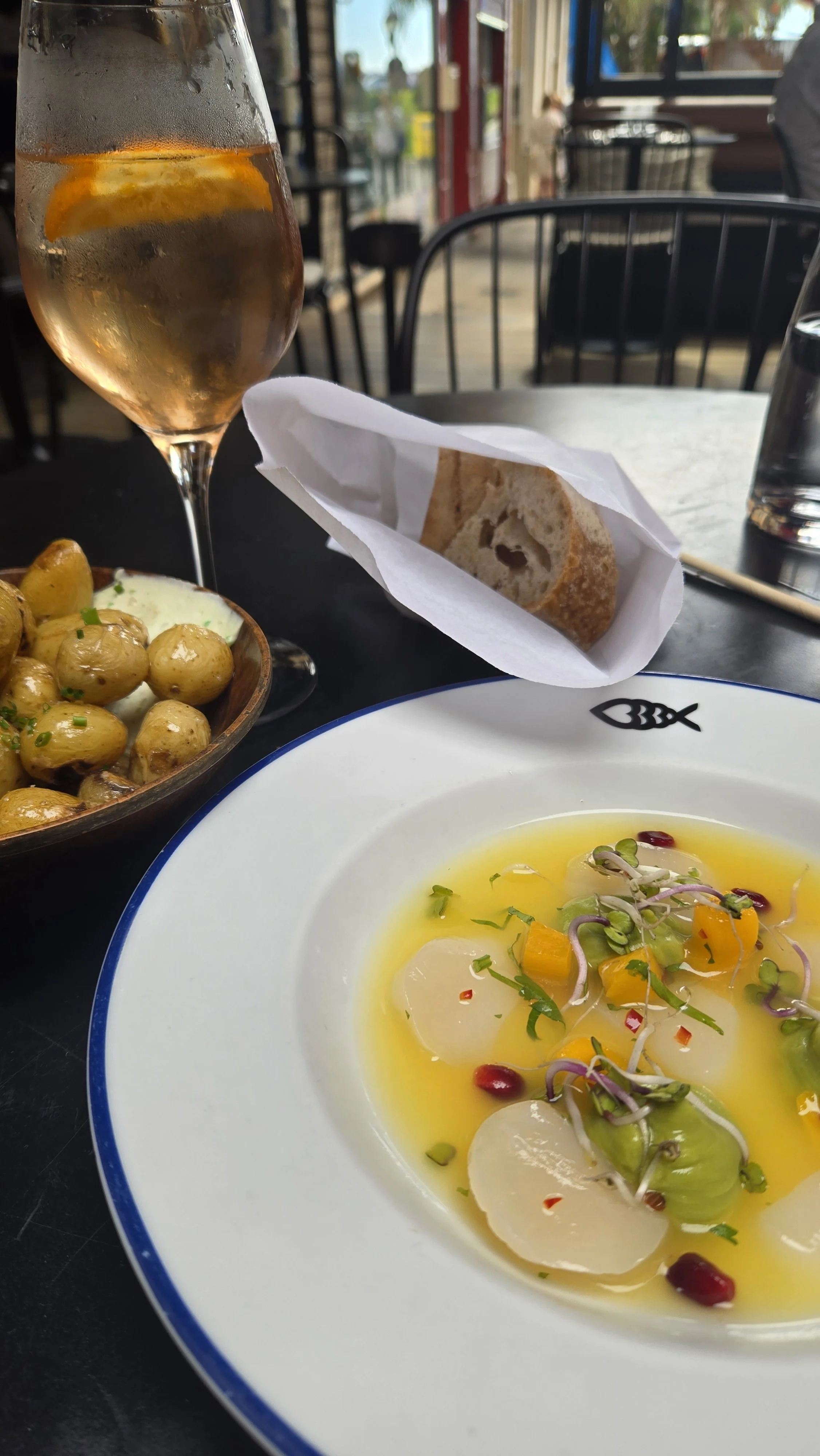
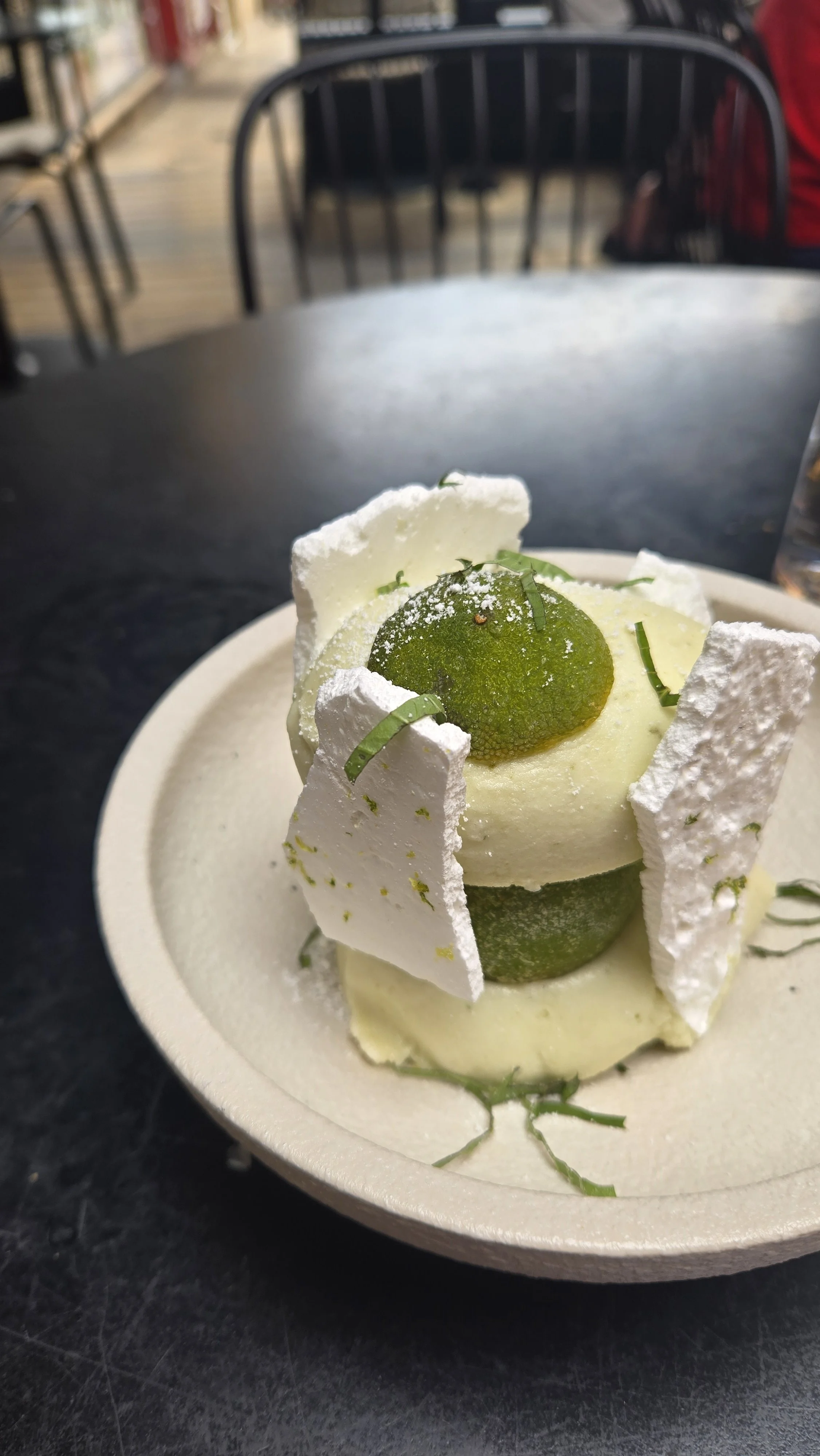
At some point, sitting there alone and ordering from a French menu, I realized I felt completely ordinary.
Not brave. Not independent. Not particularly impressive. Hungry. So I had lunch.
After a much-needed nap, I headed toward the port.
That was the extent of the plan. Toward the port.
I walked in the general direction and let my feet and whatever caught my attention decide the rest.
I found streets lined with Riviera apartments in shades of ochre and salmon, balconies crowded with plants and laundry. I walked beside remnants of the old city wall. I followed the seawall and eventually reached the harbor, boats packed into the water below hills crowded with buildings.
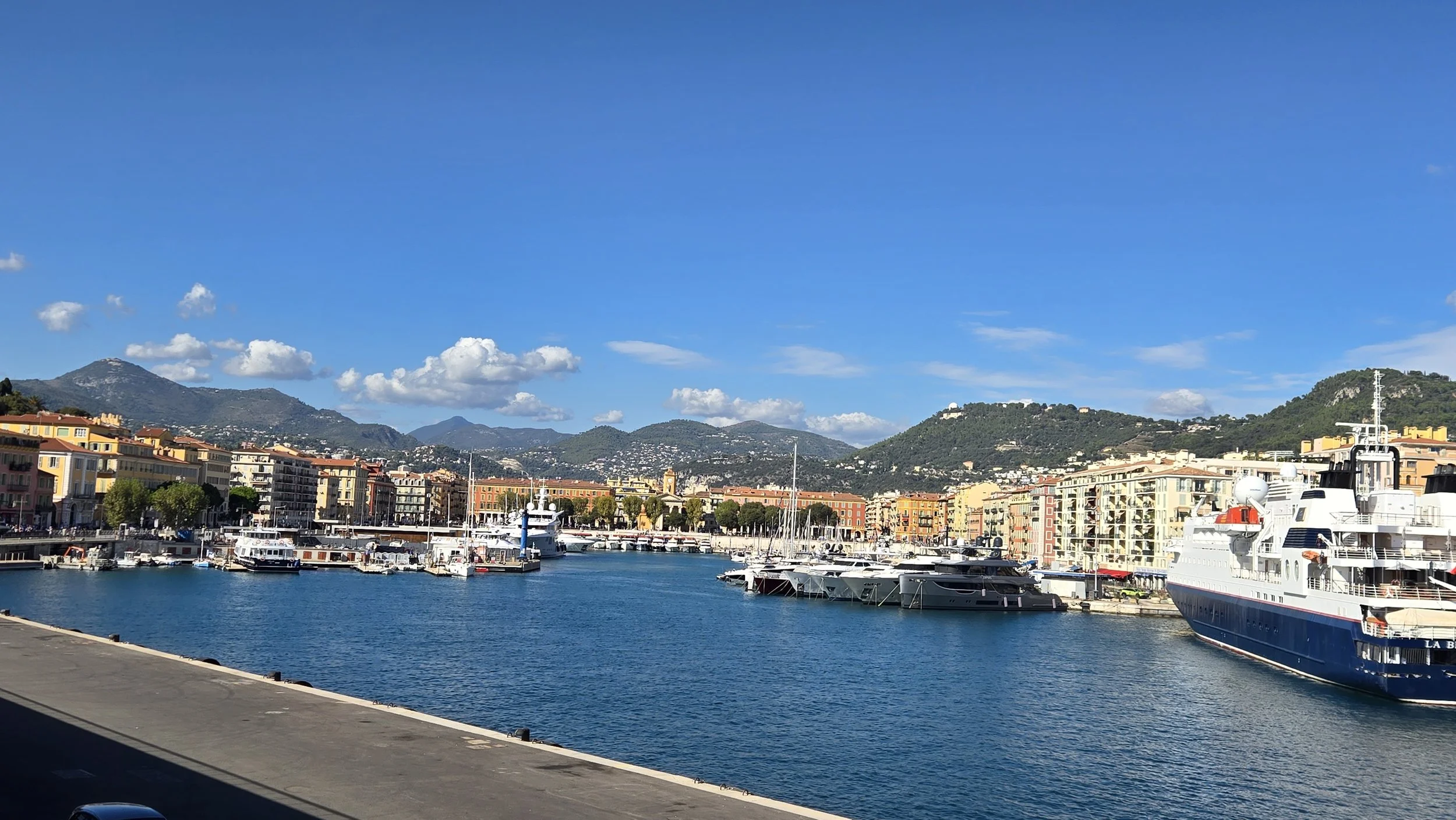
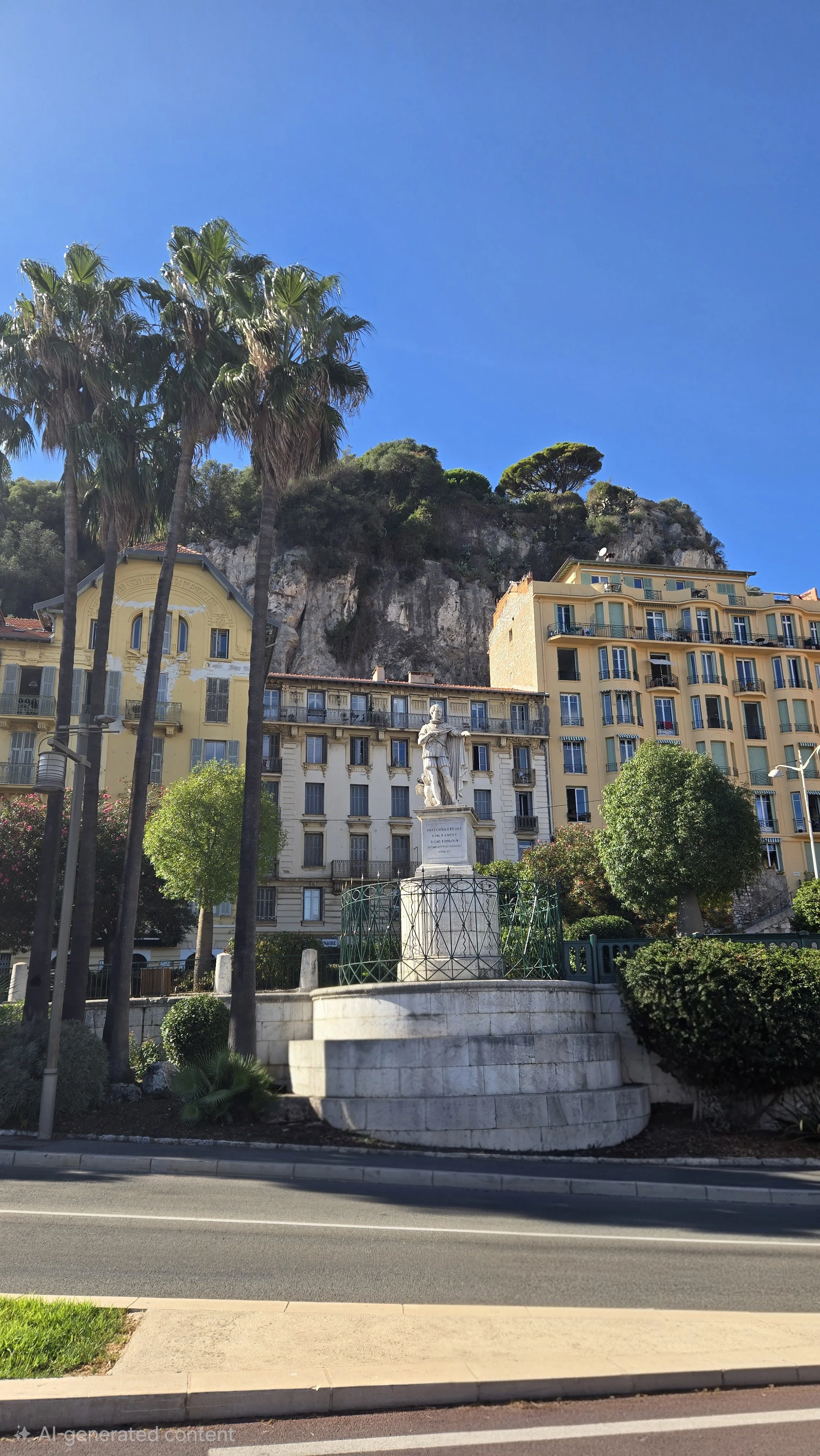
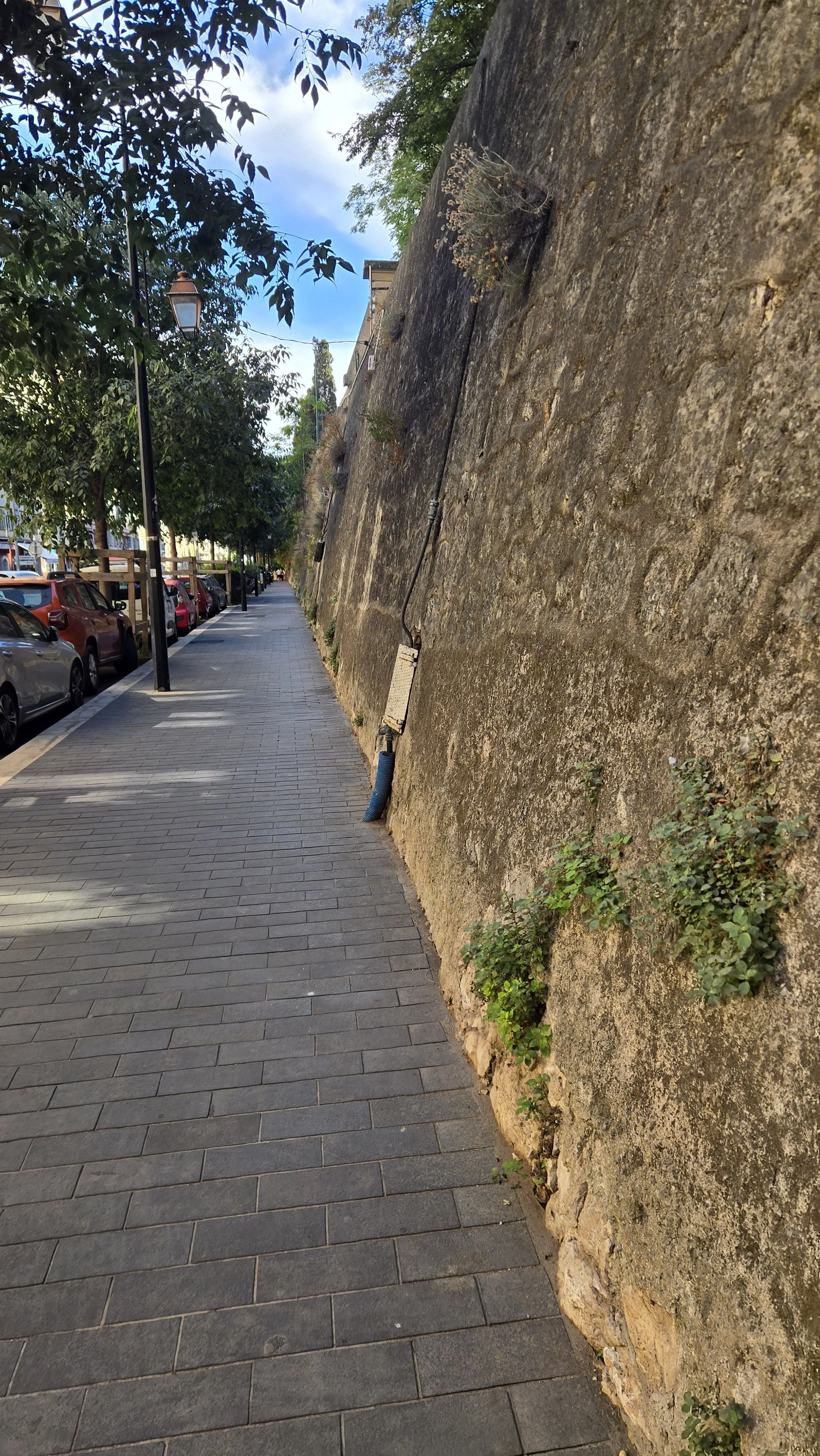
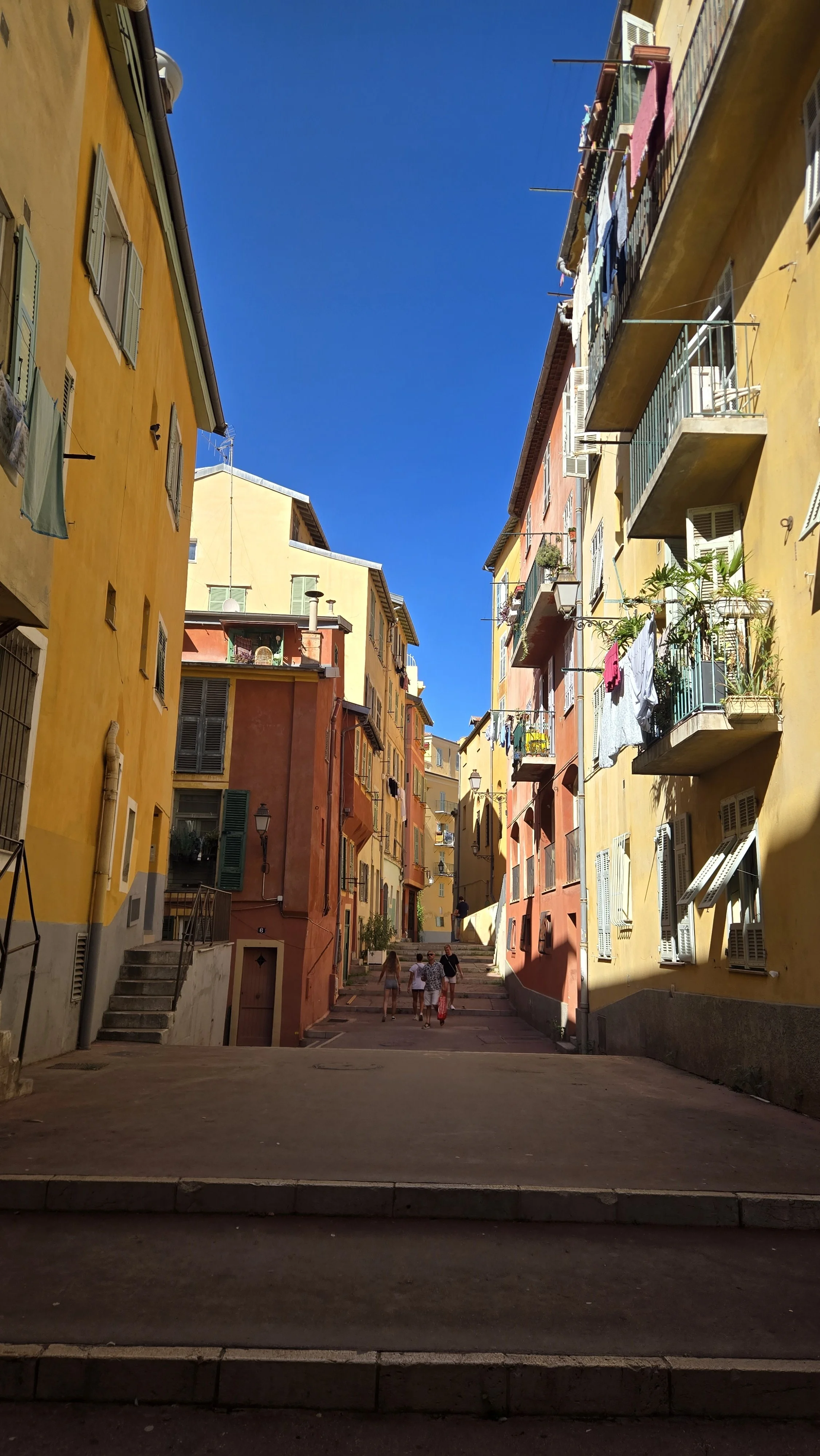
Somewhere along the way, I realized I hadn’t checked where I was in a while.
I had stopped navigating and started wandering. There is a difference.
I eventually made my way to La Réserve for a rooftop drink.
The melon spritz was fine.
The staff mostly ignored me. So I left and got ice cream. Problem solved.
That night I sat beside the open windows again.
Wine.
Movie.
Nice below me.
Chatter.
Music.
Glasses clinking.
An occasional siren.
Once, a burst of song.
After only a few days, I had the strange feeling that I had already taken an entire trip.
French Pajamas and Other Excellent Decisions
The proof came the next morning.
Checkout day. Transfer day. Ironman chaos had graduated from mildly annoying to a full logistical event.
I should probably have stayed close to the hotel. Instead, I decided I needed French pajamas.
I walked out.
No debate. No little pep talk. No careful route planning.
I found the shop, stopped for a latte and croissant while I waited for it to open, chose a brown gingham set, and wandered back through Nice carrying them under my arm.
No map. I knew approximately where the hotel was. That was enough.
At one point a cluster of tourists stopped directly across the sidewalk. Oh, for God’s sake.
Three days earlier I had been the tourist trying to figure out which alley went where.
Now these people were blocking my route home. Very French of me.
Walking back, I thought about Toulouse.
I still remembered occasionally sitting in my hotel there and needing to gather myself before I went out.
Nothing dramatic. An ounce of bravery. An ounce of independence. An ounce of courage.
Nice hadn’t required any of it.
I wanted coffee. I went.
I wanted oysters. I sat down.
I wondered what was down a street. I followed it.
I just… went.
And somehow, before I had even reached the thing I had crossed an ocean to do, the trip already felt full.
Then my driver arrived.
The Mediterranean disappeared behind us. The road began climbing into the hills.
And France changed again.
Holy Shit. Her Kitchen.
La Peetch was smaller than I expected.
The house was small.
The kitchen was tiny.
Outside, the property opened into quintessential Provençal countryside, hills layered beyond one another, old stone, trees, terraces and the sort of late-afternoon light that makes a glass of rosé seem less like a beverage and more like a civic obligation.
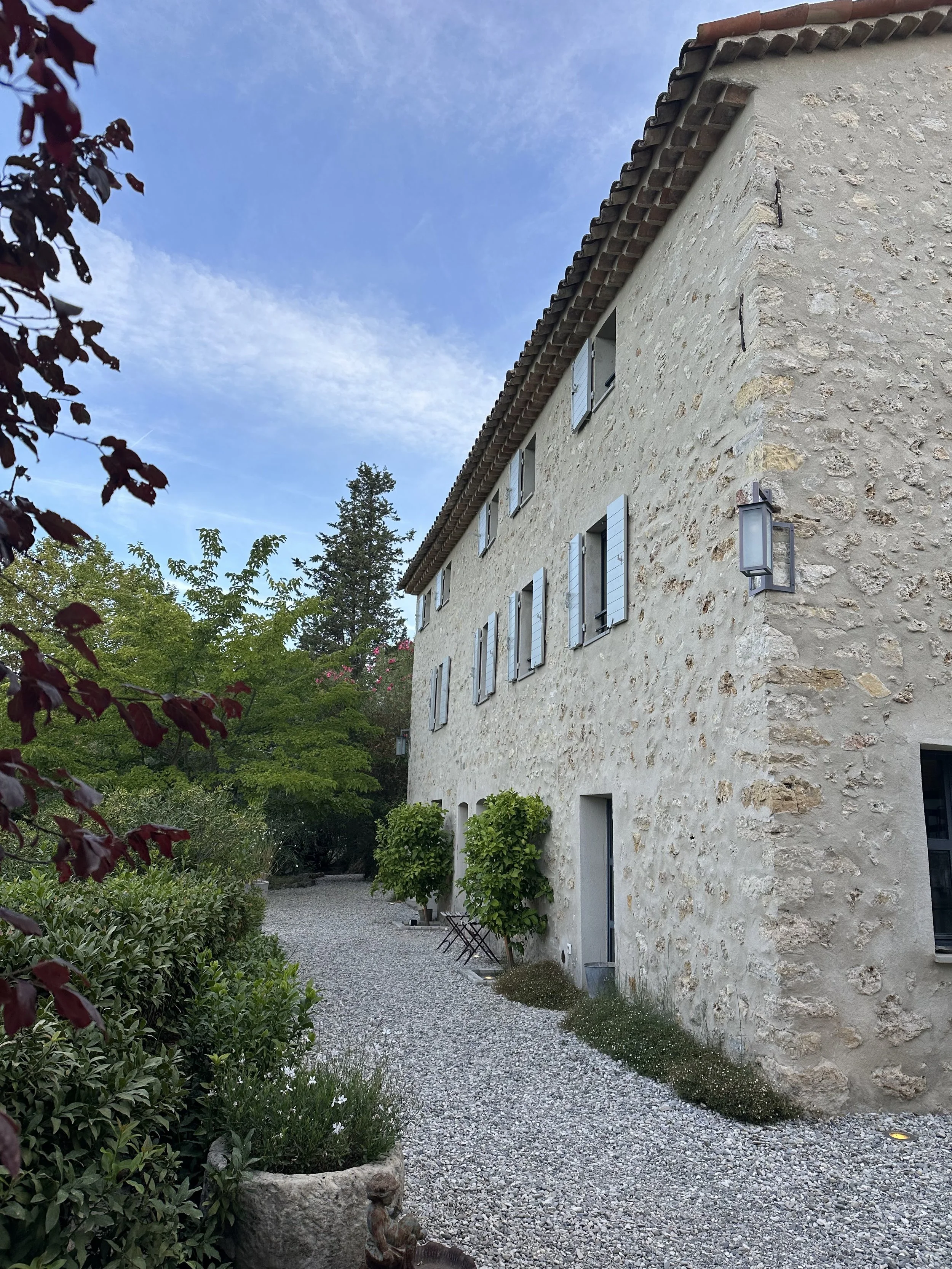
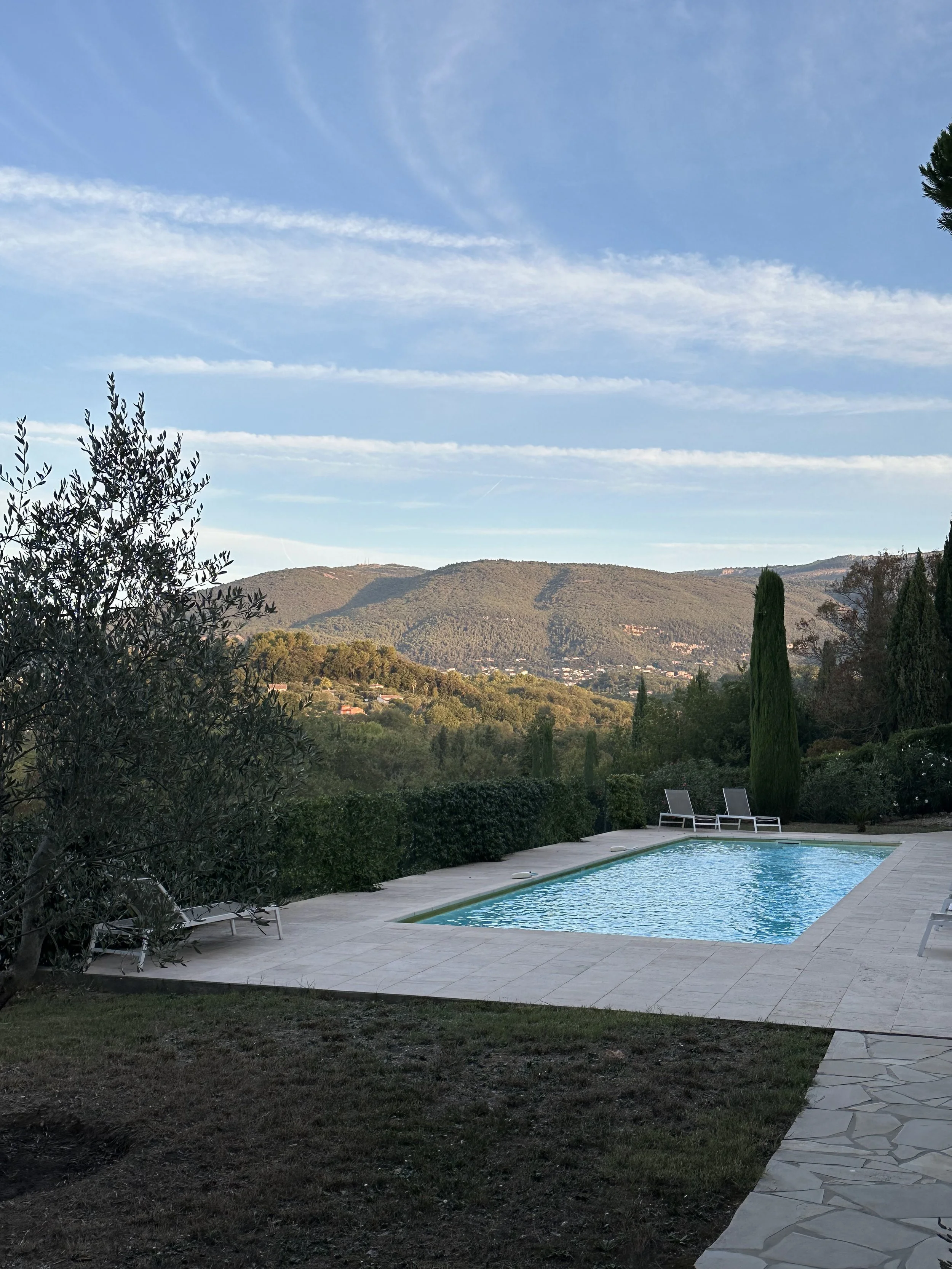
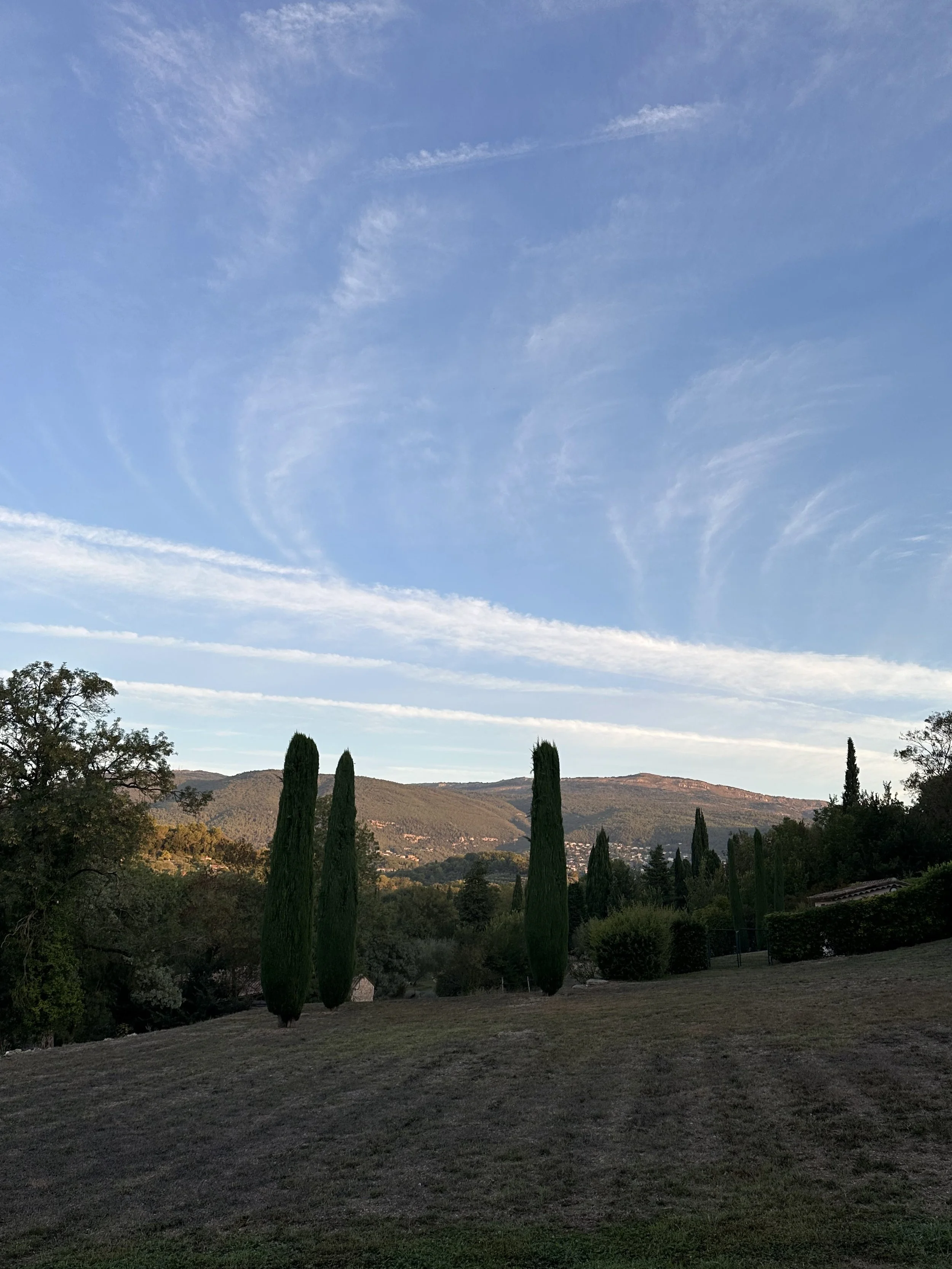
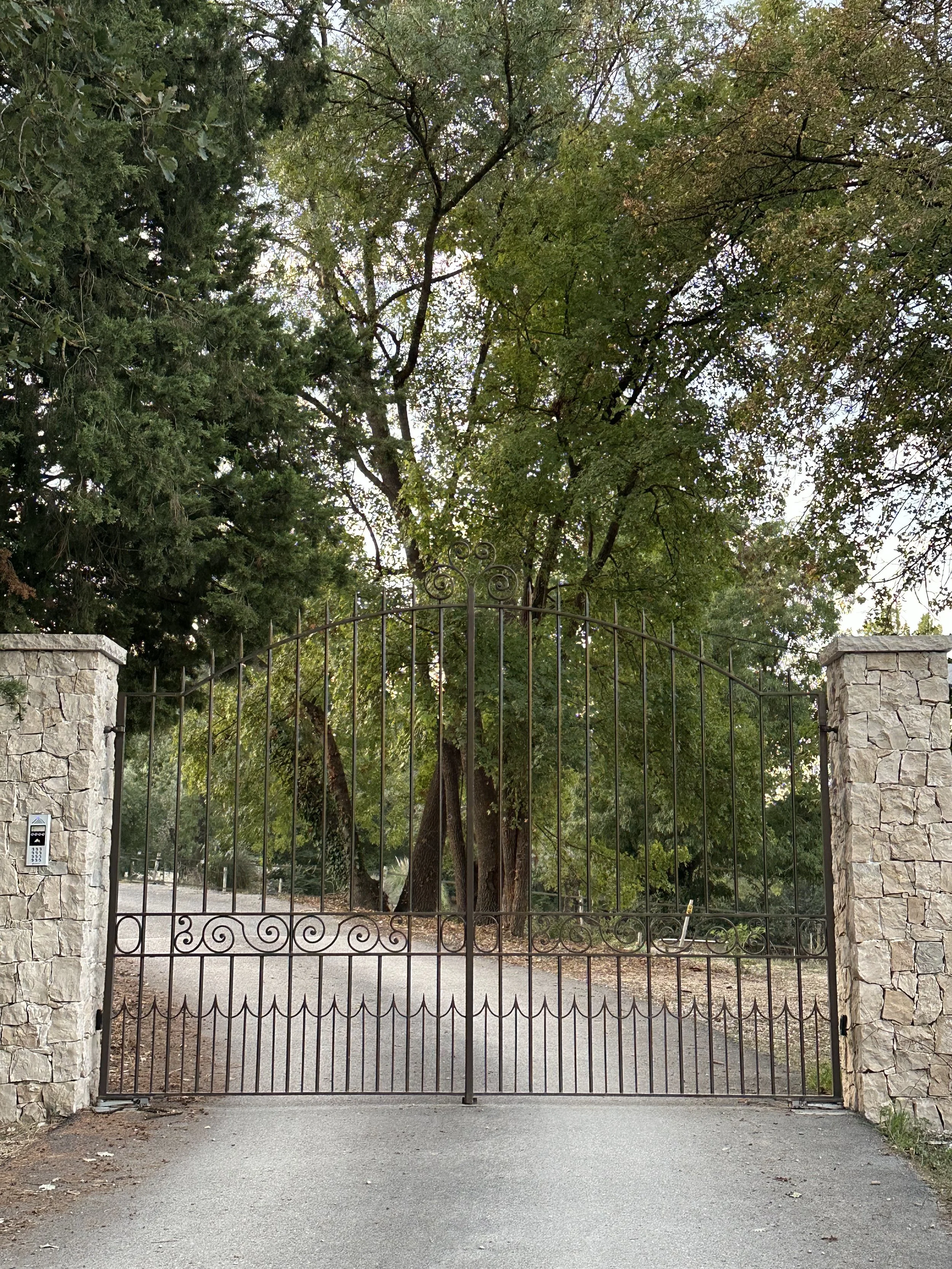
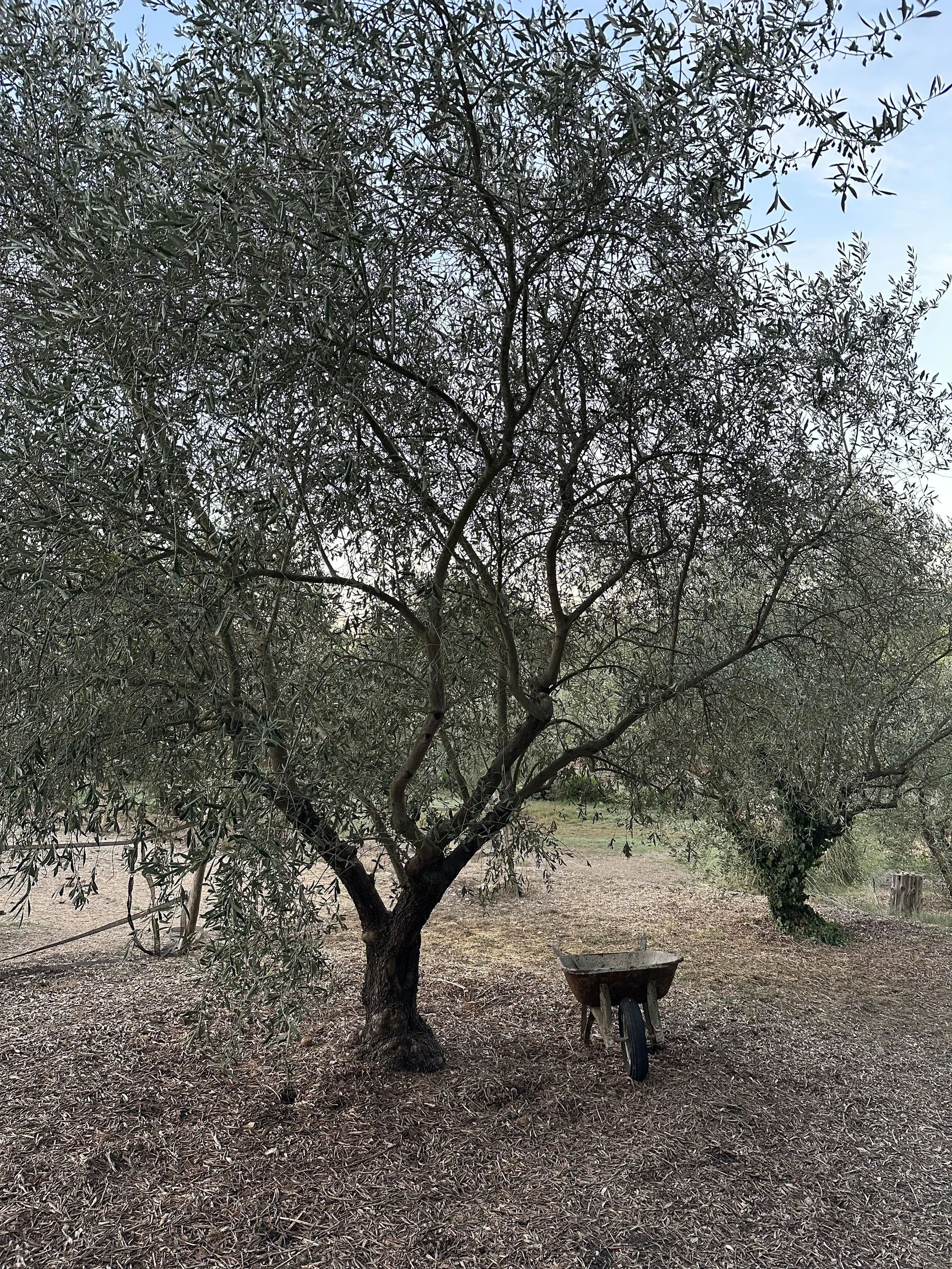
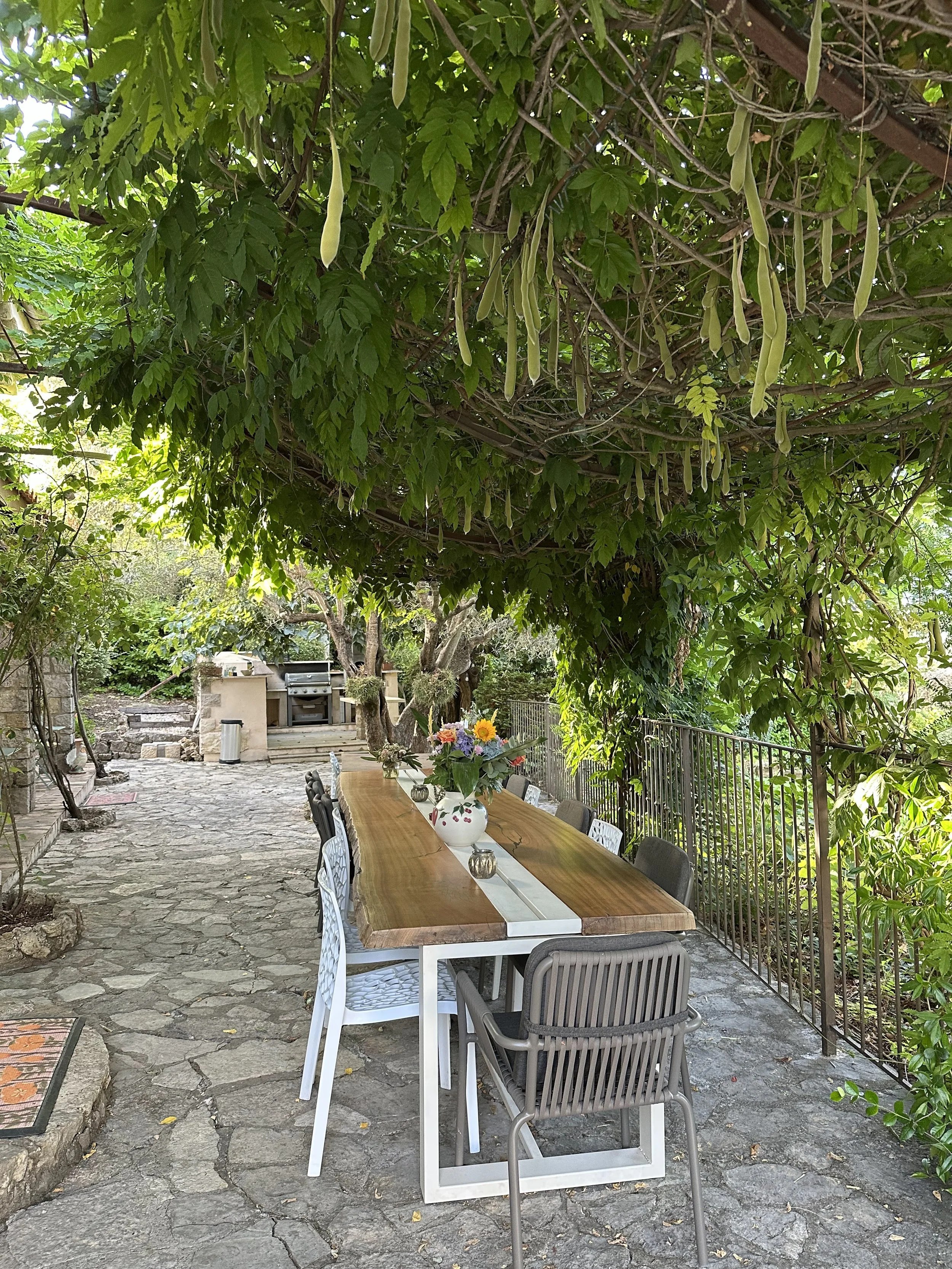
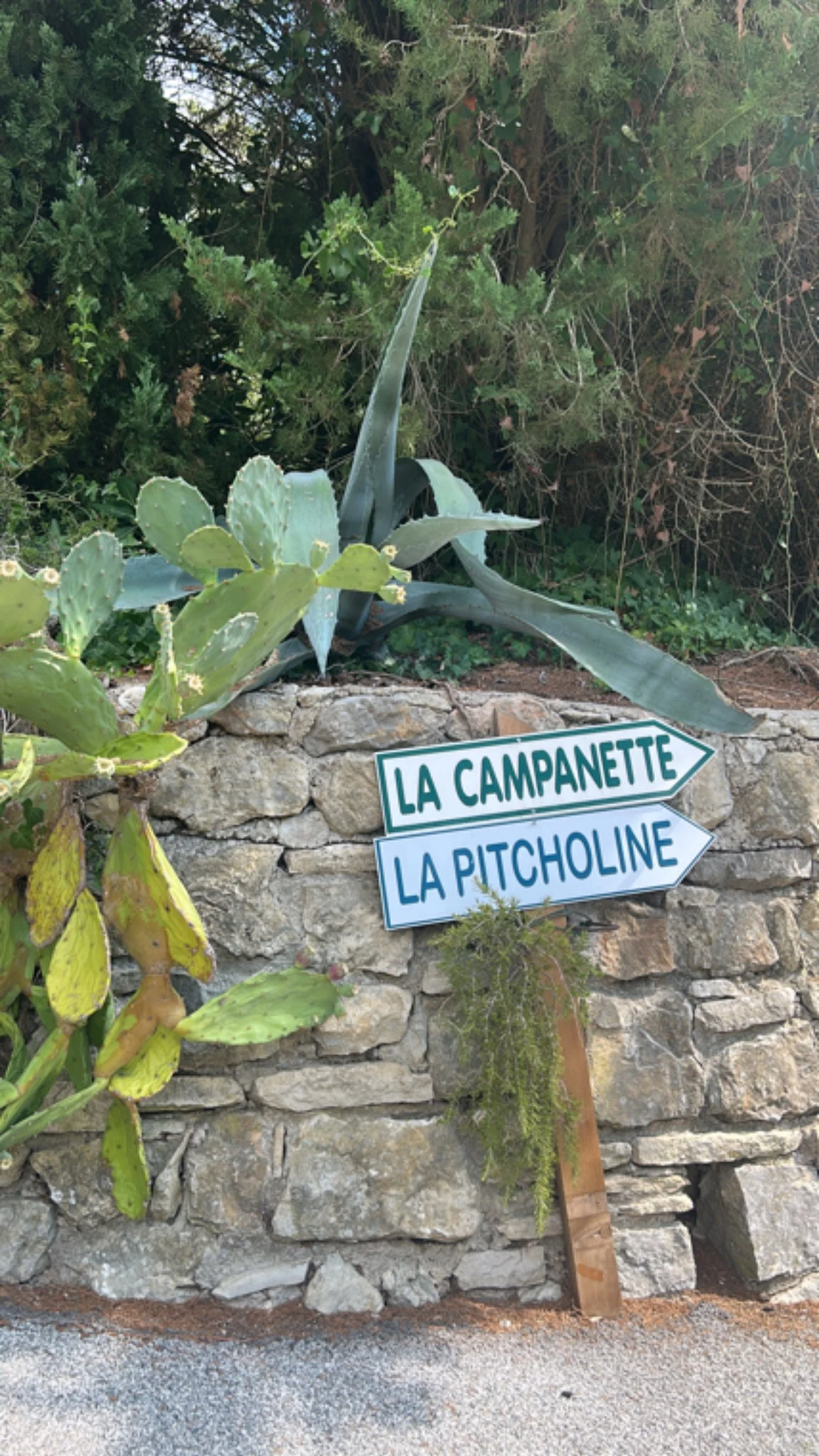
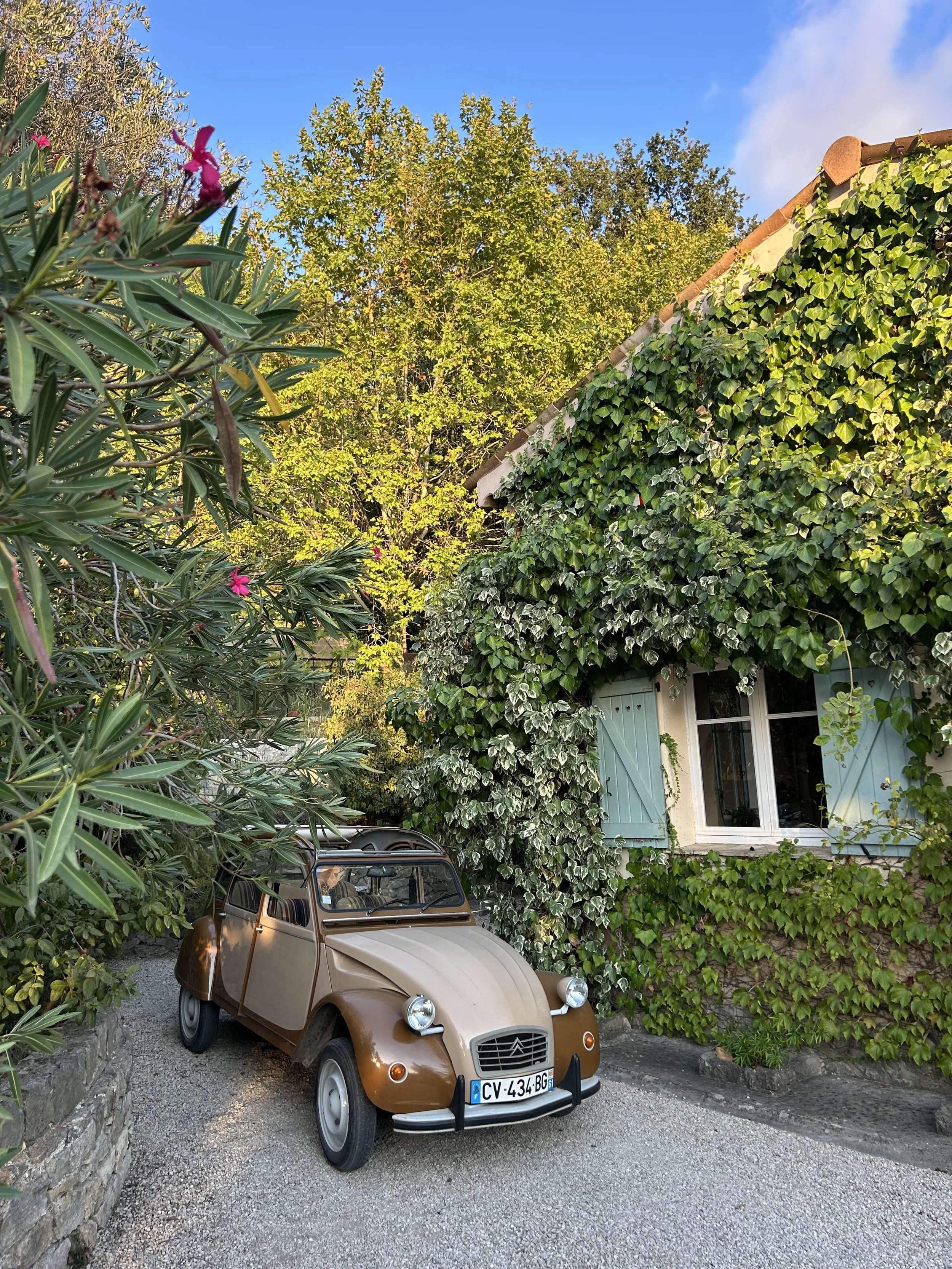
We toured the property, met the group, and filled out our class interests. Makenna Held, La Peetch’s owner, Cook Camp director, and cookbook author, seemed to be everywhere at once: big personality, big energy, deeply knowledgeable and completely unprecious about food.
There were too many things I wanted to do.
Most of the group were women somewhere around my age. Seventeen of us altogether, including two men who were family of one of the instructors.
Dinner that first night was apéro-style, casual and delicious.
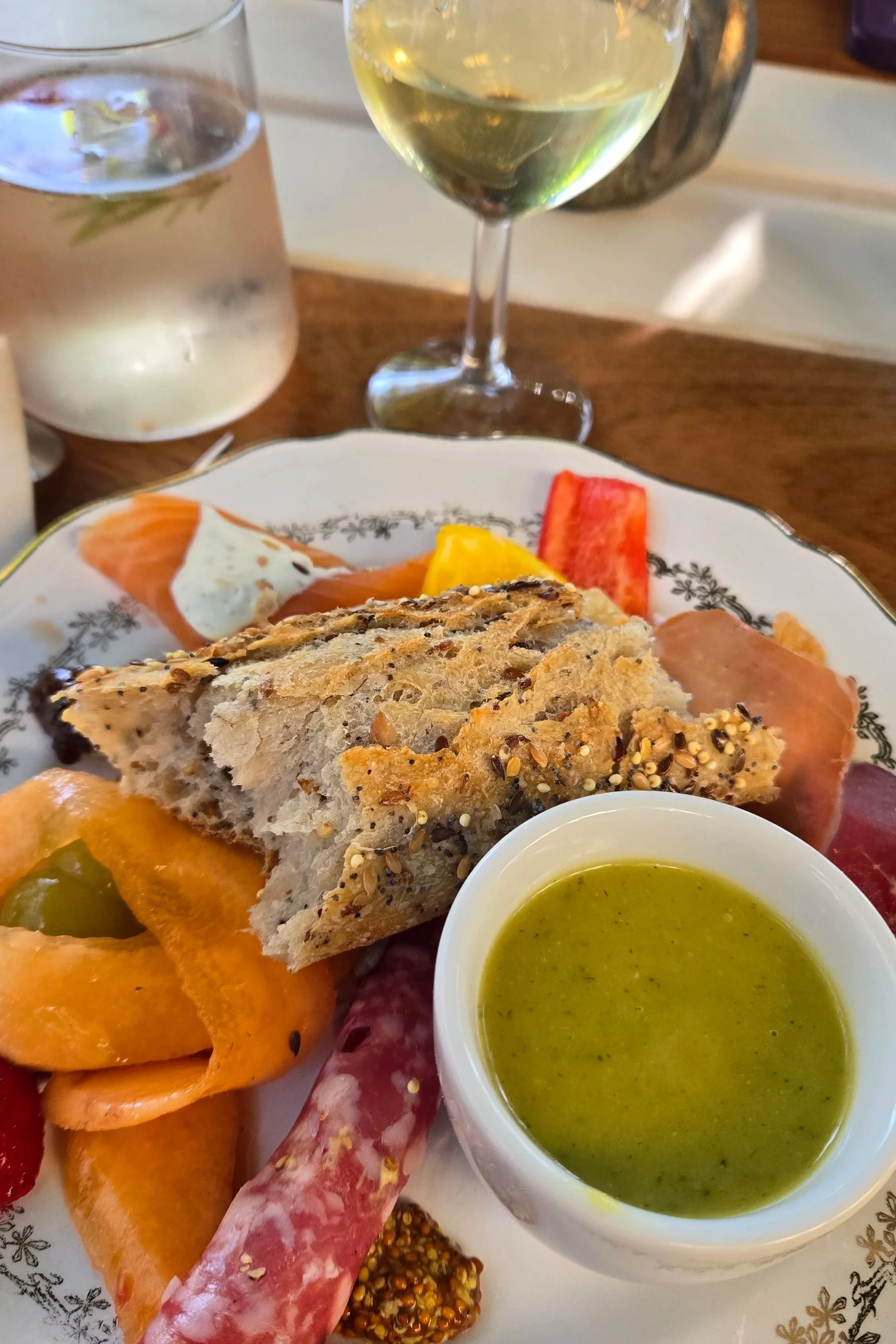
Then we stayed up too late getting to know each other.
So much for worrying whether I’d have anyone to talk to.
And then there was the kitchen.
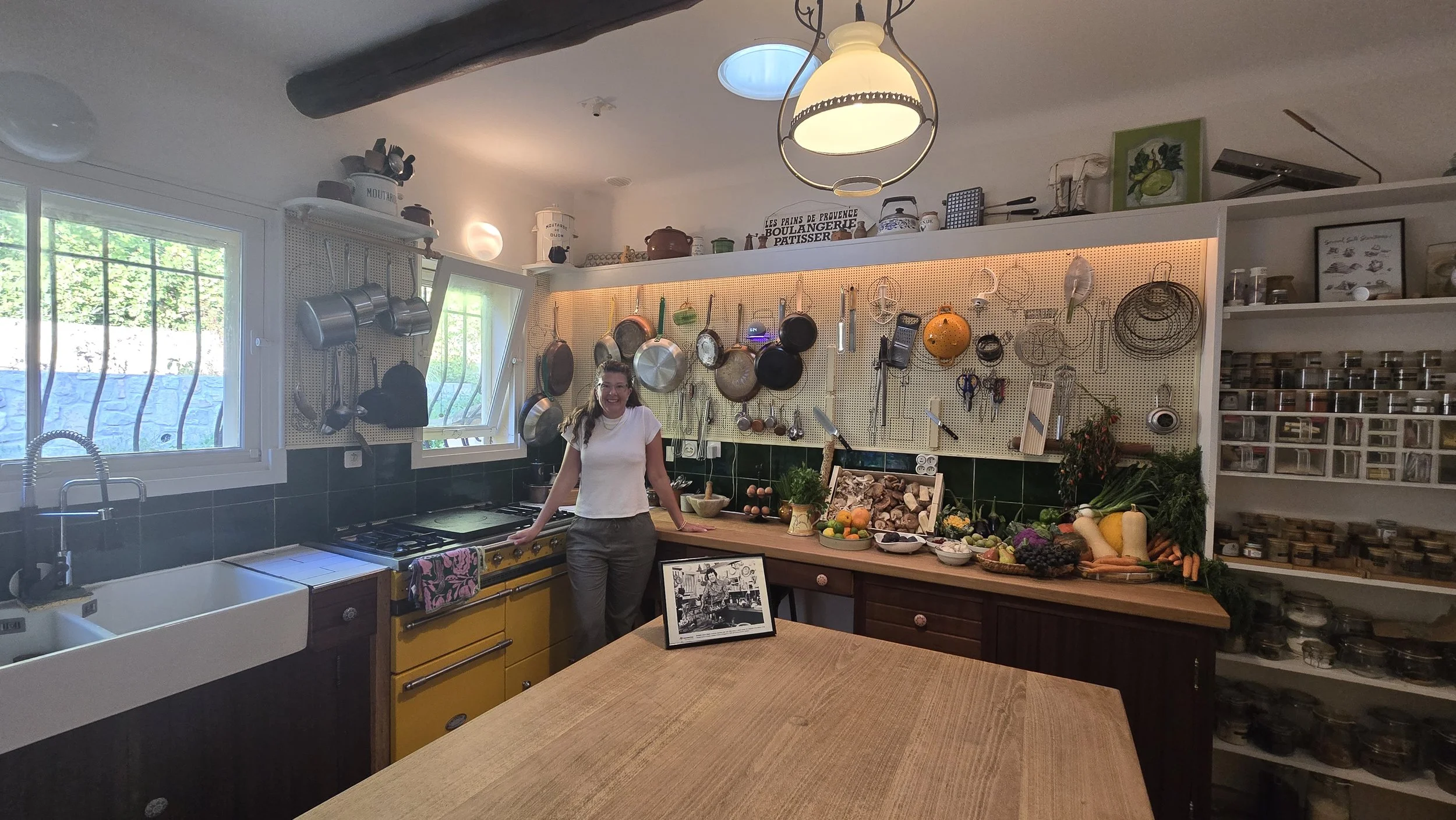
Pots hanging everywhere. Knives and graters on the wall. Jars and spices tucked into every possible space. Produce on the counter. The famous stove.
My thoughtful, historically informed reaction: HOLY SHIT. HER KITCHEN.
The kitchen was tiny.
Julia Child was not.
€50, One Tote & No Recipe
Our first full morning, seven of us headed to the market in Cannes.
We split into three little teams. Each team got a tote and €50.
The instructions: Buy fruits and vegetables. Return with no money.
Excellent.
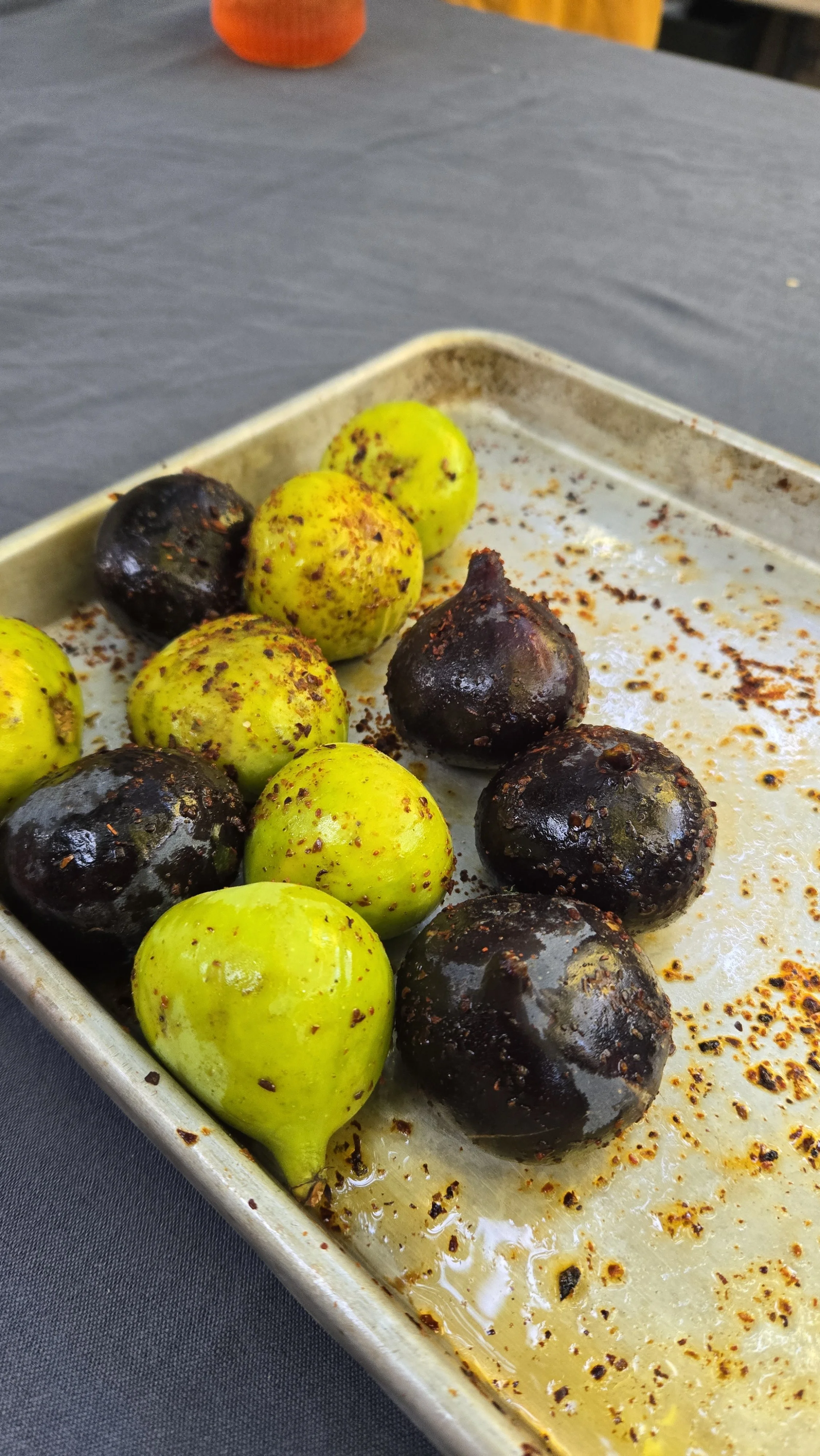
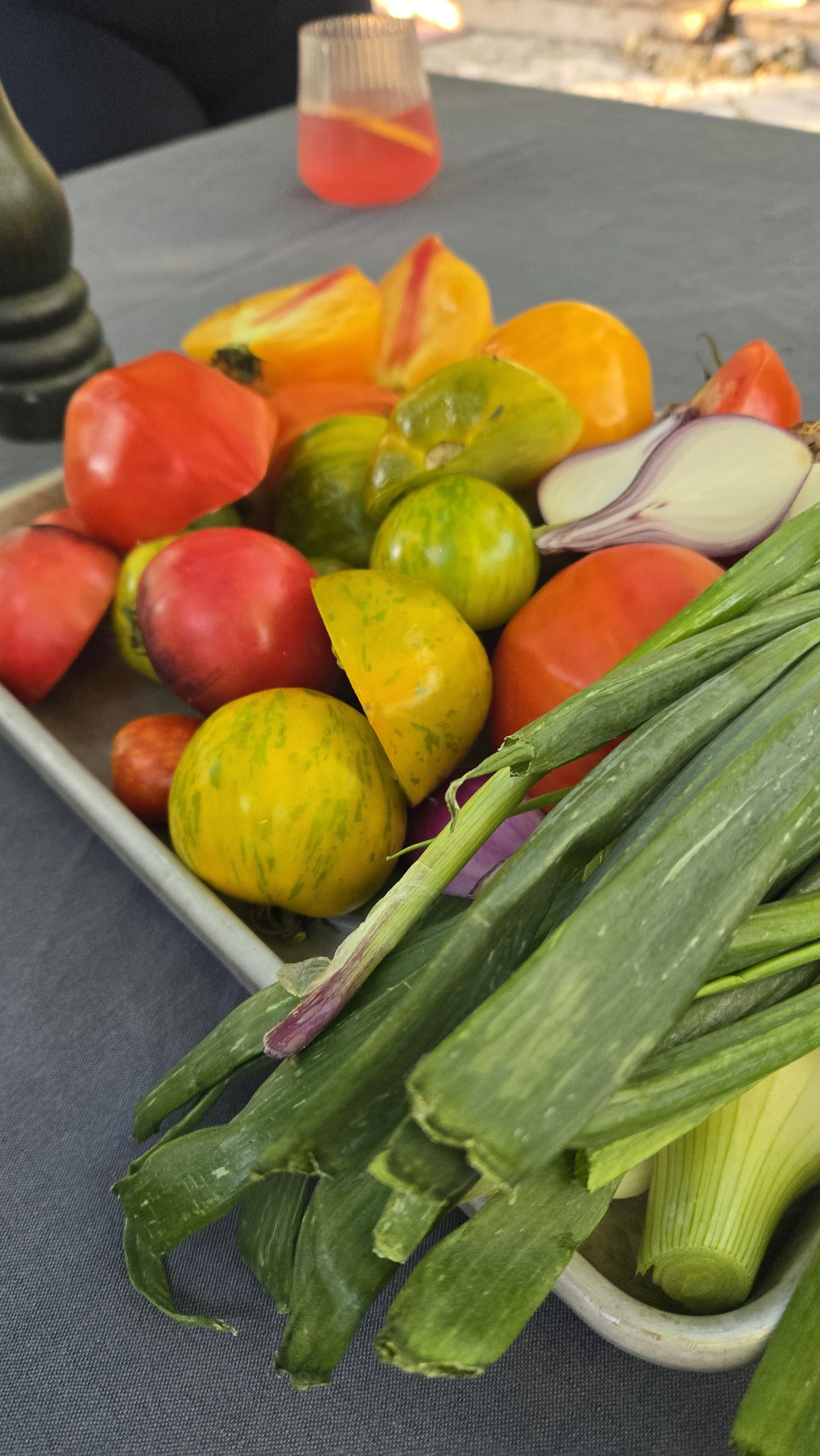
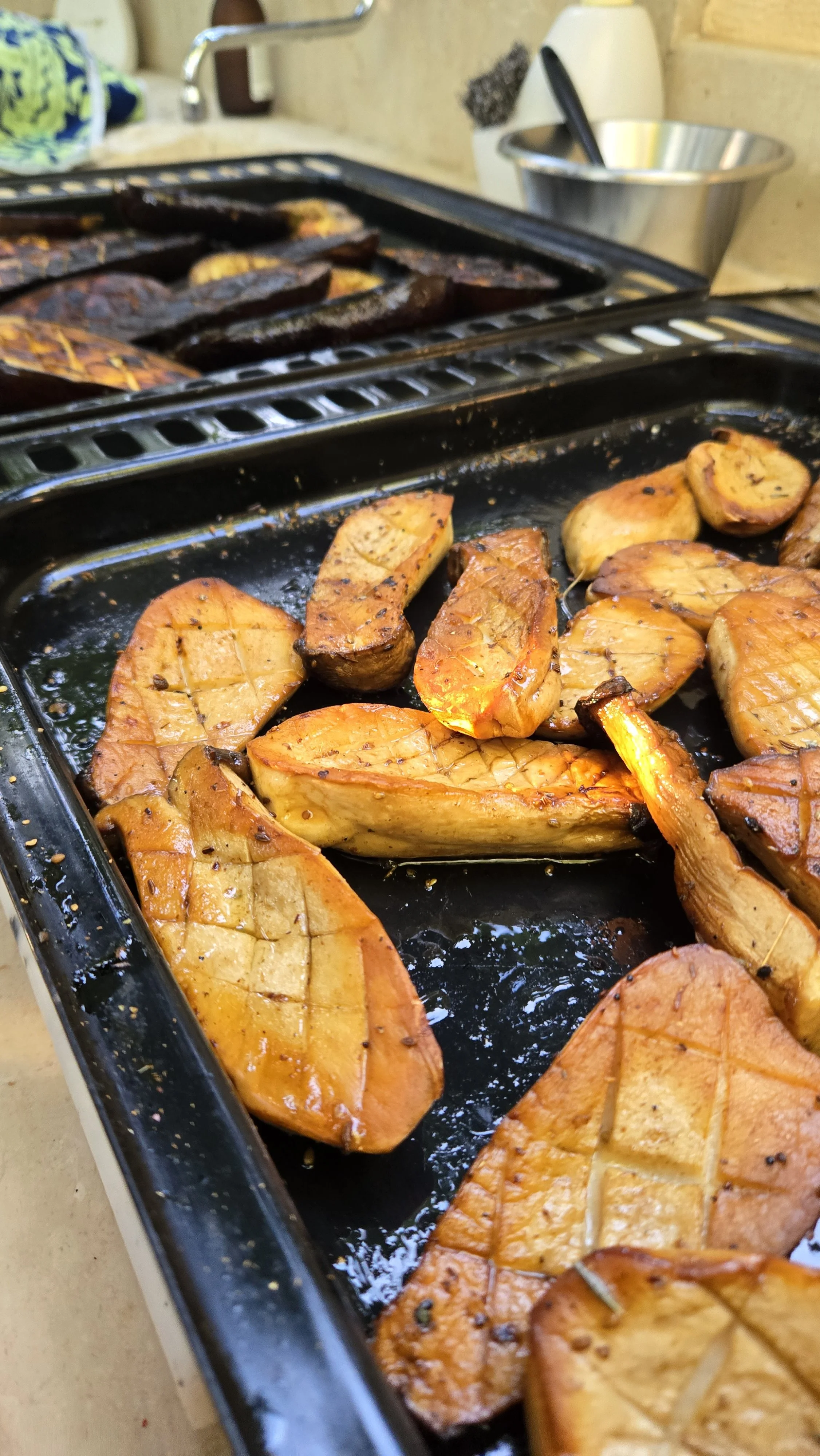
We moved through the stalls choosing whatever looked gorgeous or strange. Huge king trumpet mushrooms. Tomatoes in every color and size. Glossy eggplants. Baby onions still wearing their green stems. Pears. Green and purple figs. Leeks. Baby zucchini. Fennel.
The bags got heavier. The euros disappeared.
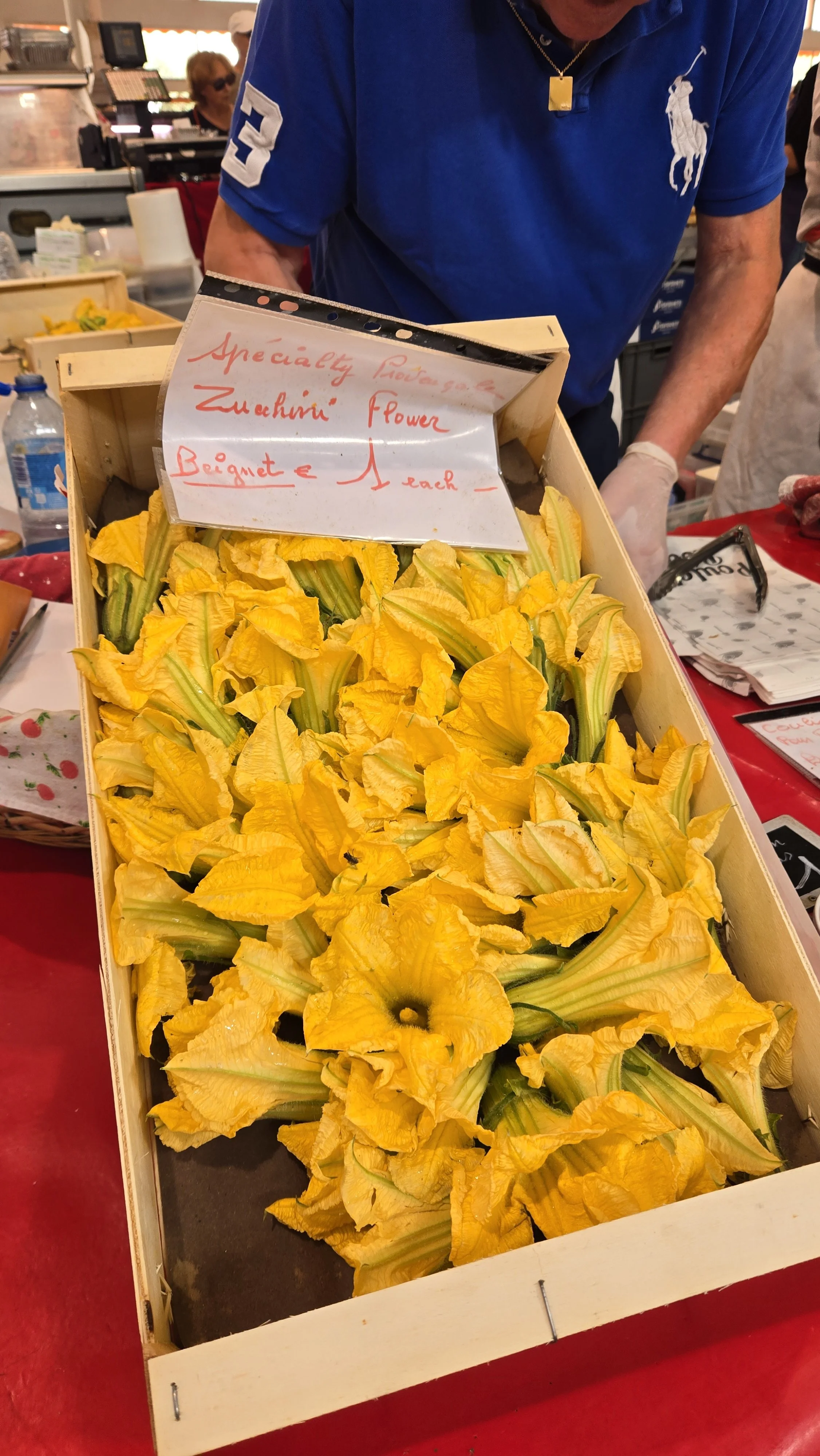
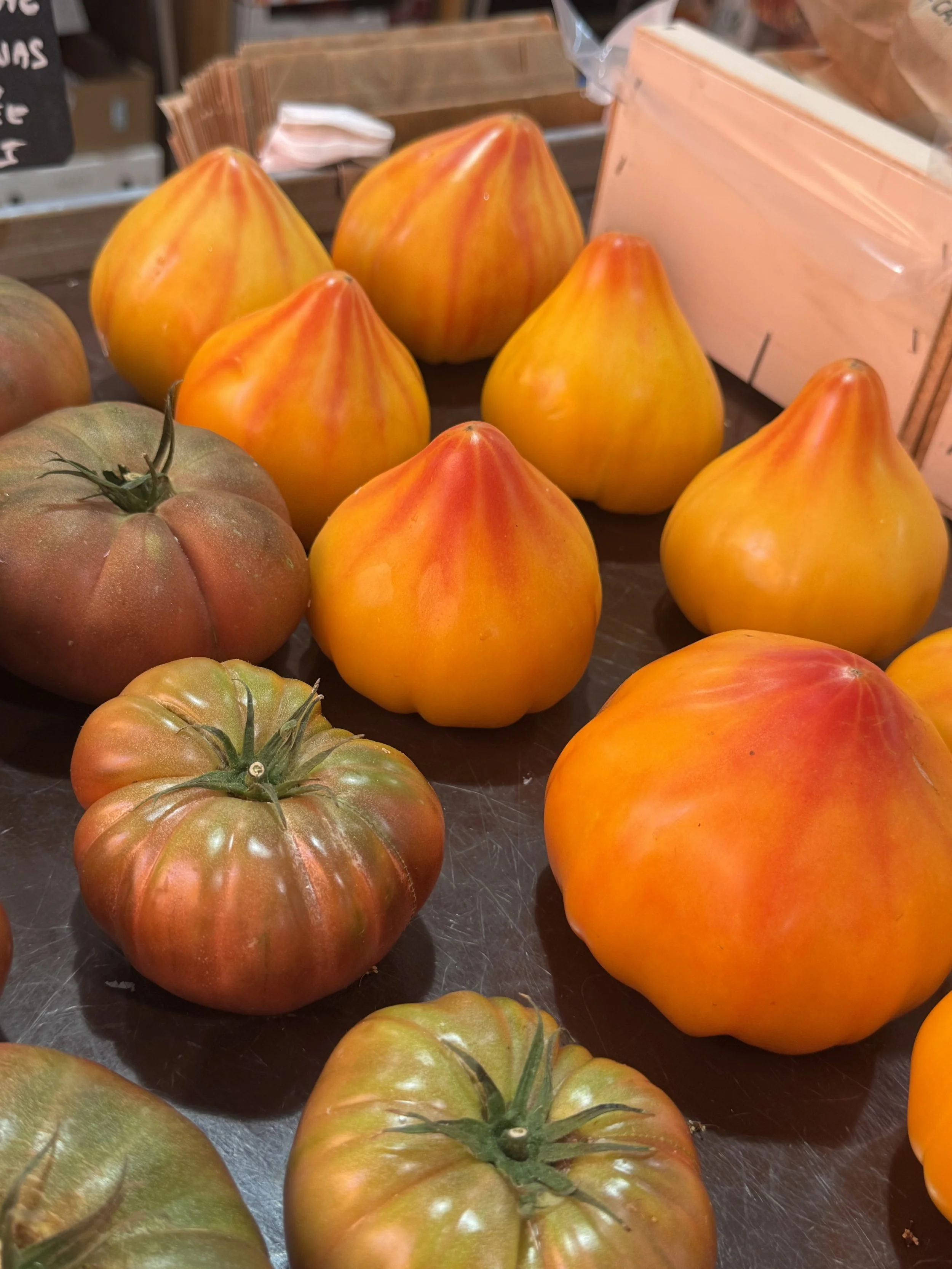
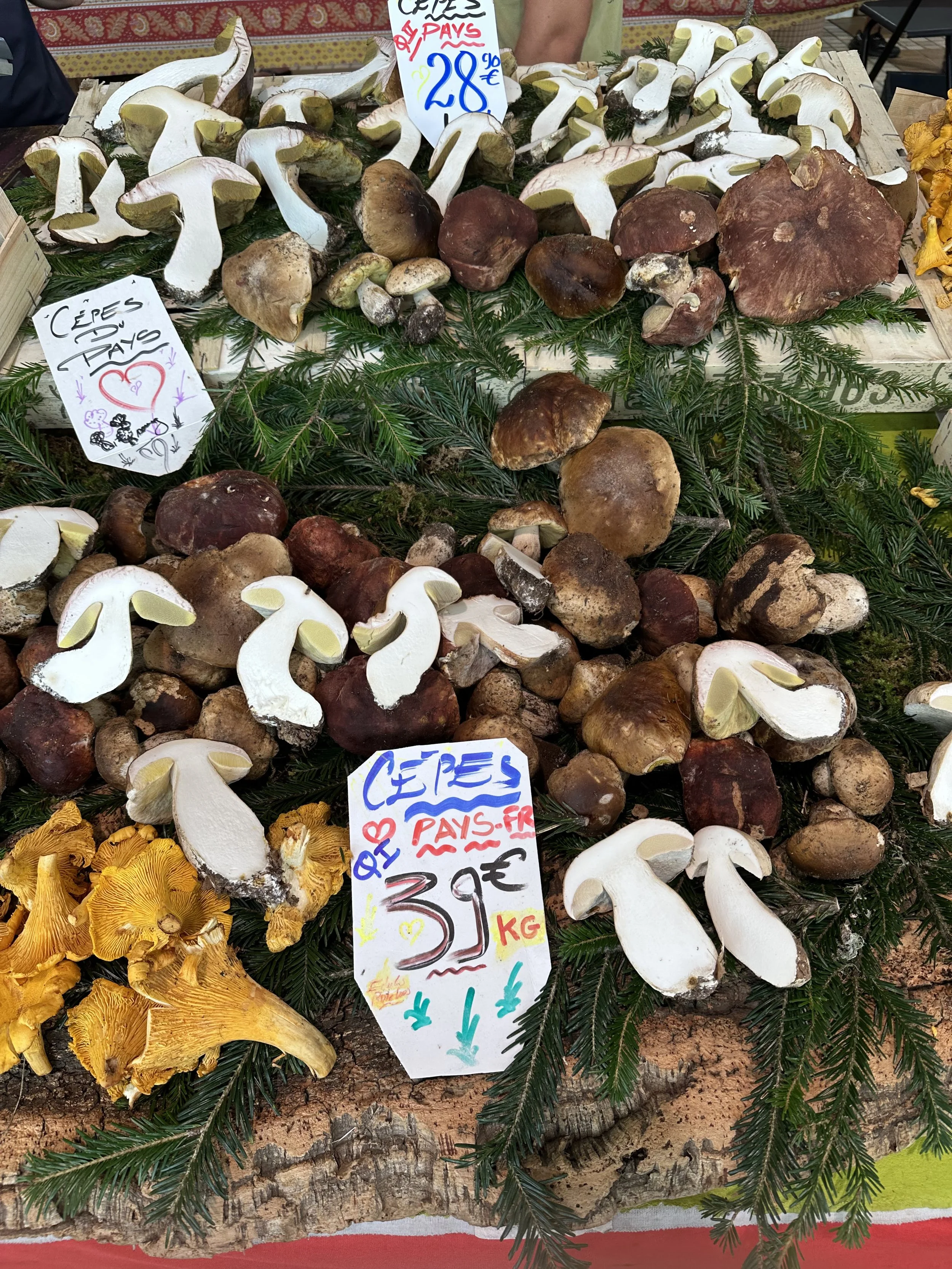
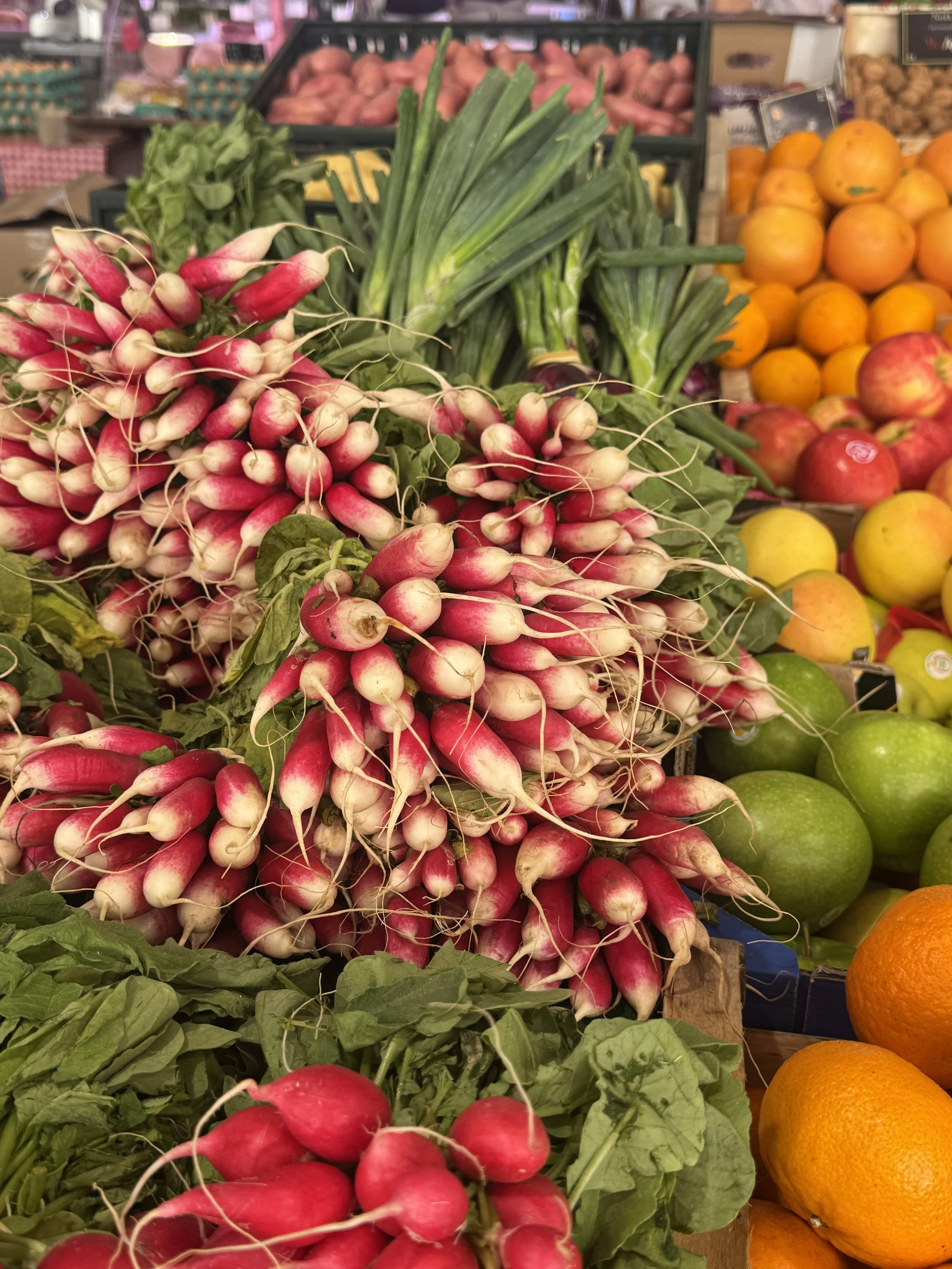
Back at camp, the other half of the group had made lunch.
No recipe. Just intuitive cooking from whatever was available.
It was fabulous.
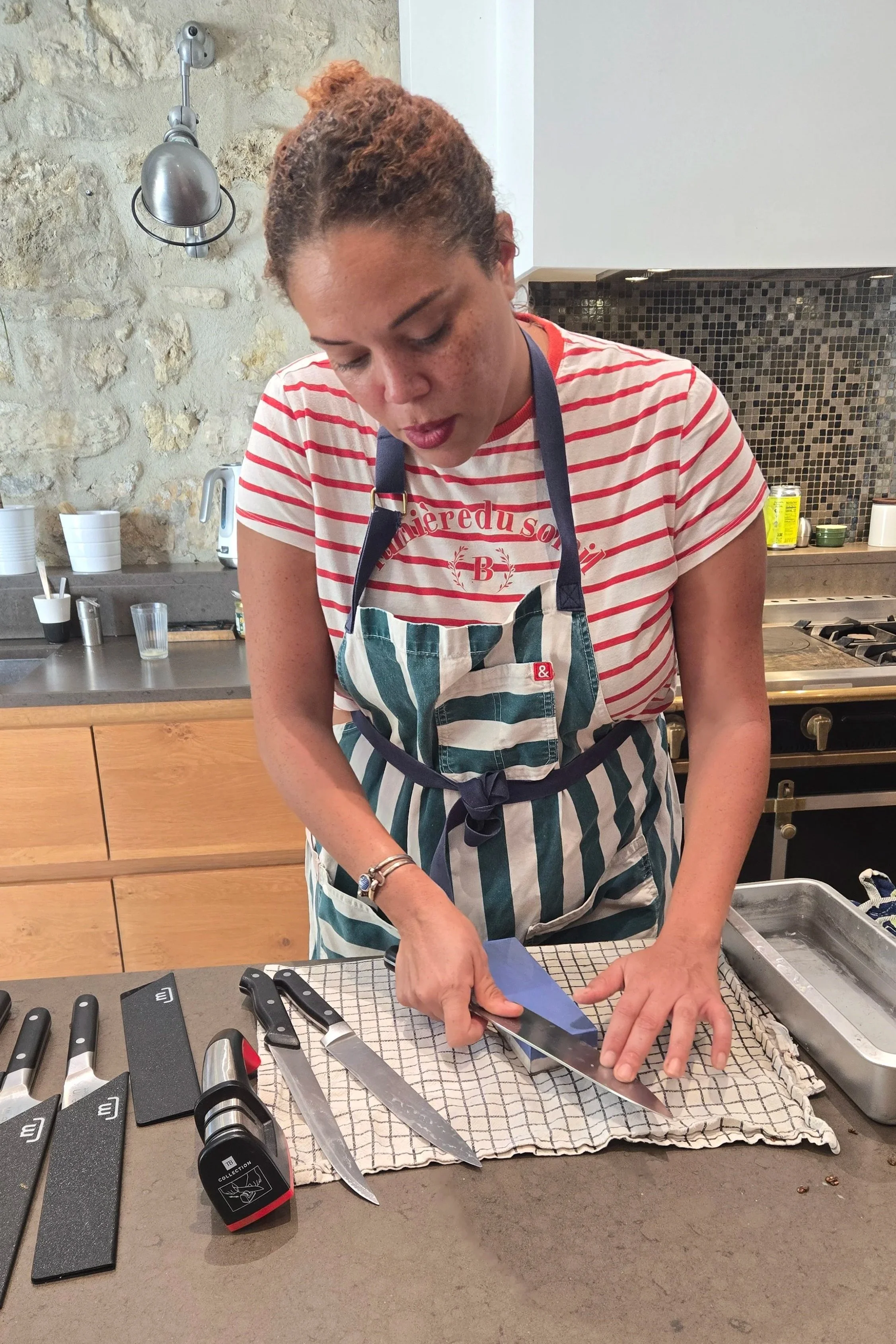
After lunch I took a knife-sharpening class, then sat by the pool with rosé and Makenna’s cookbook until our afternoon session.
Already, a rhythm was forming.
Cook.
Eat.
Learn something.
Pool.
Rosé.
Repeat.
That afternoon we carried our market haul into Julia’s kitchen to prepare dinner with Kendall Lane, La Peetch’s culinary lead and a partner and Executive Chef at Detour, where we would eat our final dinner later in the week.
A few of us were sent to the spice wall. Kendall told us to open jars. Smell them. Think about balance. Then she almost immediately suggested maybe we didn’t need to think that hard.
So we smelled. One spice was smoky. Another floral. Something else had citrus. We chose a few because they smelled good together. That was apparently enough.
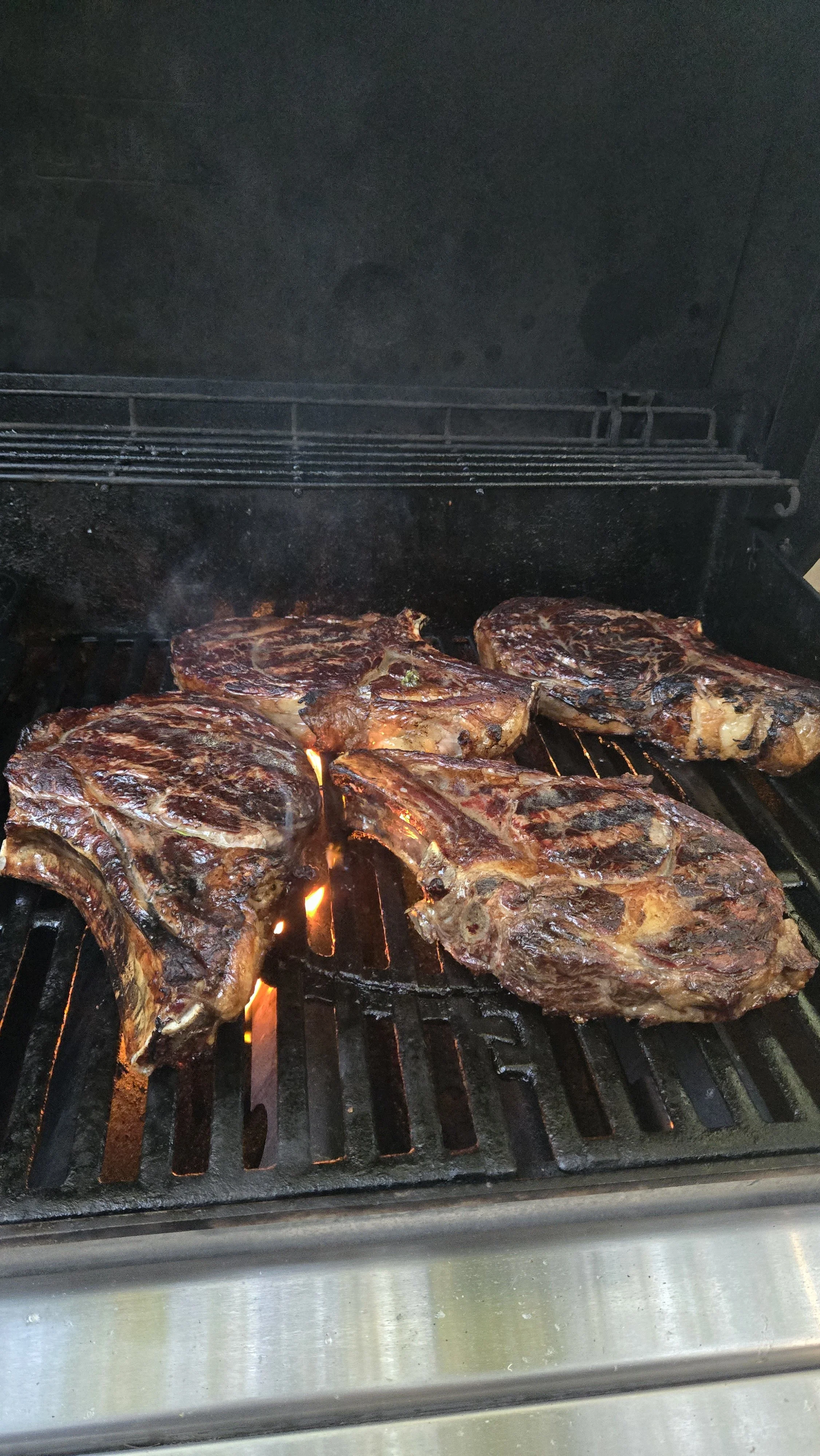
We left some vegetables alone and seasoned others. No salt before grilling. We talked about thick steaks and delicate herb sausages and when Kendall likes to season each.
Then she said something I would hear in different forms all week. This was her way. Another instructor might teach us another way.
Try it. See what you like. Find your way.
Outside, smoke drifted from the grill while we drank homemade spritzes.
The tomatoes collapsed. Mushrooms browned. Eggplant softened.
Most of the vegetables eventually became something ratatouille-ish. Nobody seemed concerned with whether we were technically allowed to call it ratatouille. It was delicious.
Julia’s Omelet and the Spoonful Test
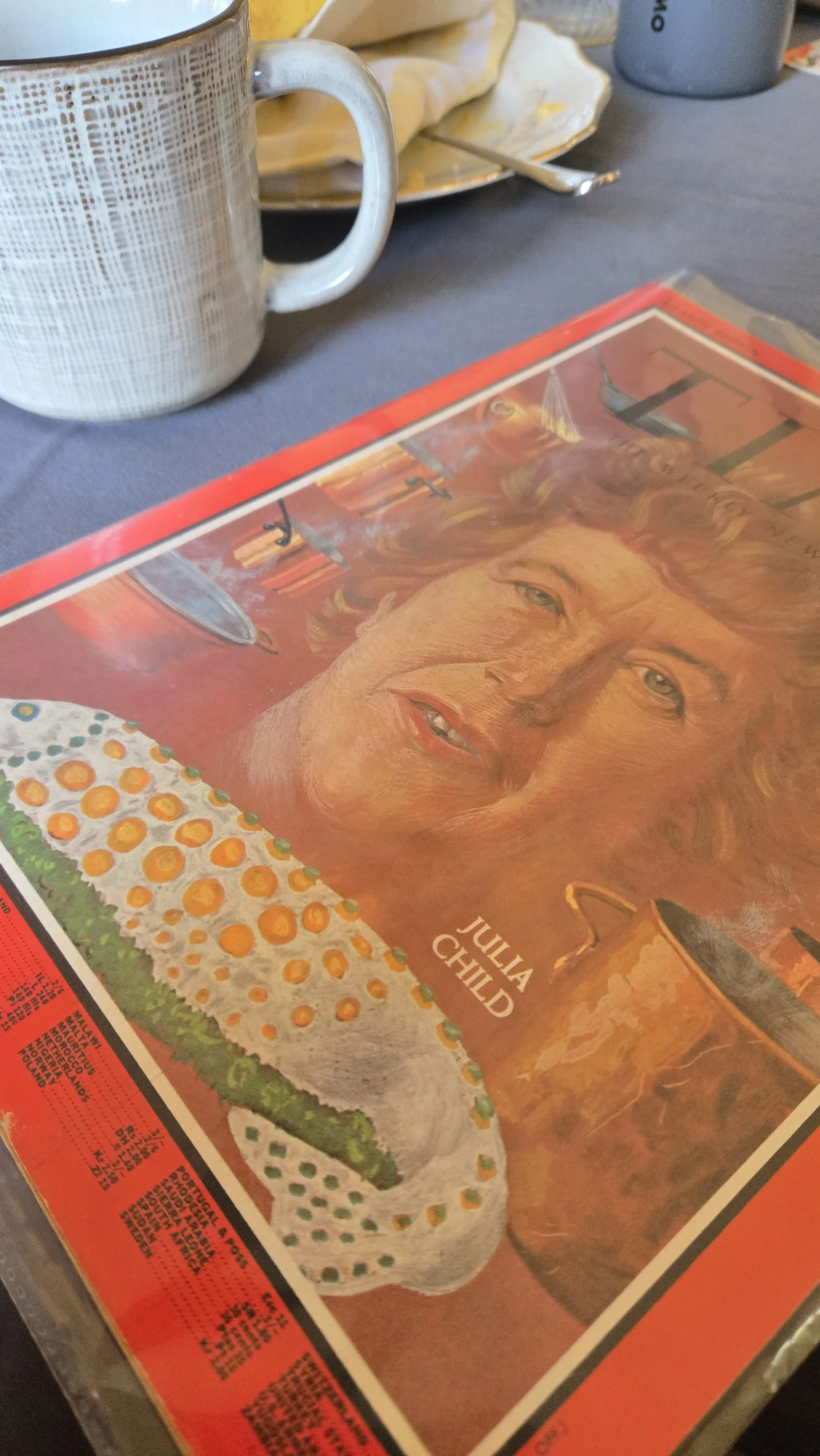
The next morning began in Julia’s kitchen with French omelets.
Chris, Makenna’s husband, told us the story of the house, the property, and Julia’s life there while we cooked.
He was a wonderful storyteller, enthusiastic enough that the history felt less like something preserved and more like something that had happened in the very room we were standing in.
And the omelet? Eggs. Butter. That’s basically it. Strain the eggs to remove what was memorably described as the “snot.”
Lots of butter. Hot pan. Eggs in. Swirl twice.
Do the fancy push-pull thing, fold about a third over, then tip it onto the plate so it folds over itself while still looking far too wet to my American scrambled-egg brain.
Salt. Herbs. Done. Perfection.
I have apparently been making eggs wrong forever.
Then came side-dish class.
A pantry full of ingredients. Piles of produce. Teams of two or three. No recipes.
My group ended up with lentils, mushrooms, pickled beets and crispy chickpeas. These were not ingredients I would ever have looked at and thought: Obviously these four belong together.
We seasoned each component differently and tasted every step.
Before assembling the dish, we piled a little of everything onto one spoon.
Tasted. Paused.
It needed something. Creamy. Bright.
We made a lime yogurt sauce.
Tried again. There it was.
One of the women cooking with me said I was helping her feel more comfortable with the process. She had attended culinary-school sessions. Well, shit.
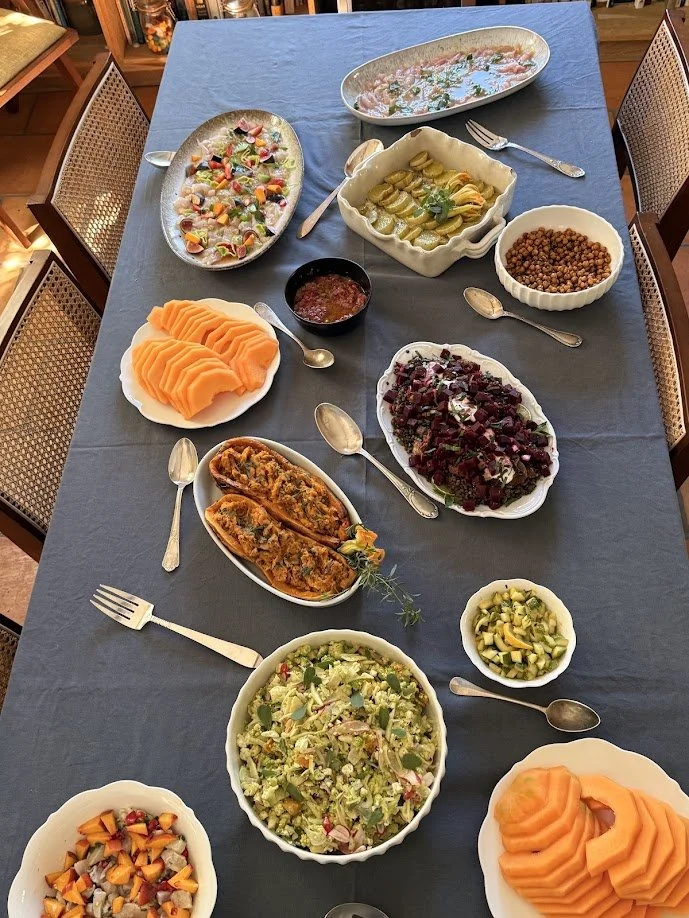
Lunch spread across the terrace: roasted fish, three ceviches from the fish class, our lentil-beet-mushroom-chickpea situation, stuffed squash, fennel slaw and other dishes built by the groups.
Nothing matched in the carefully coordinated dinner-party way I might once have thought it should. It was simply a table full of delicious things.
That afternoon I took a quiche and tart class and made a chocolate tart with chili-infused ganache and toasted hazelnuts.
Then came pool. Spritz.
A local bistro for family-style tapas and wine.
Back home. More talking. Late again.
The Cookbook Author Told Us to Ignore Her Recipe
Breakfast the next morning was our quiche from class.
Then I joined Makenna for Cook the Book, Knife Skills & RecipeKick Lab.
After spices and a short knife-skills lesson, she introduced a pork tenderloin recipe.
From her own cookbook. Then told us not to follow it. Treat it as a guide.
Each pair chose a fruit. Then one or two alliums.
We talked about cutting everything to work with quick, high-heat roasting, built a glaze that made sense with our combination, then chose a liquid to add to the pan and help create the sauce.
Six groups made six wildly different tenderloins. From the same “recipe.”
The cookbook author had essentially handed us her own work and said: Now mess with it.
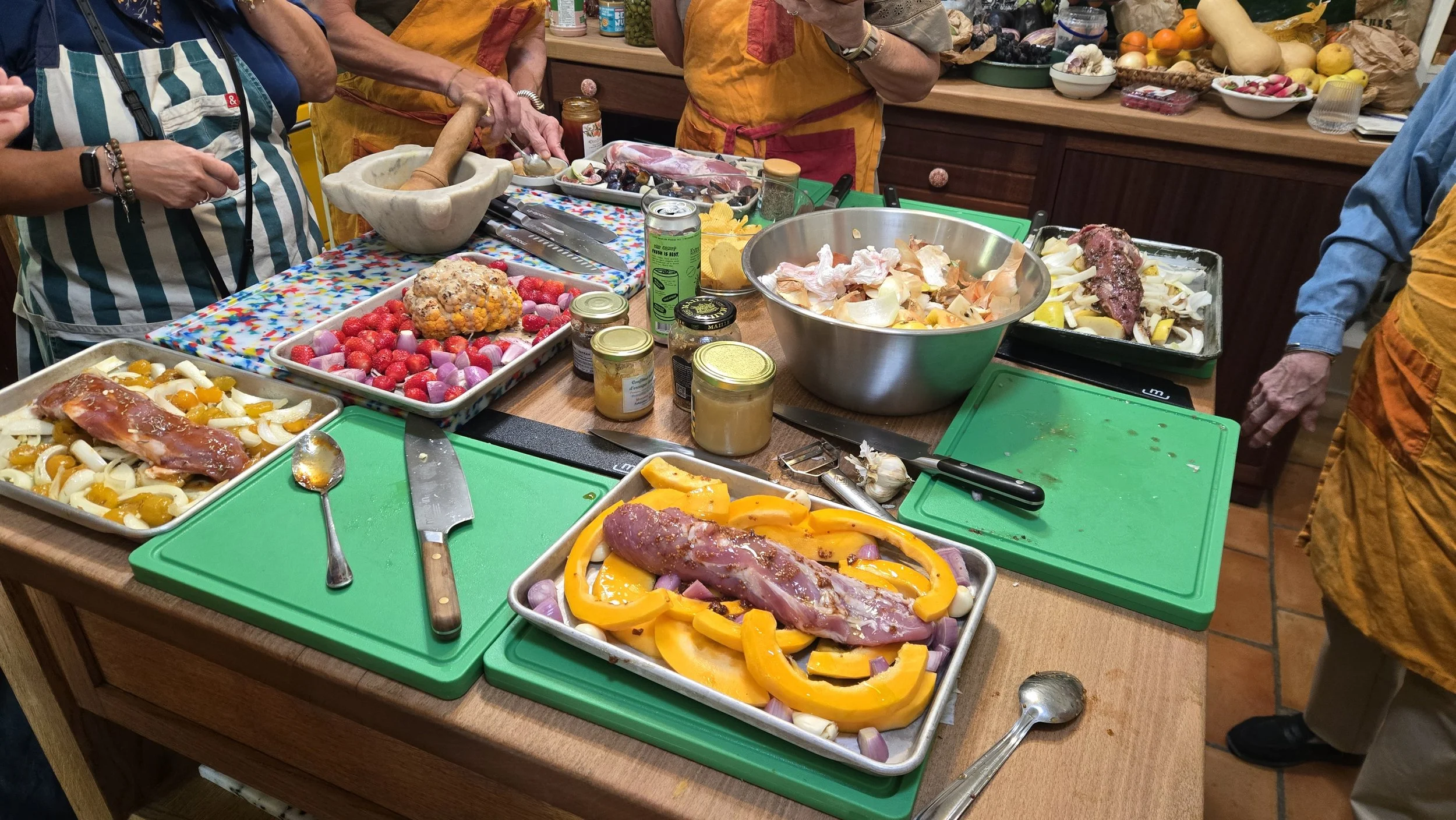
We added a couple side dishes cobbled together from what was beginning to look like the struggling remains of our market haul. And that was lunch.
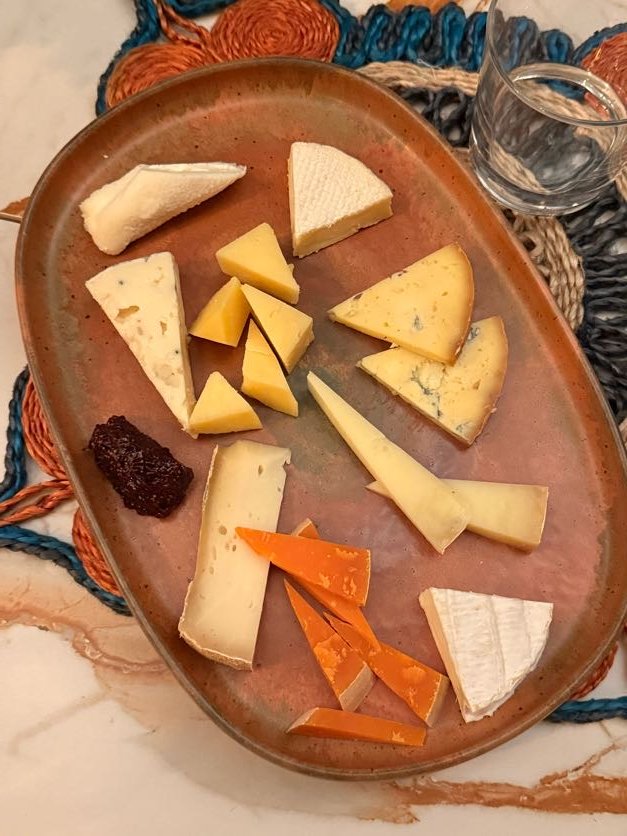
Later we headed to Valbonne for cheese tasting and wandering.
The village was exactly my weakness. Stone. Narrow streets. Little shops. Cheese.
I finally found the straw market bag I had been searching for and bought hand-painted citron espadrilles because I'd apparently decided to become French through accessories.
Back at camp: pool, rosé, talking.
That night’s dinner was the first meal where I contributed absolutely nothing.
Julia’s roast chicken. Mother sauces. Wine.
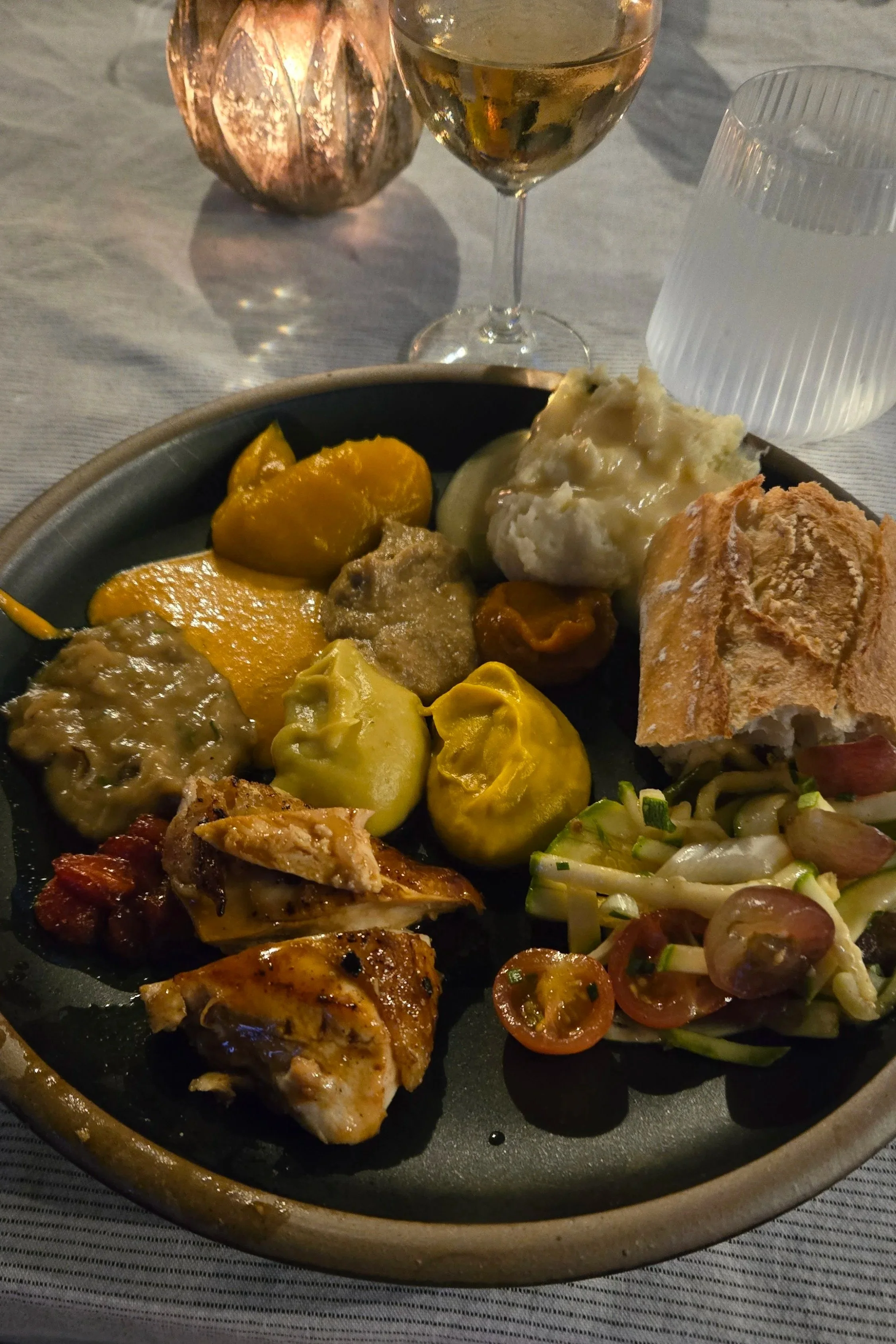
I sat down and ate. Glorious.
My chocolate-hazelnut tart appeared for dessert and was very well received, including by the resident pastry chef.
I behaved normally about this. Internally, there may have been fireworks.
The entire group lingered over dinner and wine. Nobody seemed particularly interested in ending the evening.
Eventually I slipped away. I was exhausted.
Crêpes in Pajamas and the Rules That Aren’t Rules
I slept straight through until breakfast. Which happened to be crêpe class. So I attended in my pajamas.
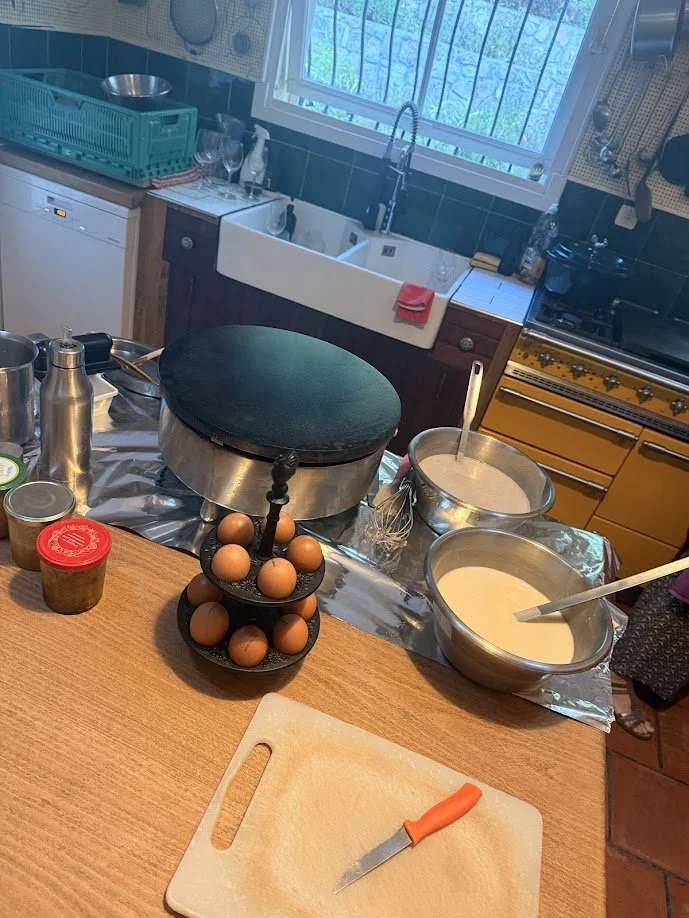
We practiced savory buckwheat and sweet crêpes on the special pan with varying levels of student competence.
Eventually the actual crêpière stepped in.
She made mine chocolate caramel. Chef’s kiss.
Then all seventeen of us crowded into the living room for Architecture of a Recipe.
No knives. No stove.
Just Makenna talking loudly about the things we had been doing all week.
Foundation. Fat. Acid. Salt. Aromatics. Complement or contrast. Texture. Temperature. Color. Garnish.
It was everything we had been learning, finally organized on one card.
The funny part was that after explaining the architecture, she essentially told us not to become enslaved by that either.
Everyone’s palate is different. Try things. Taste them. Maybe something weird works. Maybe it doesn’t. Adjust.
Lunch was followed by a small-group trip to a tiny family winery in the hills.
Eight wines. Snacky lunch. Mountain terrace. 2,000-year-old olive tree, said to have been planted by the Romans. .
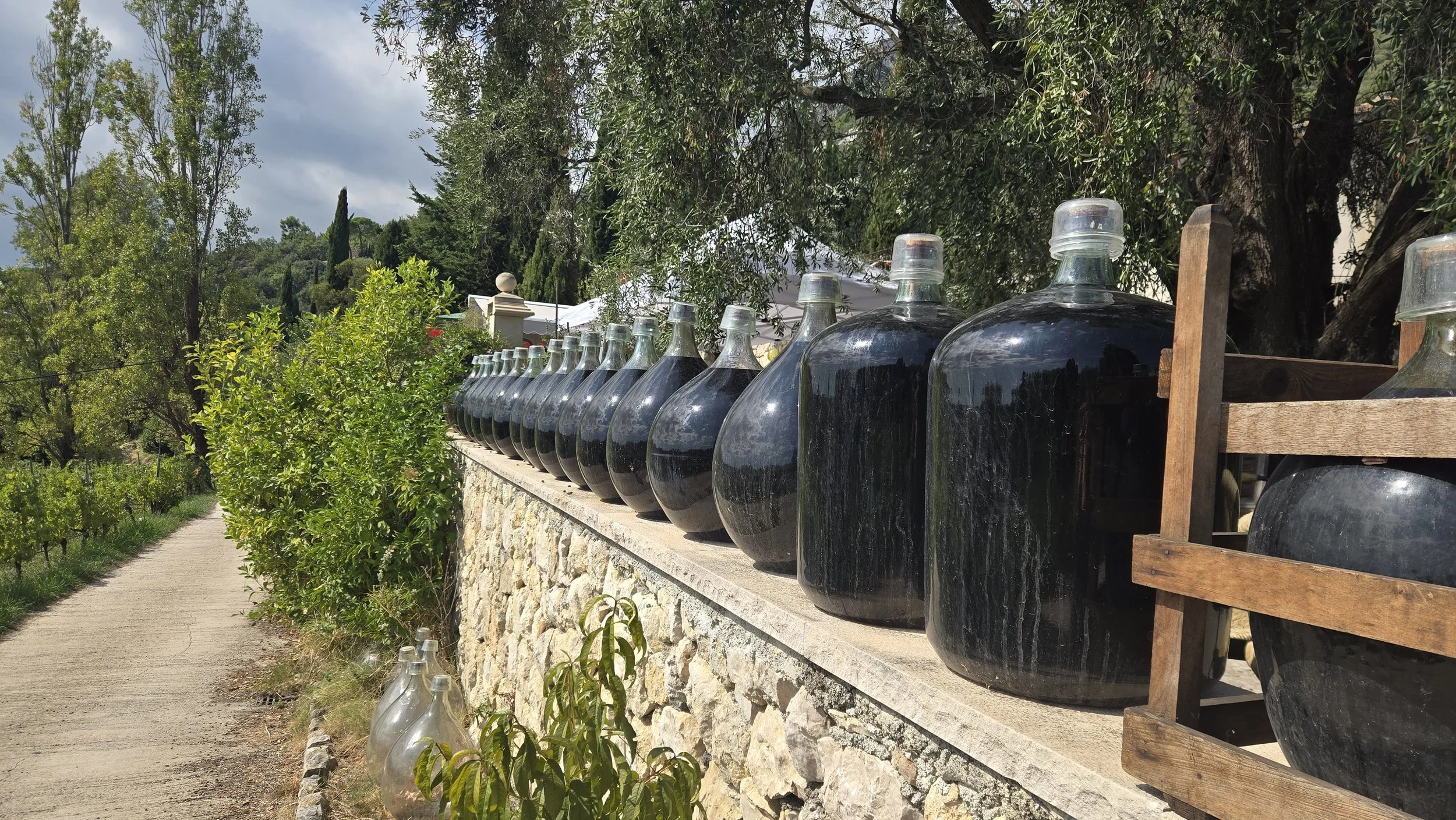
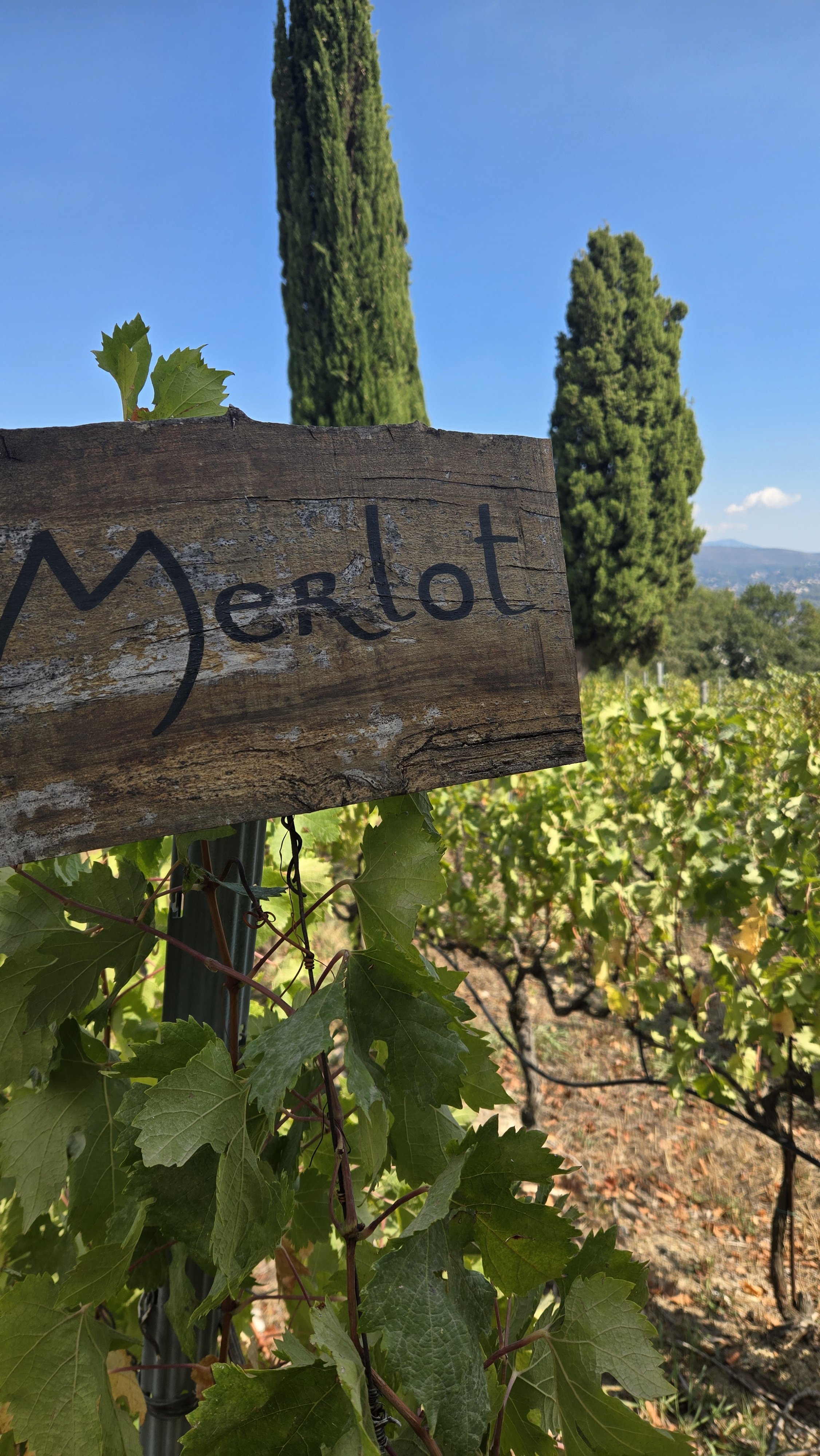
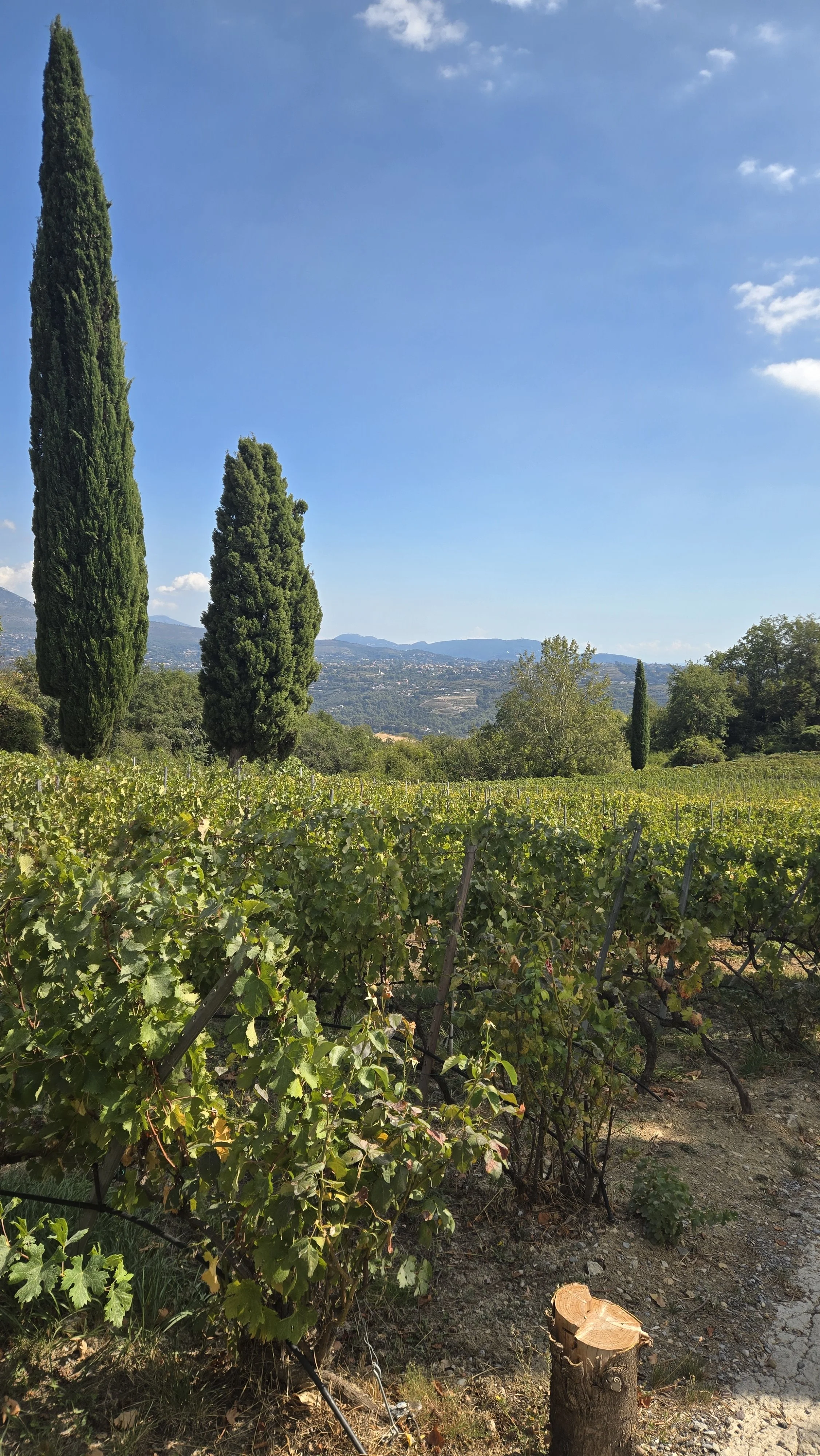
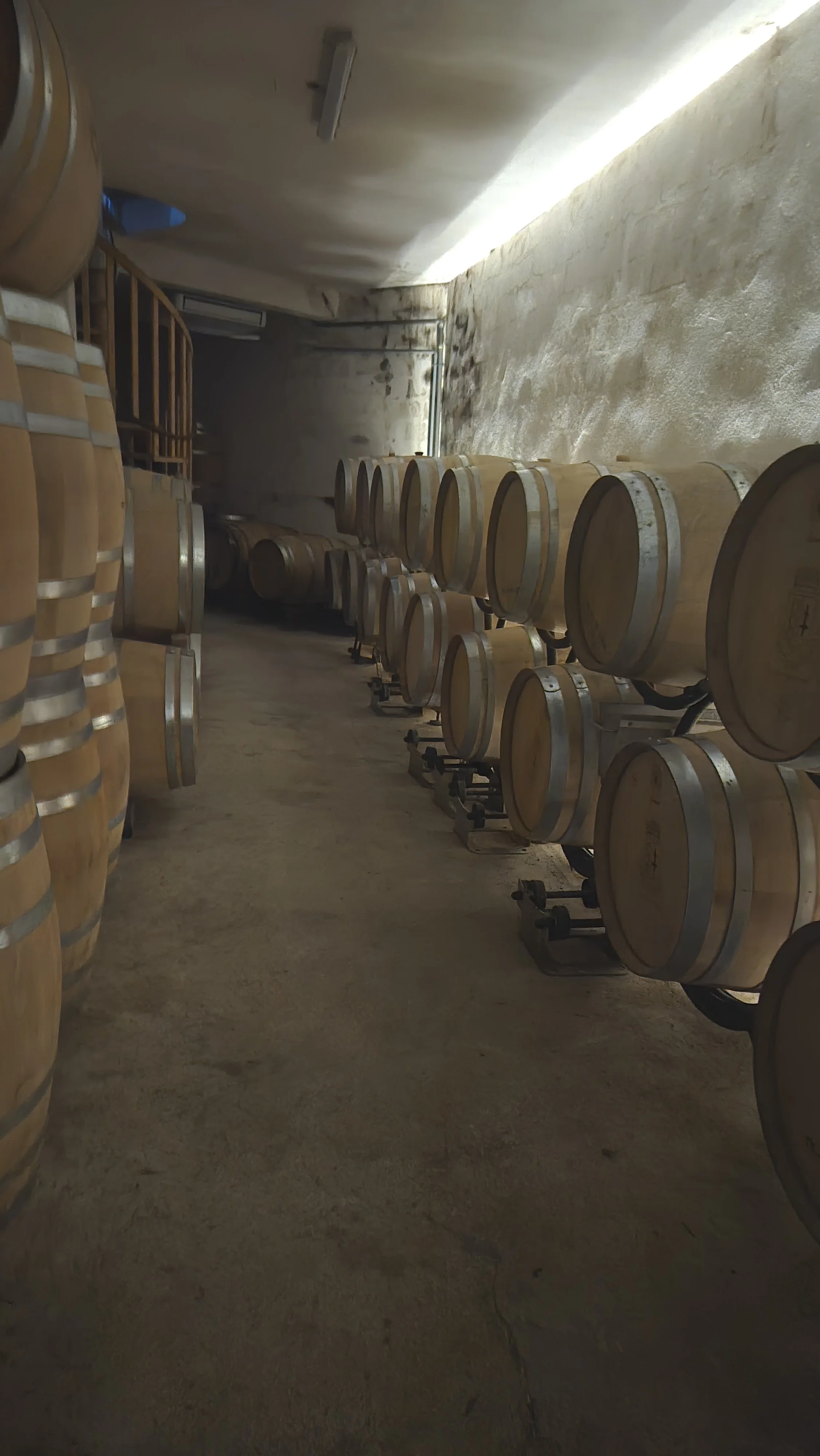
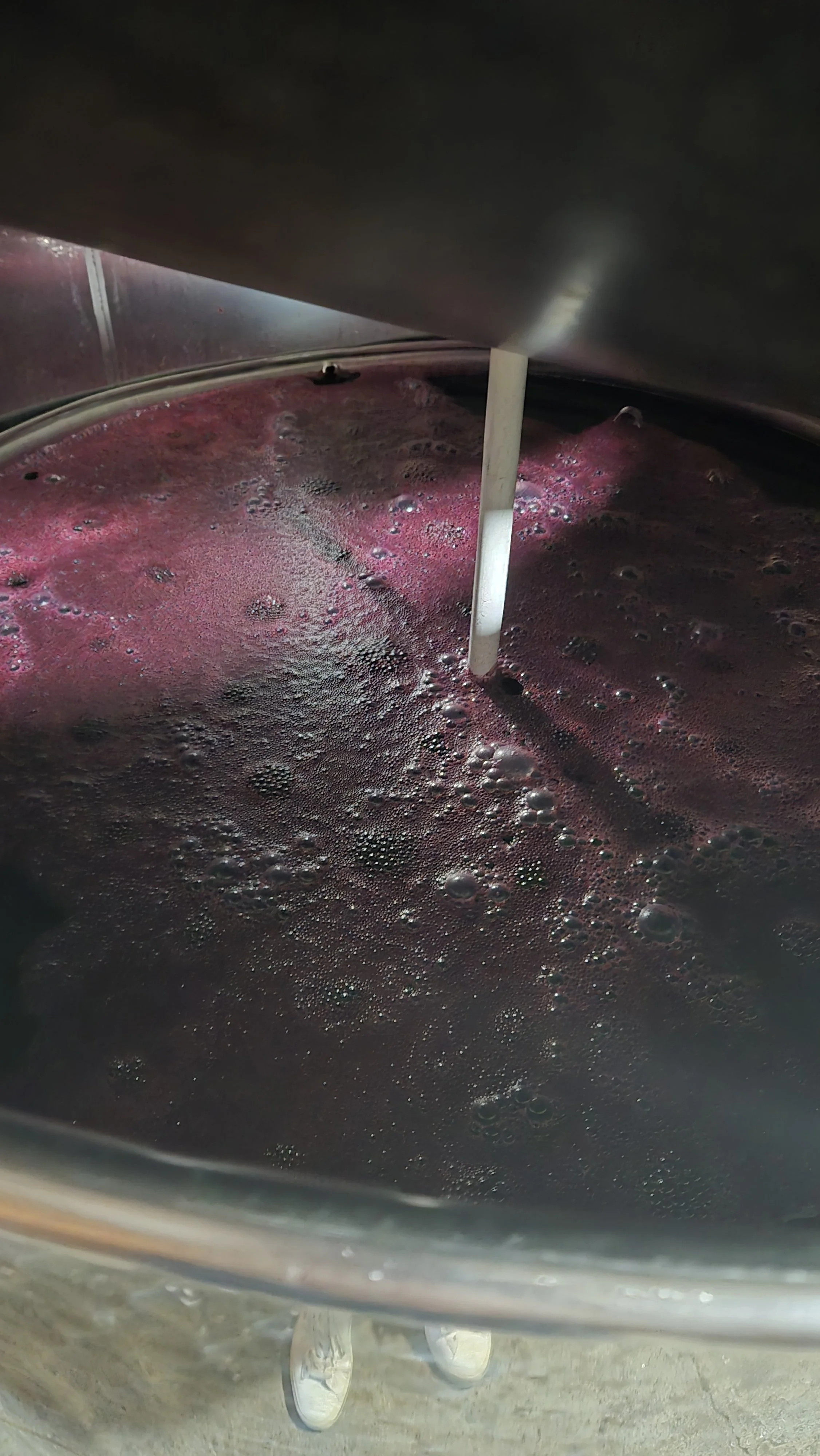
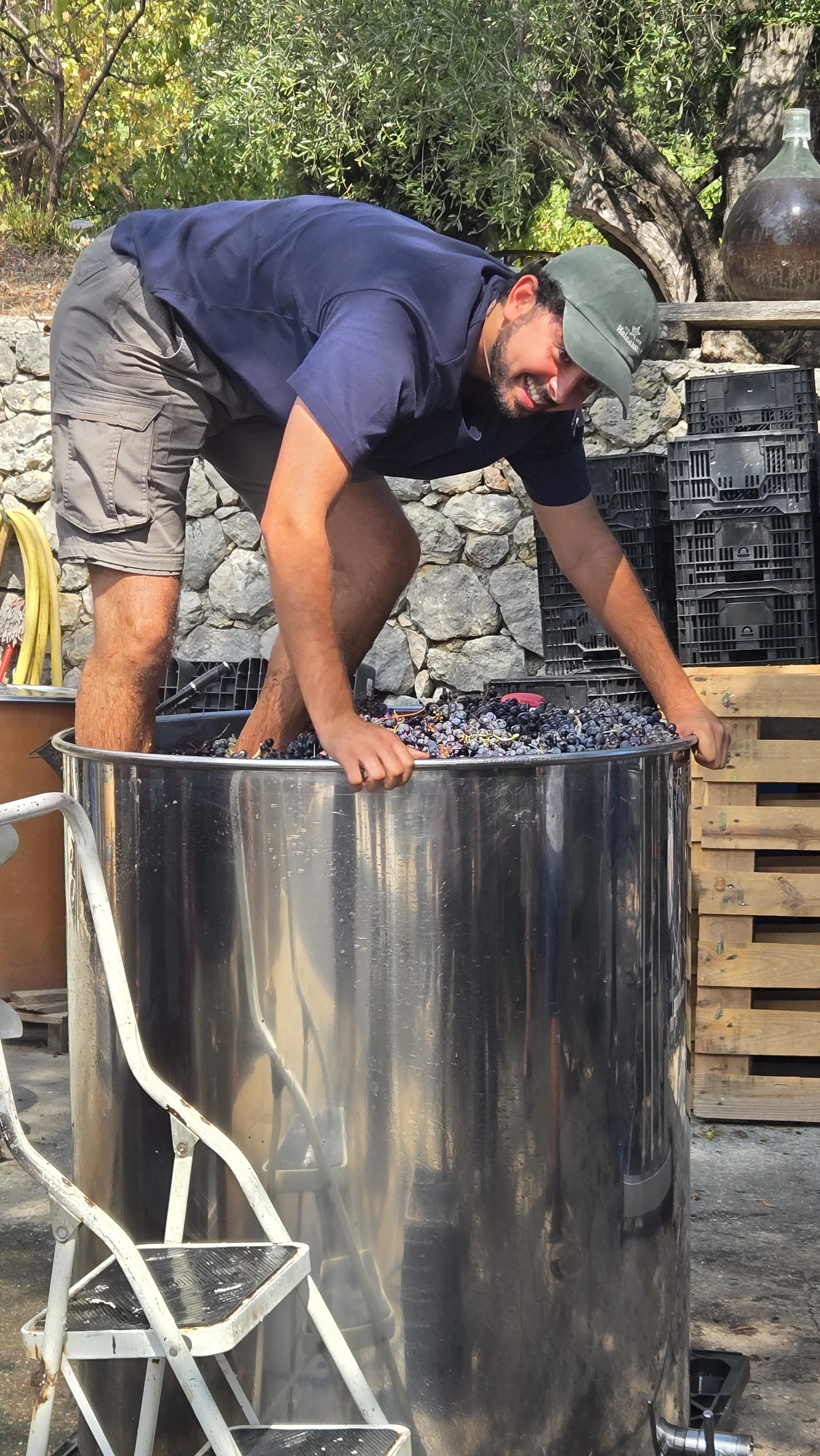
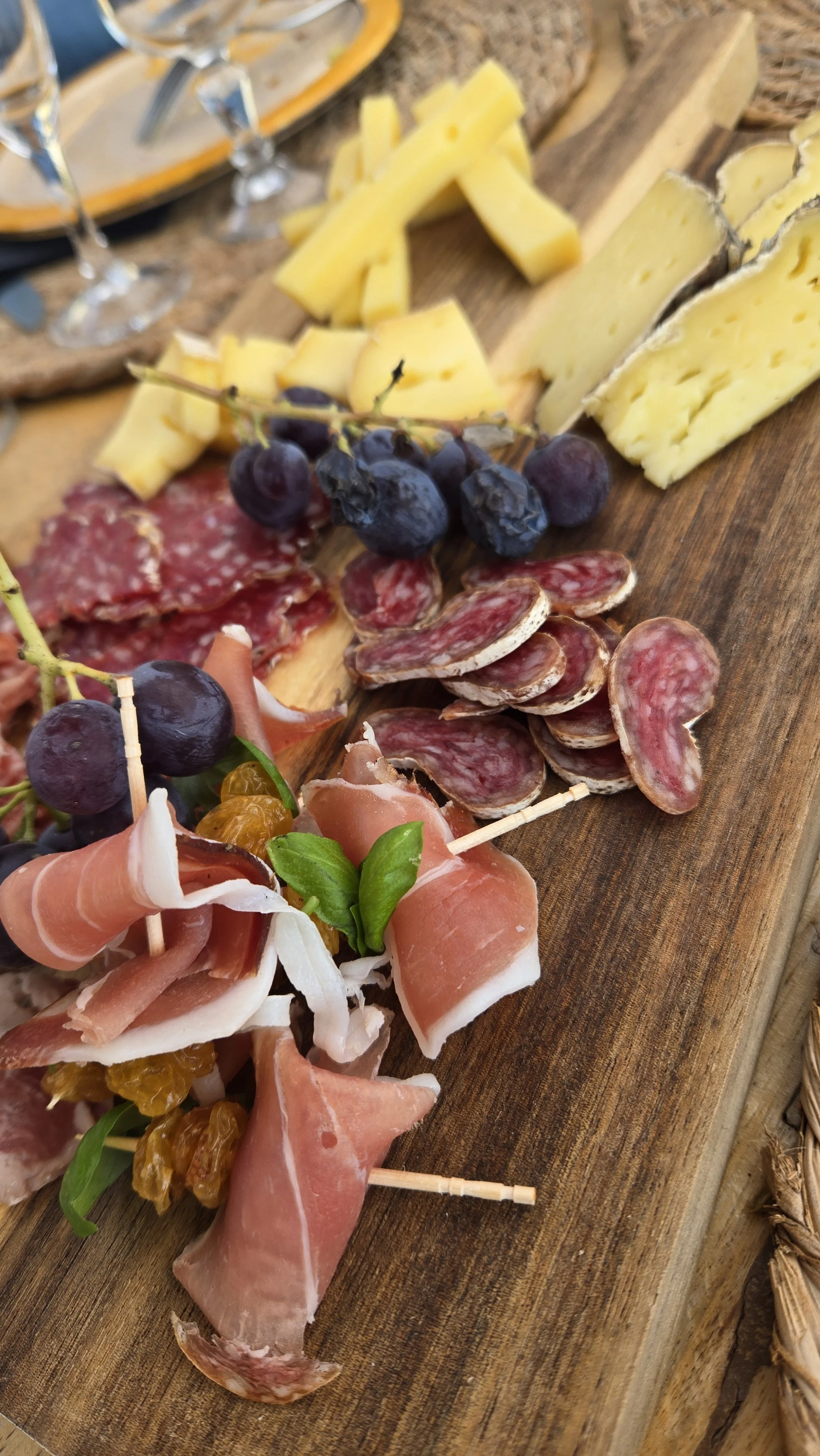
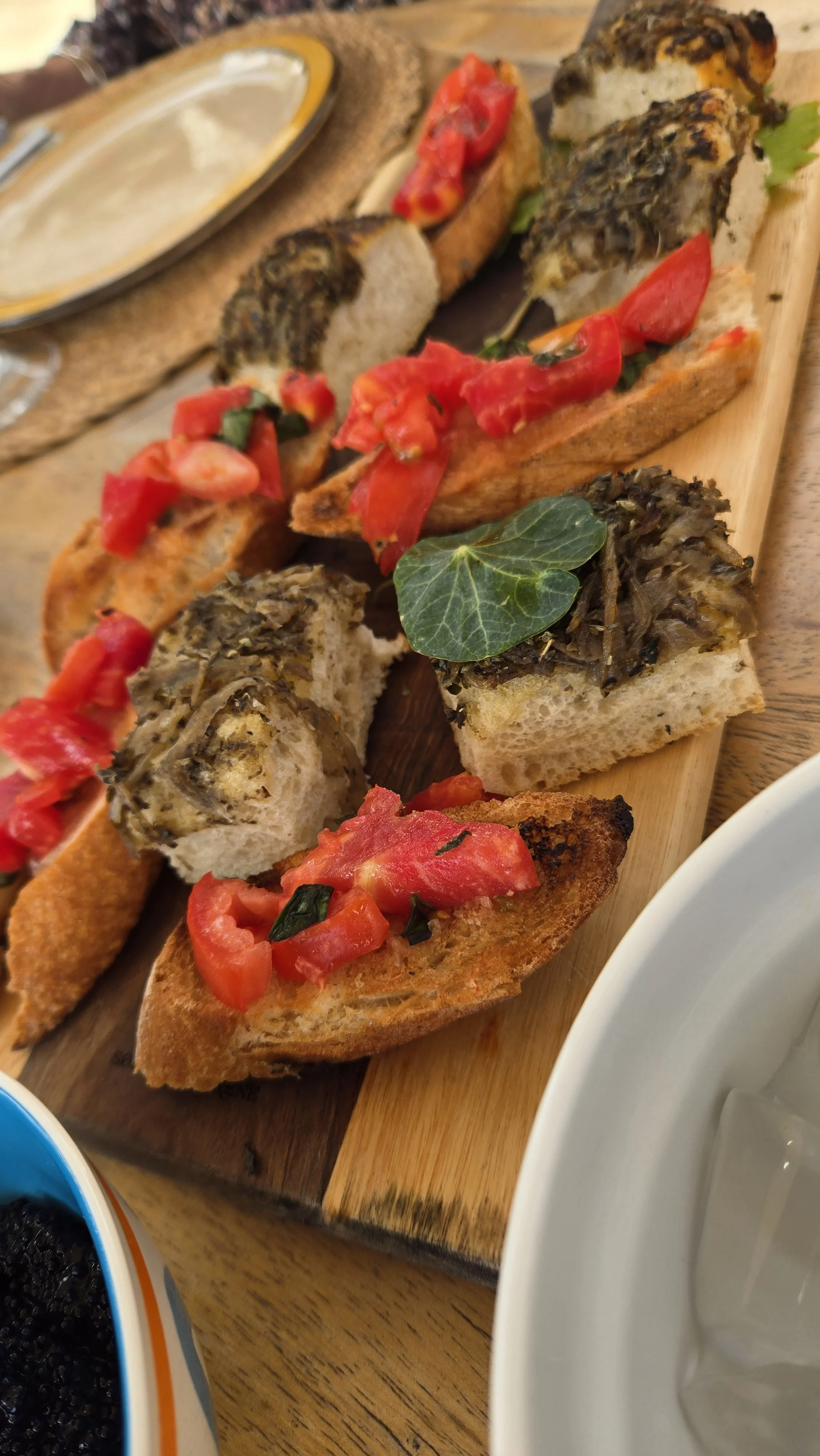
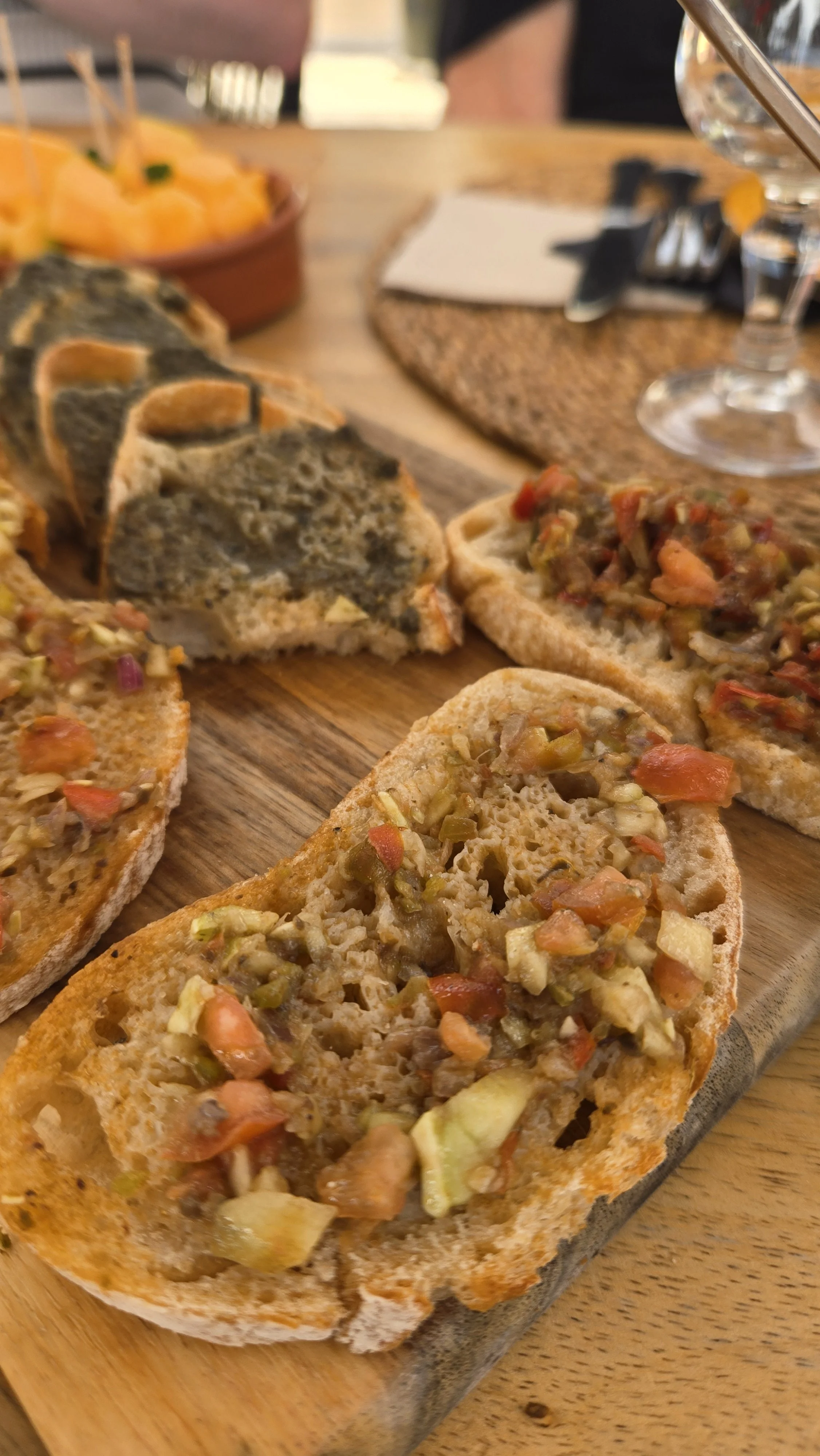
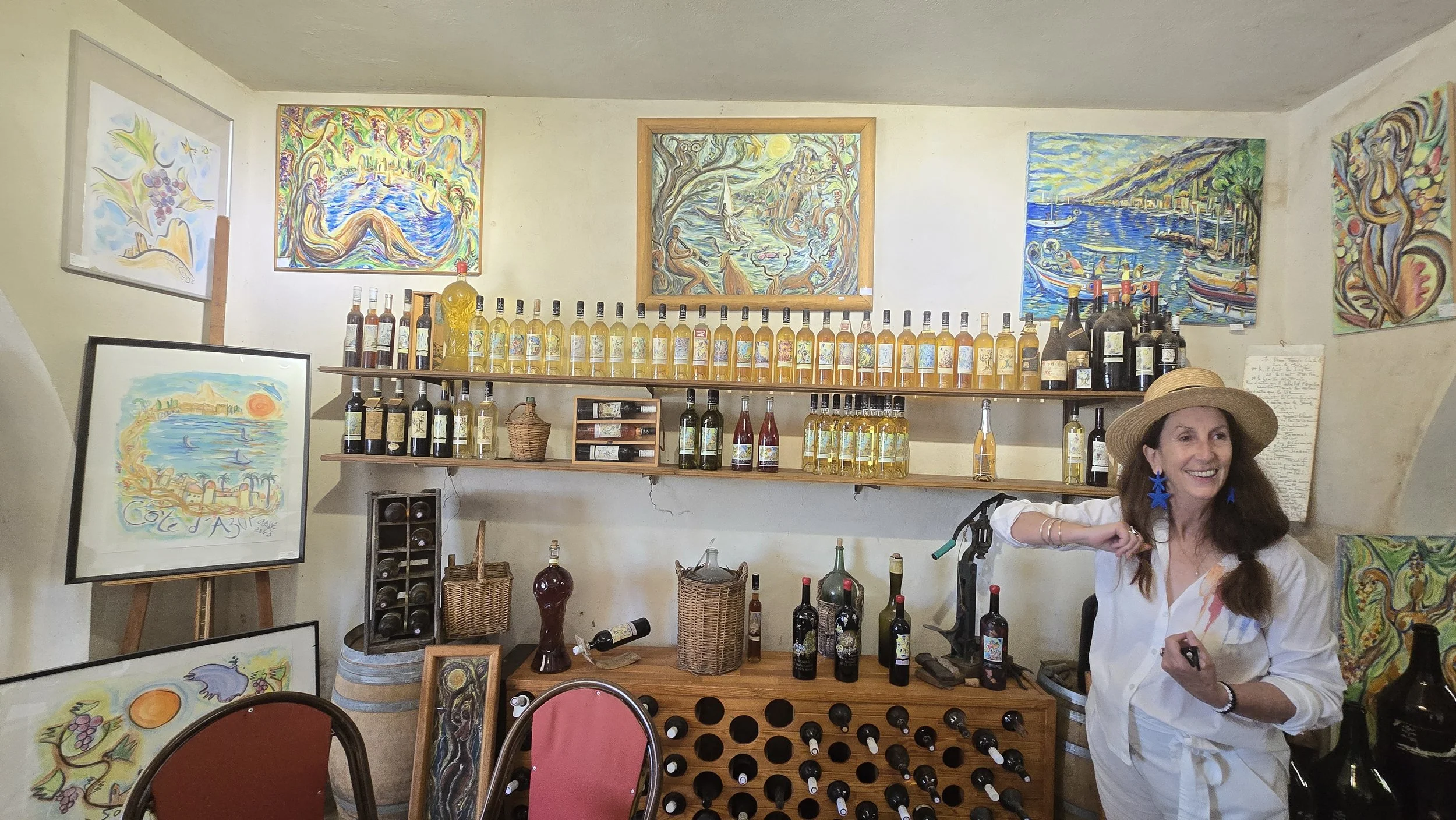
Vines around us and the kind of afternoon light that makes every purchasing decision seem financially sound.
I bought approximately €120 worth of wine.
Shipped home, it became approximately €500 worth of wine.
Jason texted: “How do you accidentally buy wine?”
“It happened. Stop asking questions.”
To be fair, I did not accidentally buy six bottles of wine. I accidentally bought international logistics.
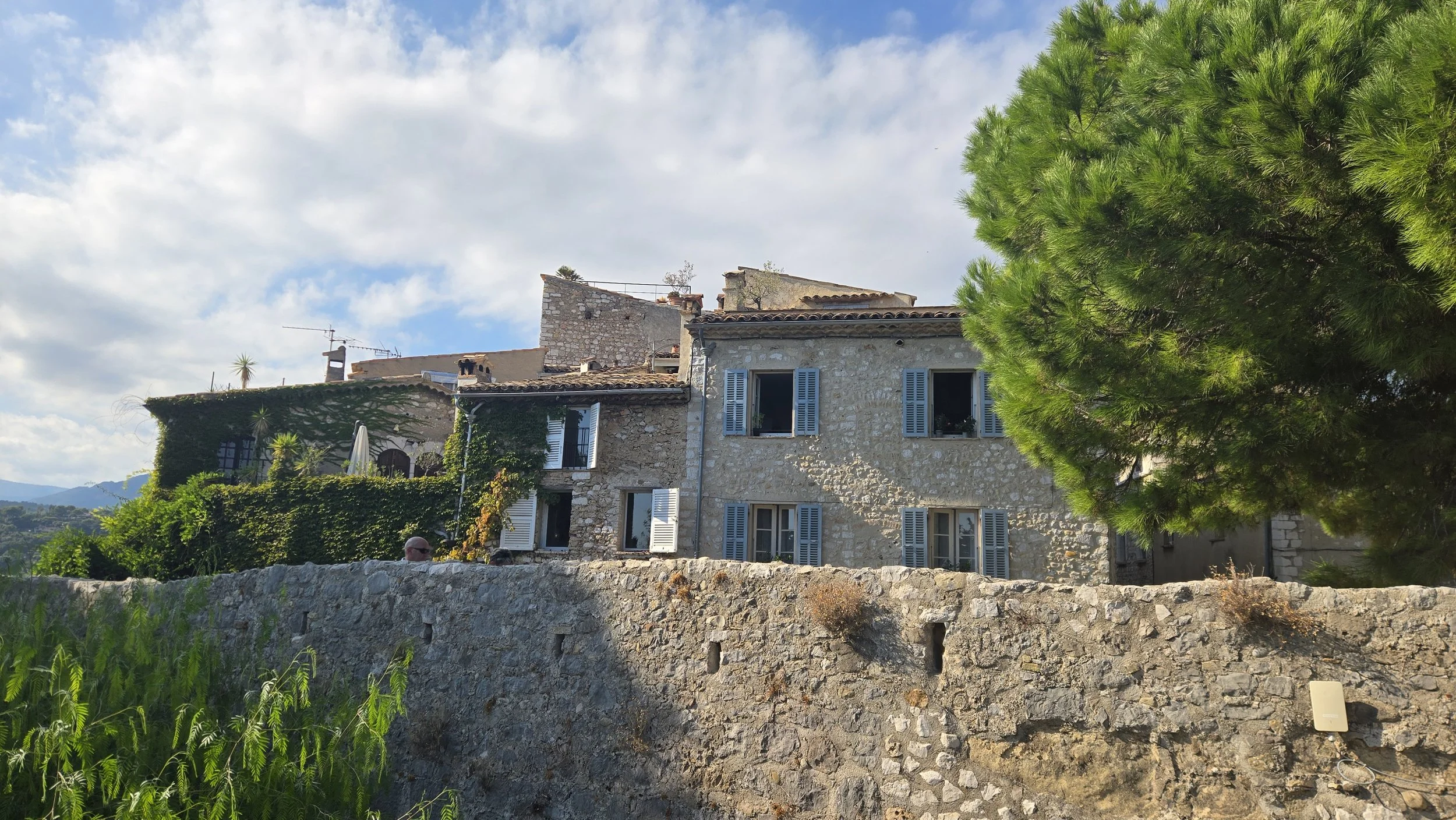
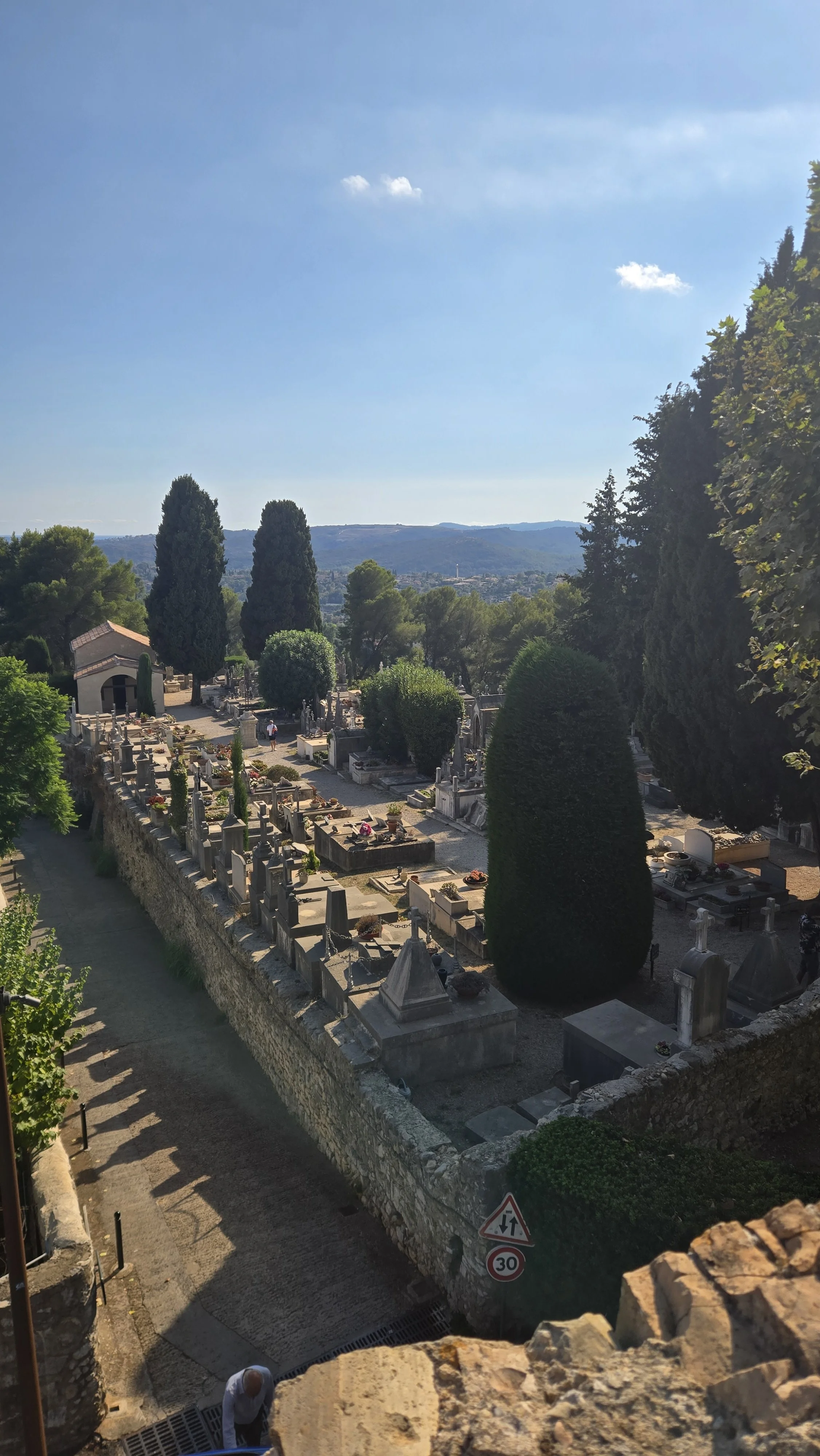
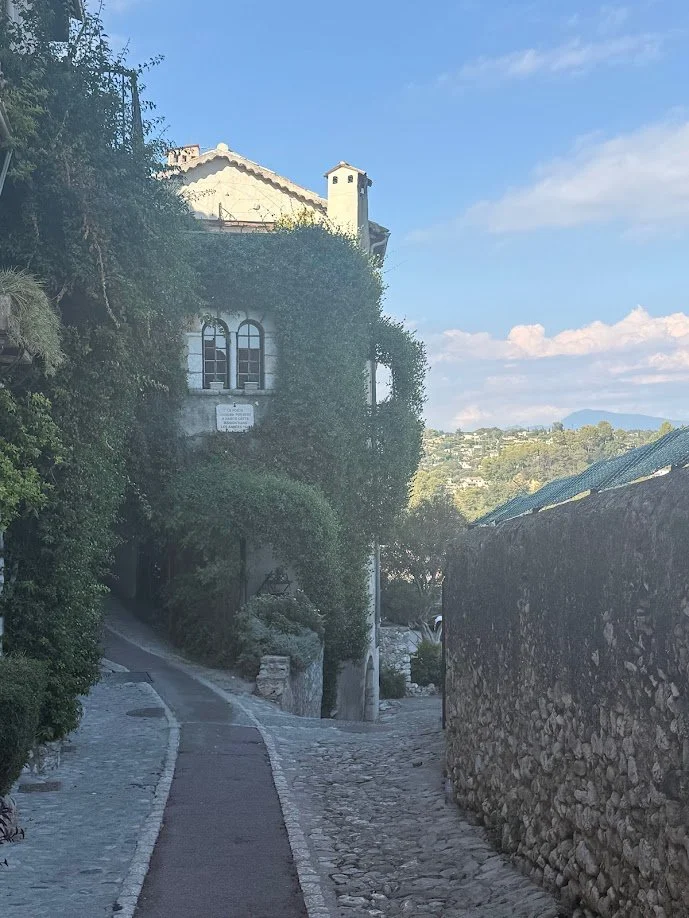
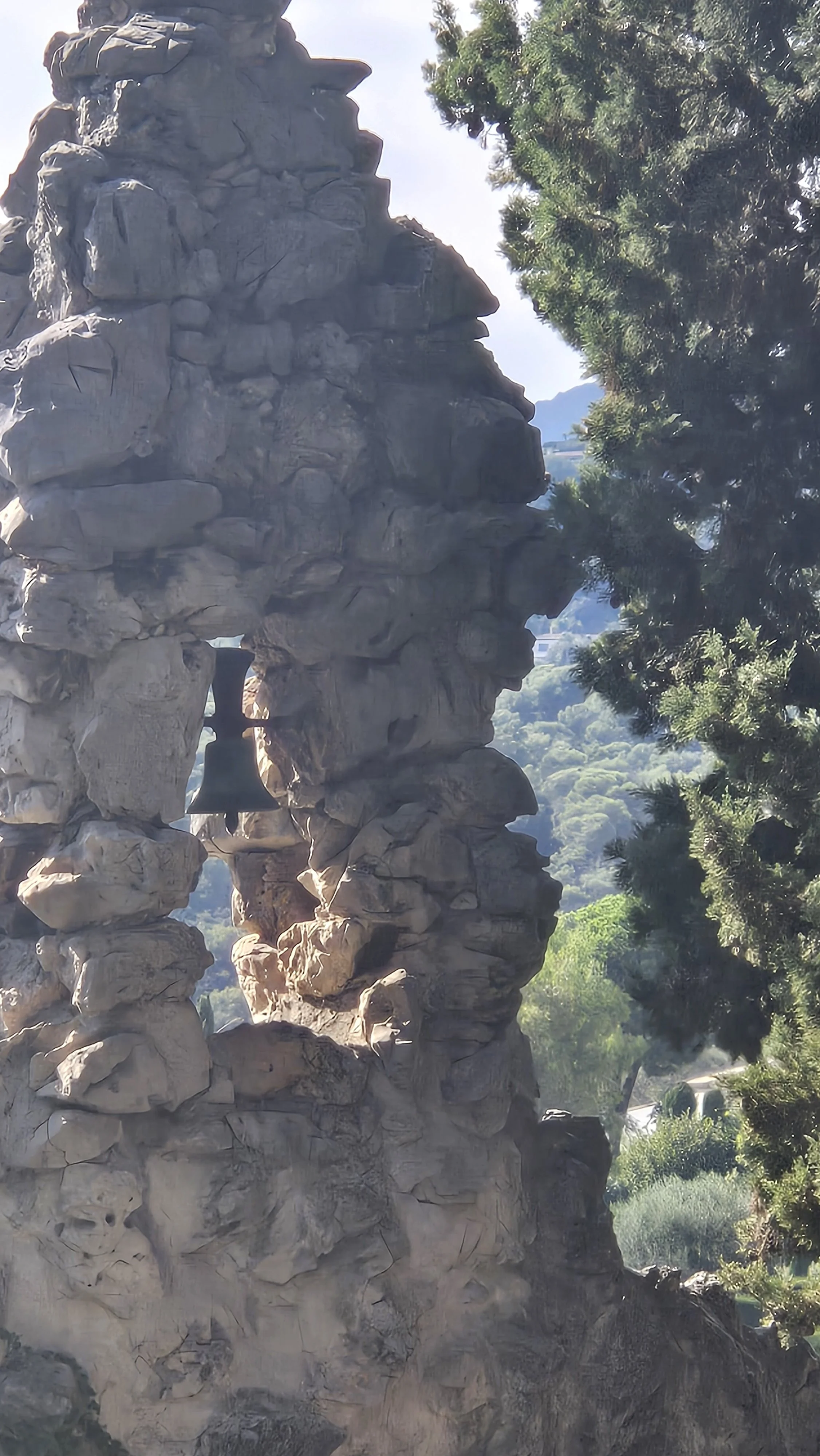
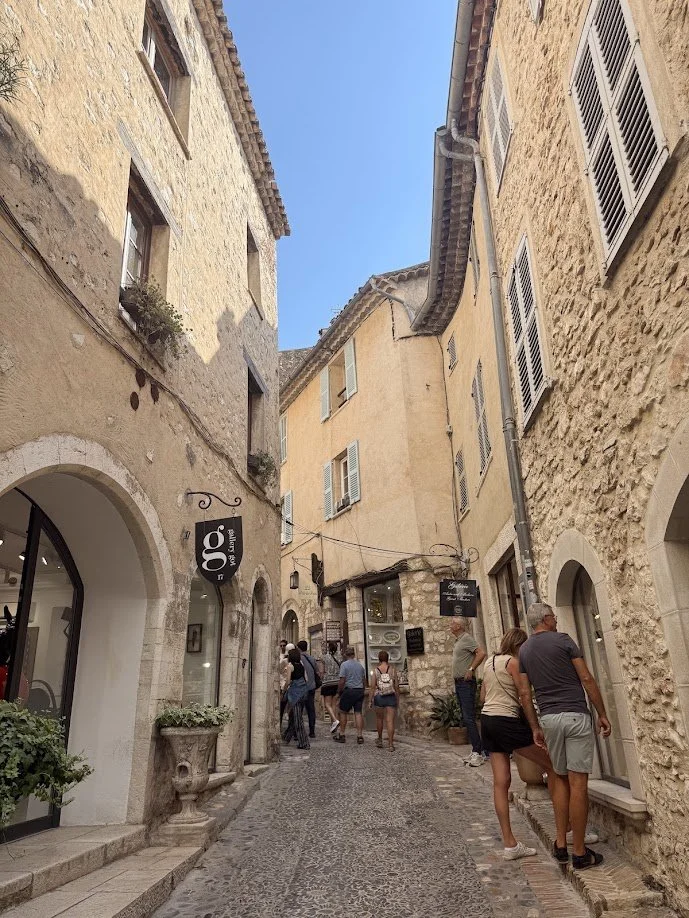
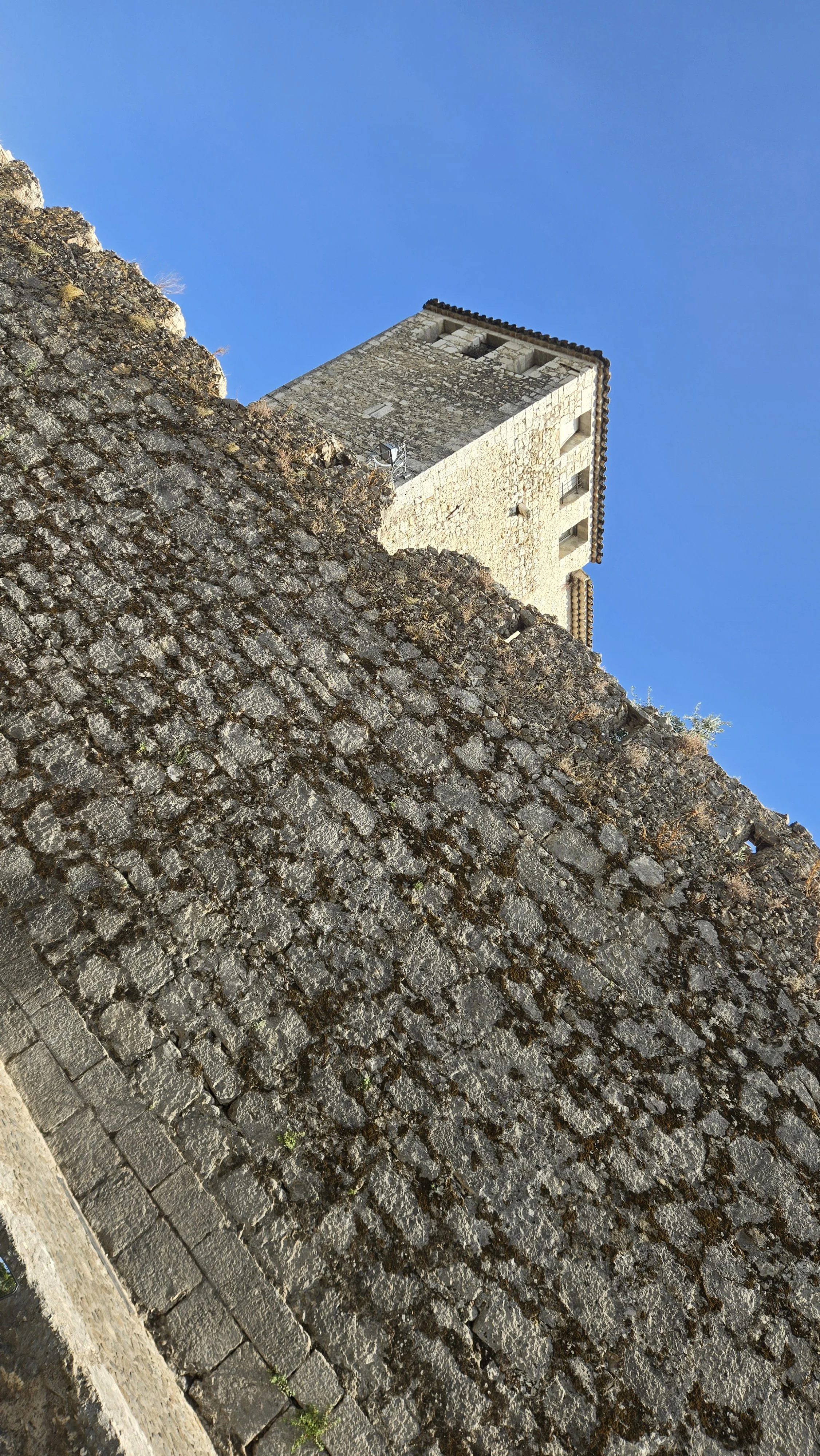
From there we headed to Saint-Paul-de-Vence.
I love a walled French town to a degree that may be medically significant.
I wandered the stone lanes, poked into shops and snuck in gelato before returning to camp for the ritual that had now become firmly established.
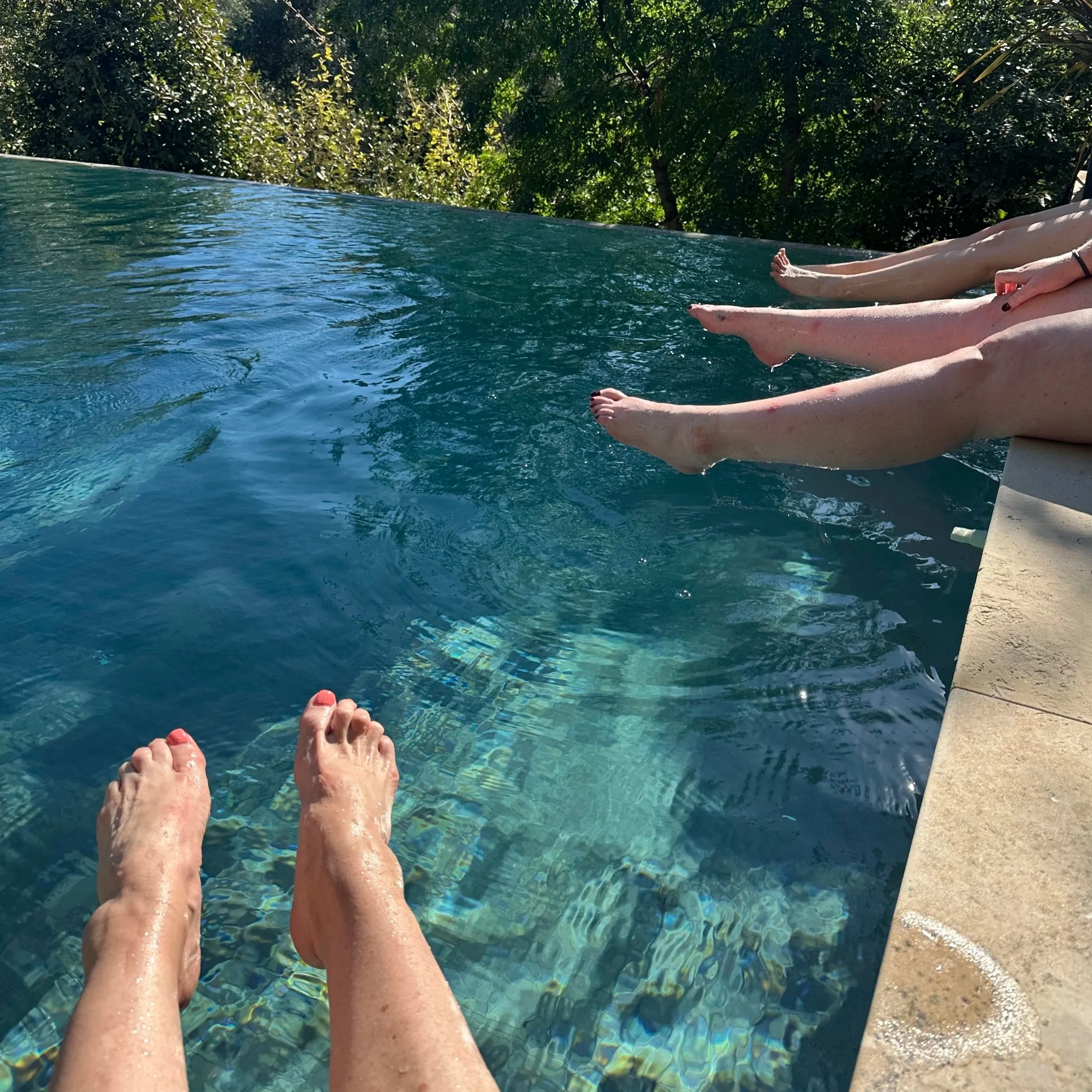
Pool.
Rosé.
Ladies.
Dinner that night was focaccia pizza made by the instructors.
Then we sat around talking far too late. Again.
Galettes & Good Olive Oil
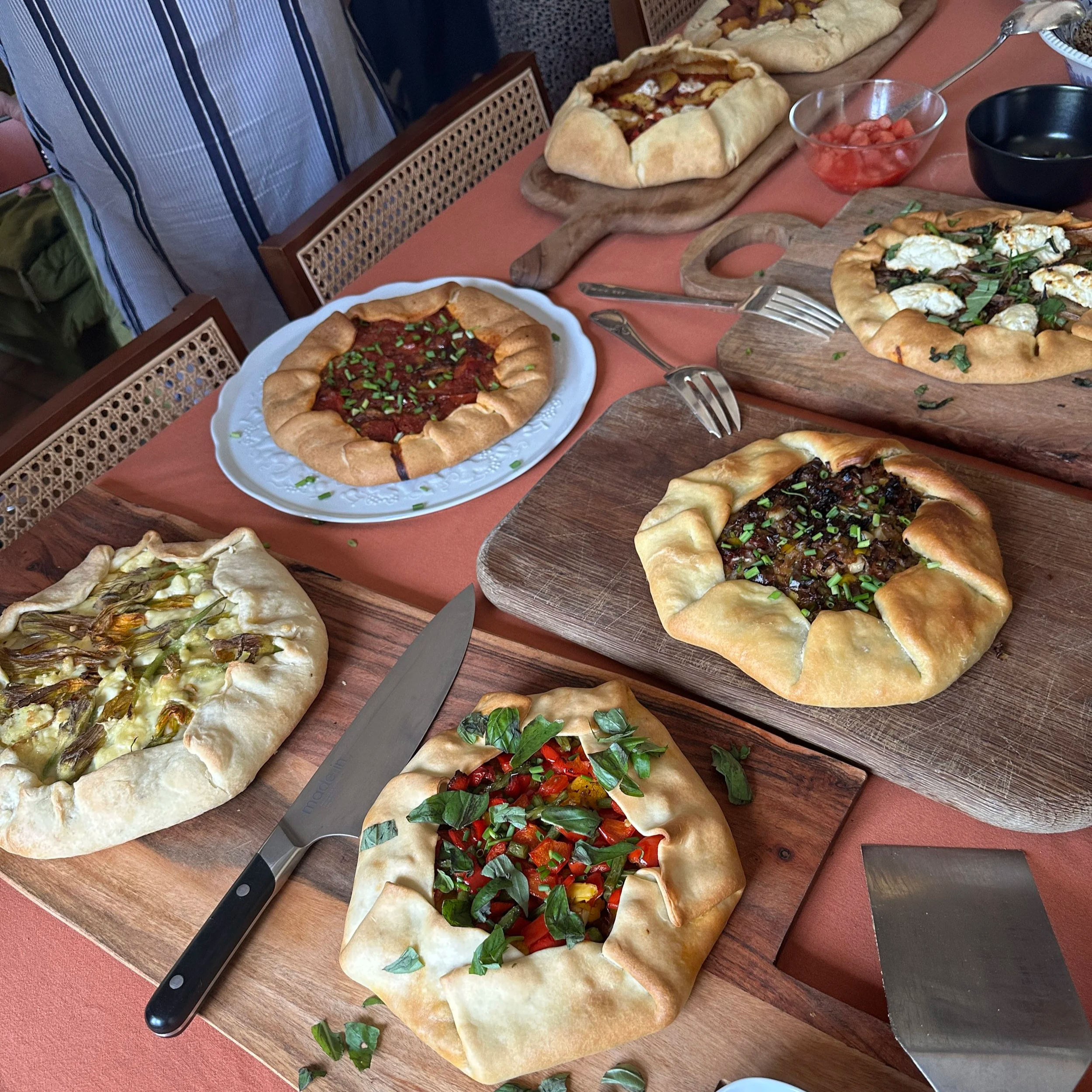
Our final morning started with galettes.
And apparently by this point even measuring cups had become optional.
Approximate ratios until the dough feels right.
Fill it with whatever you have. Sweet or savory.
Moist, not wet. Everything should cook in roughly thirty minutes.
Rustic. Nothing precious. Nothing precise.
We were cleaning out the refrigerator, folding the week's last odds and ends into pastry.
I loved it.
Quiche and galettes may be about to become a whole personality at home.
God help everyone.
We ate our galettes for lunch with sides and salads cobbled together from whatever remained, then sat talking until it was time to leave for Makenna’s farm in Grasse.
We walked the property and tasted olive oils.
Really tasted them. Peppery. Grassy. Soft. Sharp.
I left with one immediate conclusion: The olive oil situation in my kitchen at home needed intervention.
Then we had a little free time in Grasse.
I sat in the shade. No particular mission. Just France around me.
One Last Table
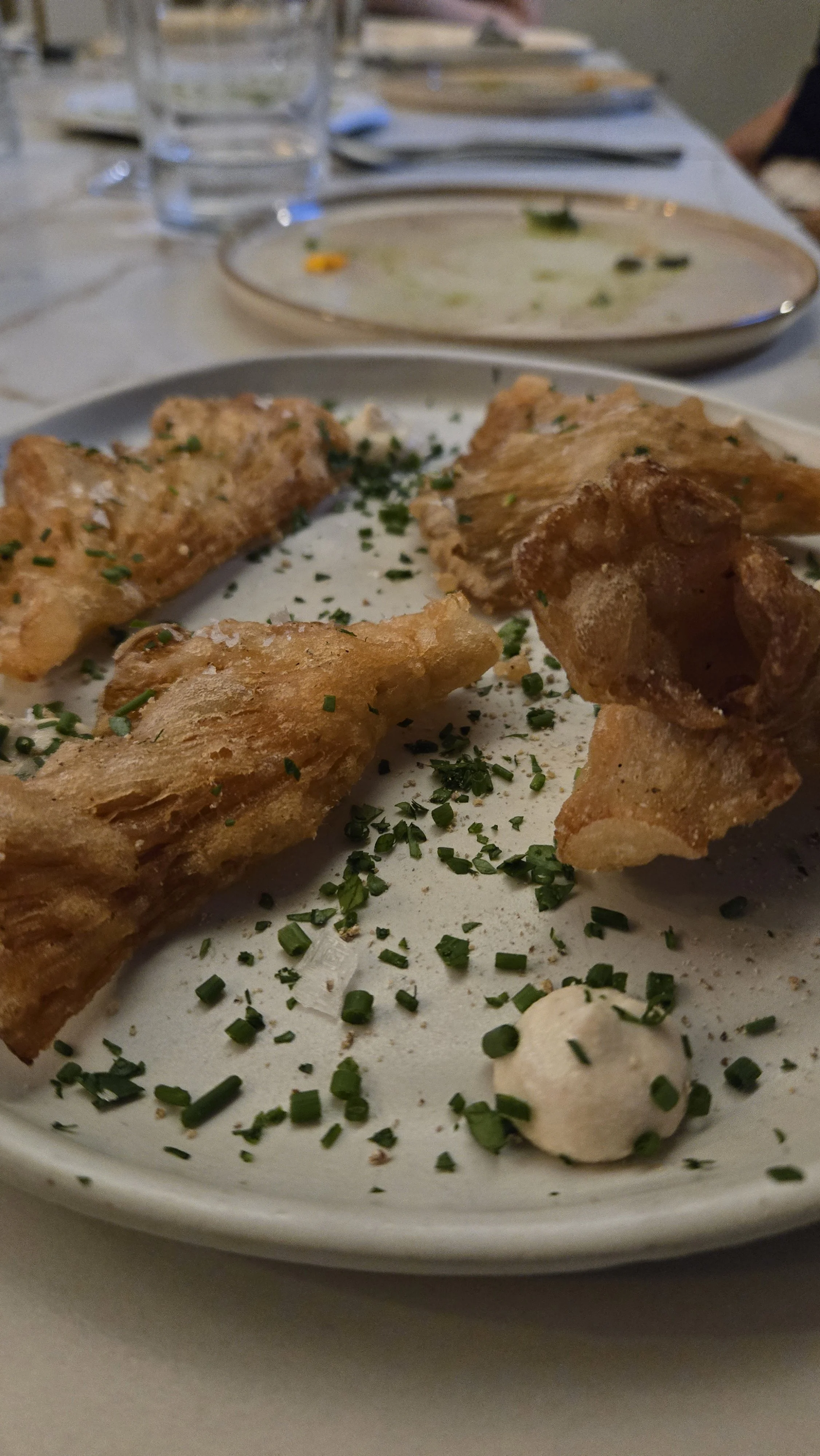
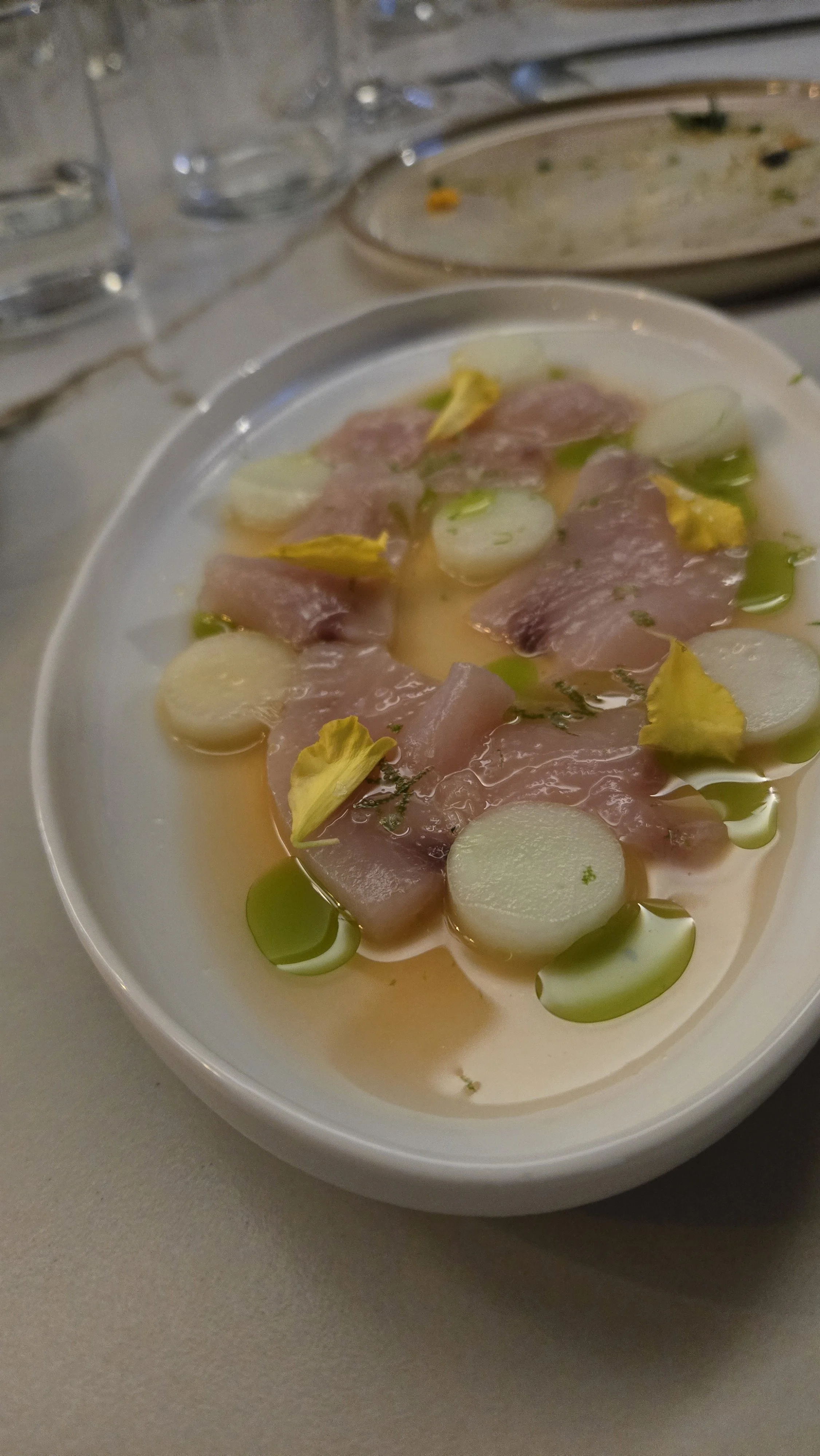
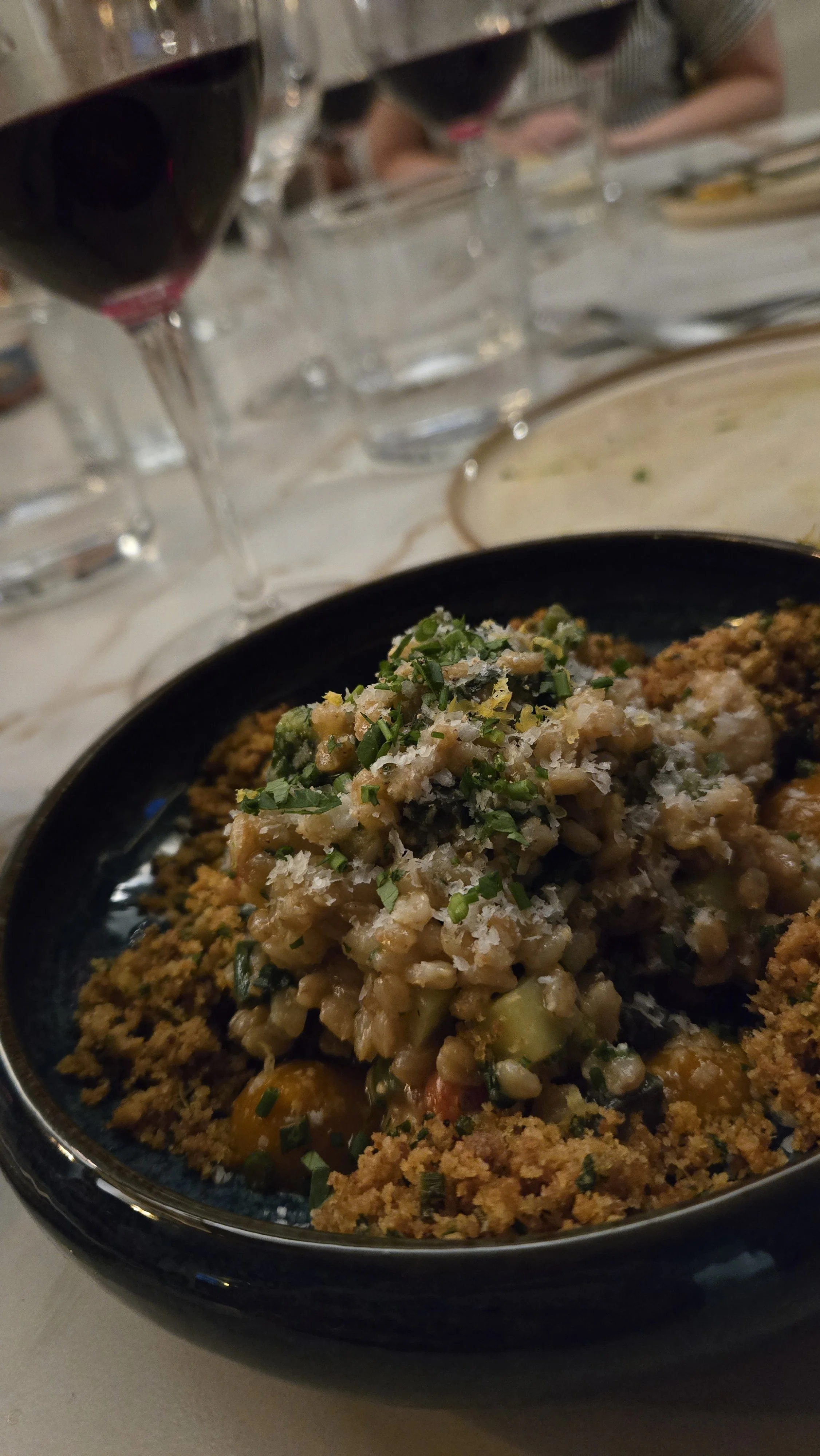
Our final dinner was at Detour, Kendall’s restaurant in Grasse. Eight courses. Seven wines. Vegetables and fish, with ingredients sourced from within about six hours. Seeing Kendall in her own kitchen made perfect sense. Her enthusiasm for food was infectious. The dishes looked simple until you tasted them and realized something unexpected was happening.
Tomato carpaccio. With cinnamon. Cinnamon!? On tomato.
My favorite course was a fried oyster mushroom with almond “aioli.”
A mushroom.
Nothing extravagant. Nothing precious. Spectacular.
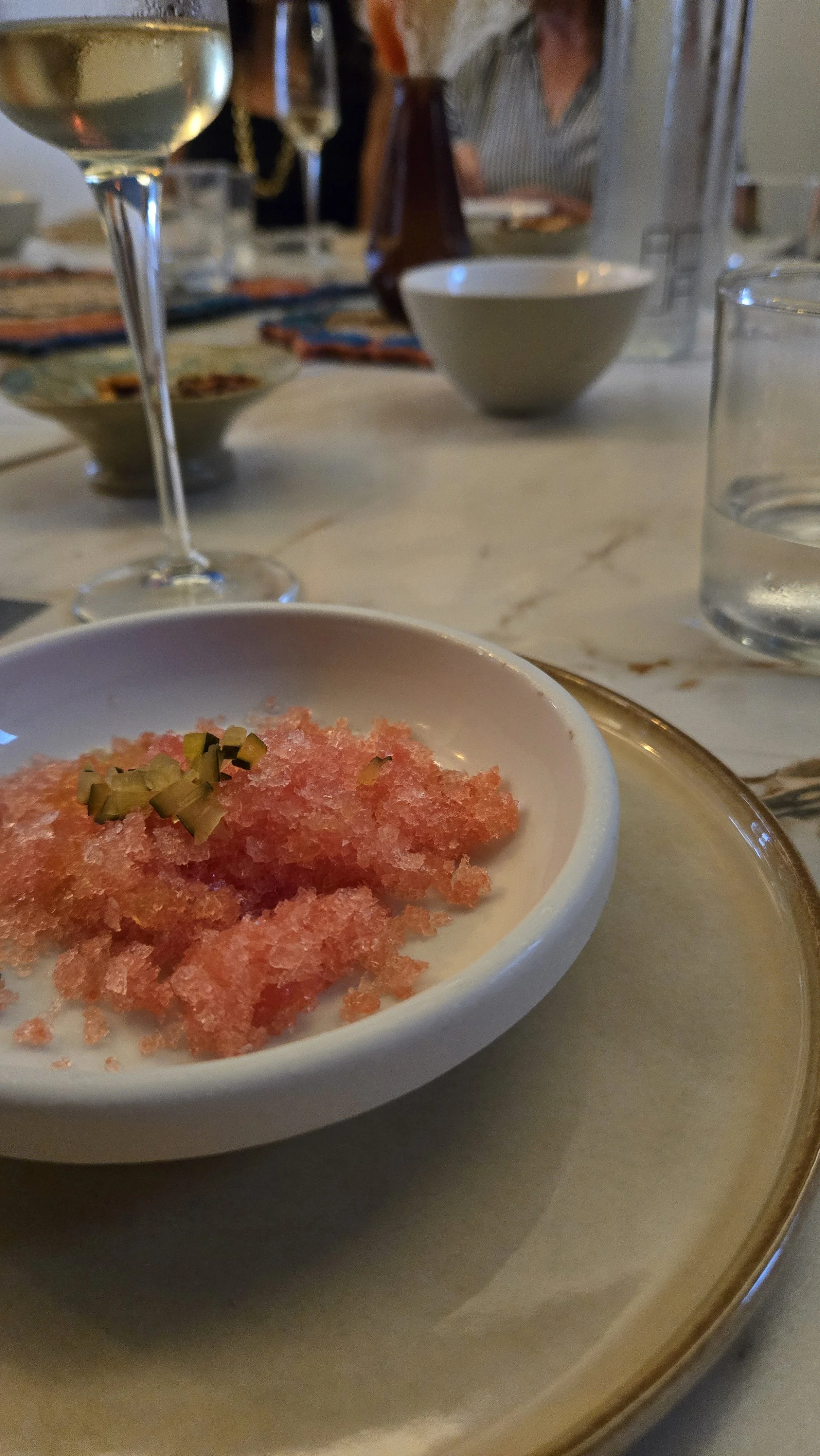
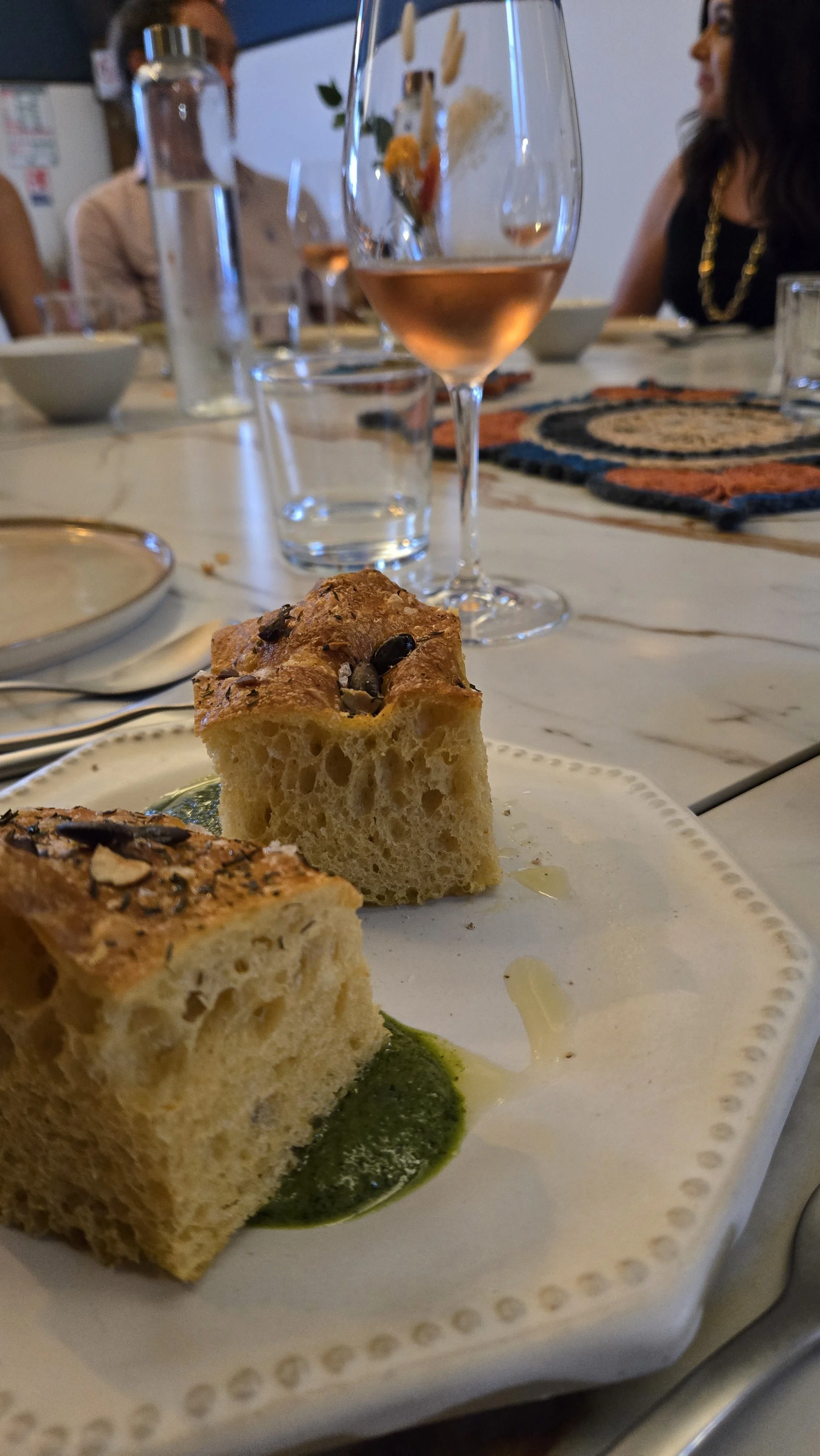
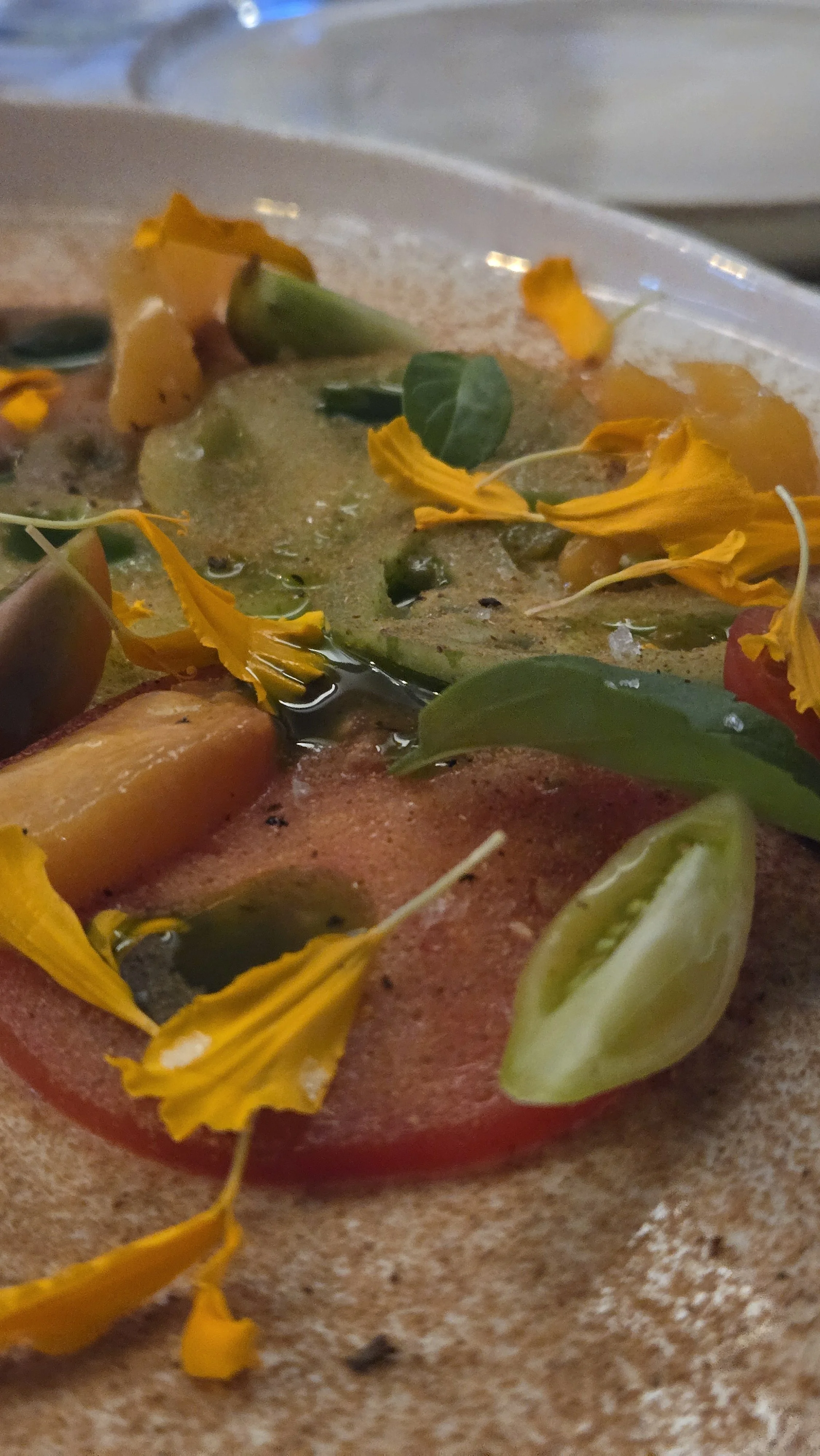
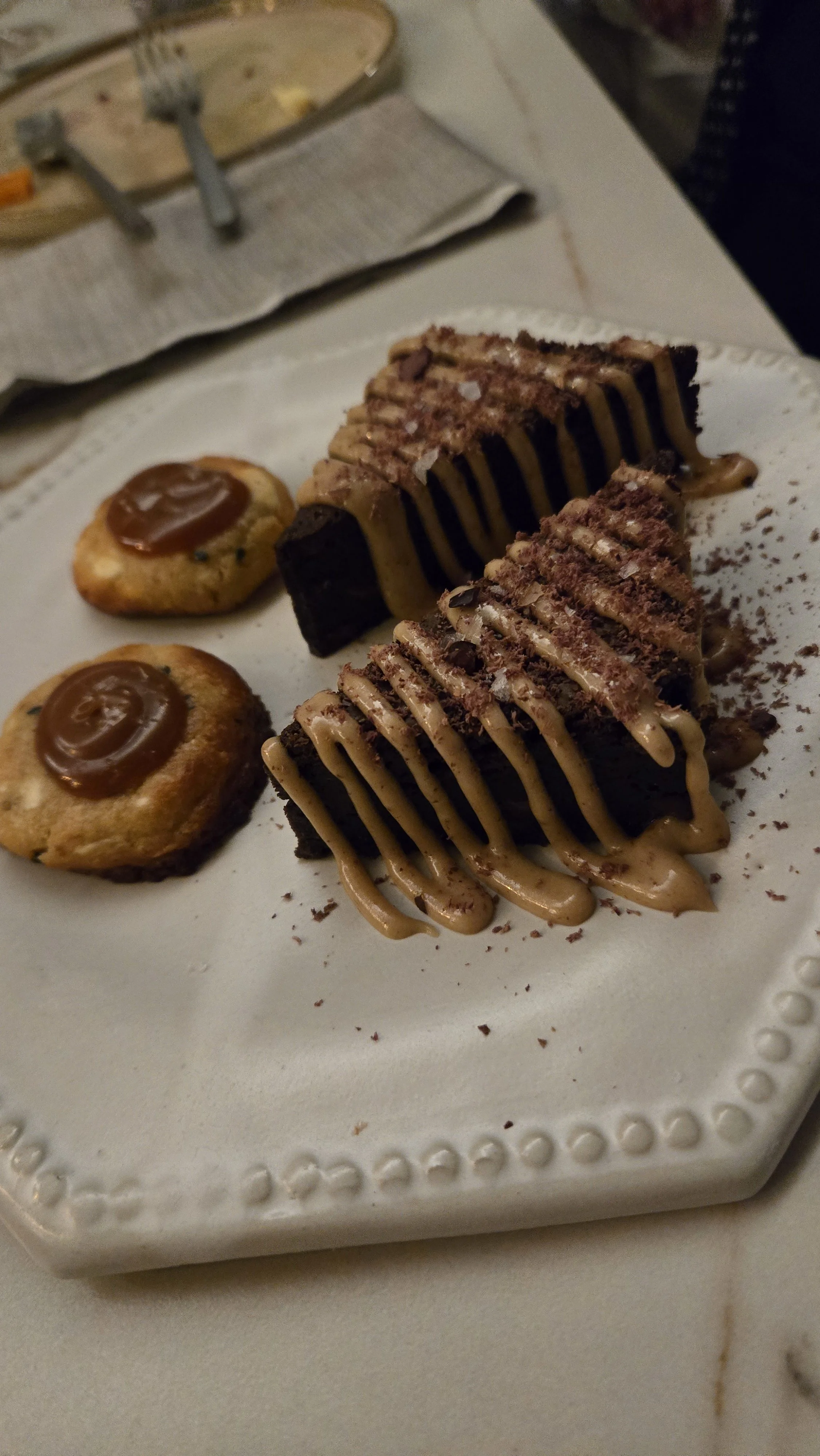
We ate and drank and talked.
Then went home and stayed up far too late drinking and talking some more because apparently nobody had learned how to end a meal all week.
The next morning I left for the airport.
This Isn’t That Serious
Sitting at the gate, I kept thinking about my kitchen.
Not Julia’s. Mine.
I wanted to buy better olive oil.
I wanted to make an omelet properly.
I wanted to open the refrigerator and see what needed using.
I wanted to make a galette without measuring it.
Maybe put two things together that had no obvious business being together.
Taste. Adjust. See what happened.
All week, the instructions had gotten less precise.
Smell the spices. Pick one. Taste it. Add acid.
Change direction.
Use the leftovers.
Approximate the dough.
Rustic is fine.
This isn’t that serious.
Which is funny, because one sentence had been quietly following me around all week: She never did take life too seriously, even if she very much took life too seriously.
I will make the inappropriate joke. Drink the rosé. Sneak the gelato. Buy the ridiculous wine.
And quietly wonder whether I chose the right route, the right restaurant, the right spice.
In Nice, eventually I stopped checking the map.
At La Peetch, eventually I stopped looking for the recipe.
France itself had changed somewhere along the way too.
For years, France was Paris in my mind, and Paris never particularly called to me.
Now France is Toulouse’s pink brick and Nice’s open windows. Church bells over dinner. Chouquettes beside the Mediterranean. Green plums. Oyster shells. Ochre walls and laundry over alleyways. A chaotic Promenade beside an impossibly calm sea. A mountain terrace with eight wines. A walled town and illicit gelato. Pool rosé. Good olive oil.
Seventeen people who would not go to bed.
And a tiny kitchen in the hills where I arrived thinking: Holy shit. Julia Child cooked here.
By the last morning, I could walk into that room without first thinking about Julia at all.
It was where I had cooked.
Where I had smelled, tasted, guessed, screwed things up, adjusted, and tried again.
It wasn’t just Julia’s kitchen. It was where I finally earned my wings.
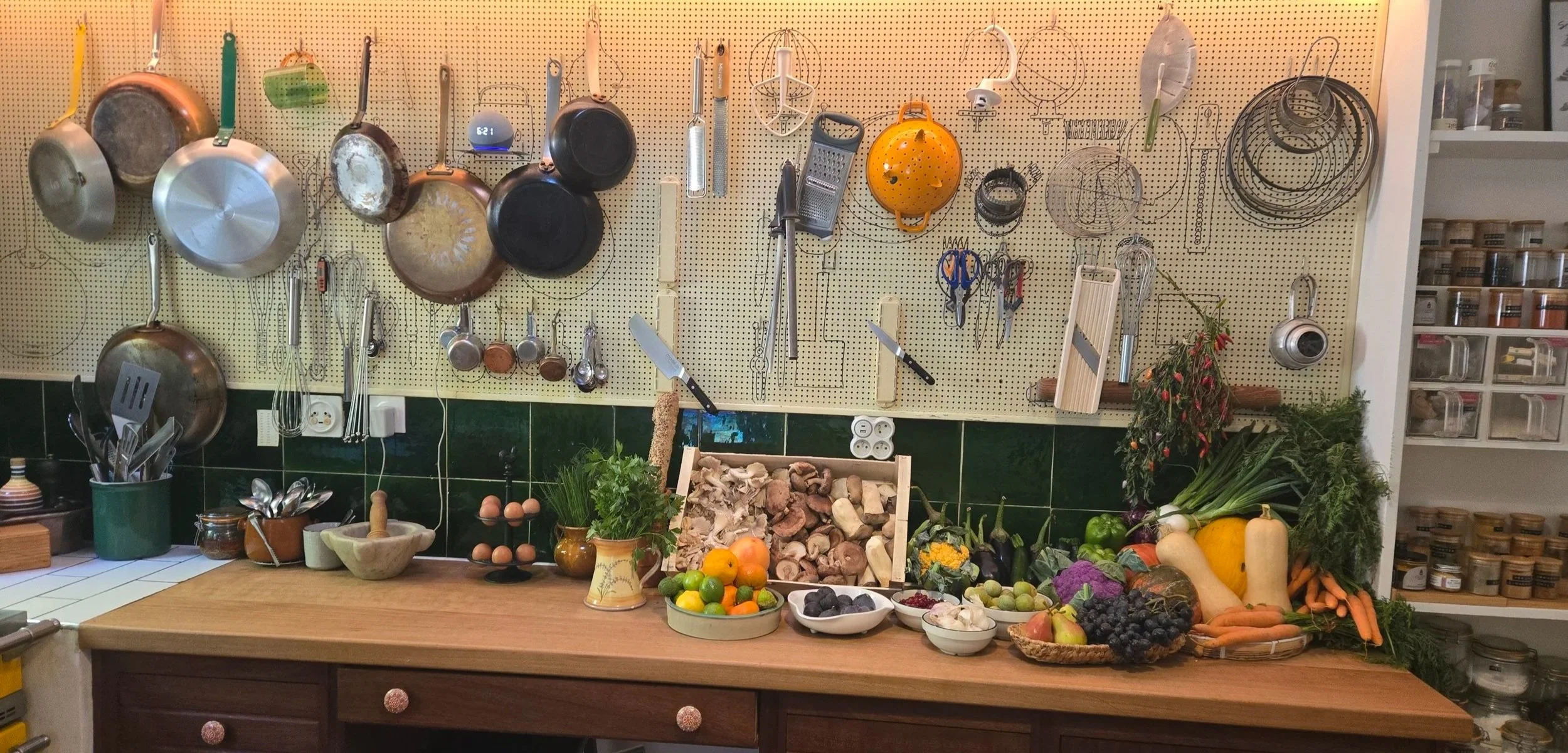
I came to France wanting to cook in Julia Child’s kitchen.
Sitting at the airport, all I wanted was to get home and cook in mine.
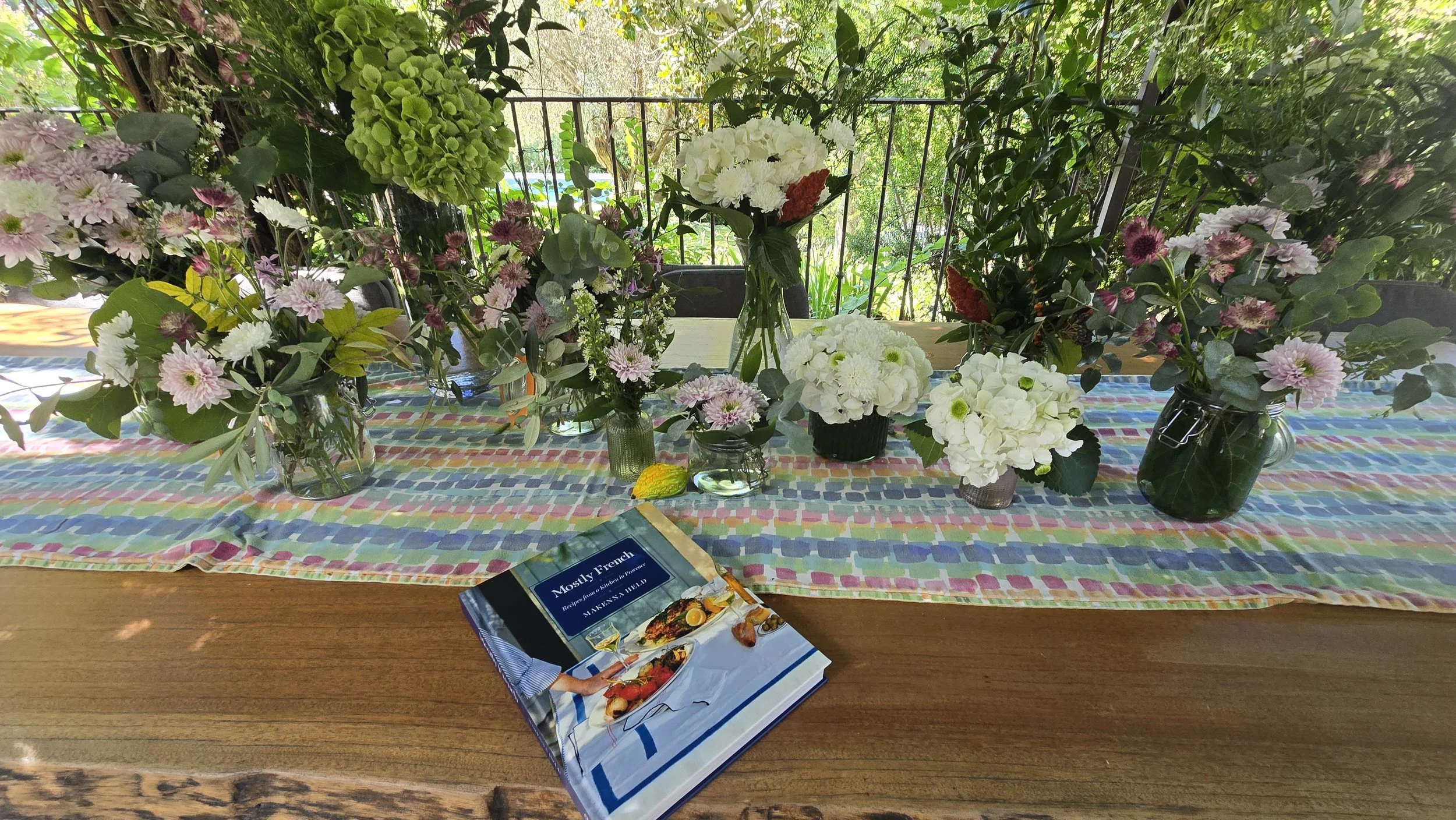
I hope this inspires you to travel, to eat, and to join me as I continue sharing my journey through seven continents and infinite foods.
**************************************************
If You Go – Quick Itinerary
Stay: Palais Saleya in Old Nice for the solo portion; La Peetch/Cook Camp for the Provence portion.
Eat and drink: In Nice, eat your way through the Niçoise classics – pan bagnat, socca, stuffed zucchini flowers, petits farcis, pissaladière, barbajuans and tourte de blettes – on a Food tour; have dinner with church bells at LU FRAN CALIN; Peixes was a favorite solo lunch spot; Café de Turin was perfect for oyster research; the house rosé never once disappointed me. In Provence, leave room for whatever Cook Camp puts on the table and a final dinner at Detour.
Shop: Cours Saleya for produce and market wandering; Old Nice for chocolates, fruits confits & calissons (Maison Auer & PATISSERIE LAC), wine (Côté Vin & Les Grandes Caves Caprioglio) and Comptoir des Cotonniers for emergency French pajamas; Valbonne for cheese from 365 Fromages and small shops; Grasse for Provençal wandering.
Explore: Vieux Nice, the Promenade des Anglais, Castle Hill, Villa Masséna, Place Masséna, the port, Cannes market, Valbonne, Saint-Paul-de-Vence and Grasse.
Worth the drive: A tiny family winery in the hills, particularly if you are emotionally and financially prepared for international wine logistics.
Worth paying for: A private arrival transfer after the overnight flight. Arriving in a foreign city without immediately needing to solve a transportation problem felt downright luxurious.
Maybe skip: Filling every available hour. Some of my favorite moments happened once I stopped asking France to perform for me.
Our trip rhythm: A few solo days in Nice followed by six nights at Cook Camp in Provence. Market, cook, eat, learn, wander, pool, rosé, stay up too late, repeat.